Best Mods for a 2nd Gen 4Runner: Where to Start (Priority)
best 2nd gen 4runner mods. 4runner mods. 2nd gen 4runner.
Best Mods for a 2nd Gen 4Runner: Where to Start (Priority-Order Build Guide, 1990–1995)
So you've got a 2nd gen Toyota 4Runner and you're ready to build it. The problem? There are a hundred directions to go, and it's easy to blow your budget on the wrong things in the wrong order. The truth is, the best builds follow a logical sequence — fix the foundation first, then add capability, then dial in the extras. This guide lays out exactly where to start and what order to tackle your 2nd gen mods for the most capable, reliable, best-looking truck for your money.
First Things First: Sort the Mechanicals
Before you spend a dollar on lift kits or lights, make sure the truck itself is healthy. There's no point bolting accessories onto a rig that strands you on the trail. On a 30-plus-year-old 4Runner, that means addressing deferred maintenance and known weak points first:
- Cooling system — especially critical on the 3.0L V6. Fresh coolant, a good radiator, hoses, thermostat, and water pump protect your engine from the overheating that kills these motors.
- Front-end components — worn ball joints and a sloppy idler arm are common on these trucks and affect both safety and steering feel. Tighten up the front end before you add bigger tires that stress it further.
- Fluids and tune-up — transmission service, differential and transfer case fluids, and a basic tune-up go a long way.
- Known engine quirks — the failure-prone factory power steering idle-up valve is a perfect example of a cheap, smart fix to knock out early. The SAO Power Steering Idle Up Valve Delete Kit cleanly removes that common source of leaks and rough idle and fits the 3VZ, 22RE, and 1UZ engines.
Get the truck mechanically solid first. Everything else builds on this foundation.
Step 1: Tires and Suspension (The Real Foundation)
Ask any experienced builder what the most important upgrade is, and the answer is almost always the same: tires and suspension, in that order of importance — but done together. This is where your truck gains real off-road capability, and it's the single biggest transformation you can make.
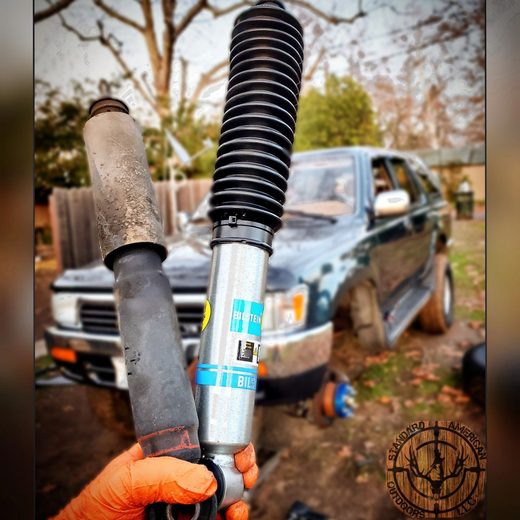
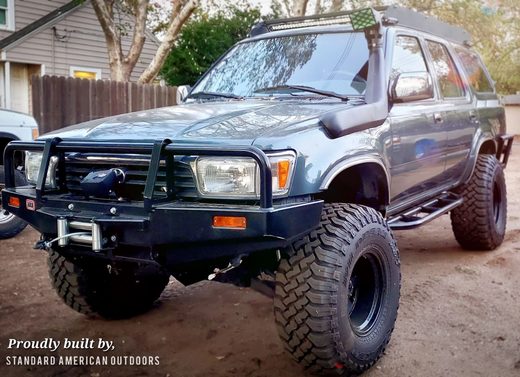
A good all-terrain tire dramatically improves traction, and a quality lift gives you the ground clearance and wheel-well room to run a larger size. On the 2nd gen, a complete 3-inch lift is the sweet spot — it opens up the popular 33-inch tire range, levels the tired factory stance, and keeps the truck drivable on the highway. The SAO 89–95 Complete 3" Lift Kit is engineered specifically for this platform, addressing the full suspension for a balanced ride front to rear.
Do the lift and tires before anything else capability-related. Bigger tires and clearance change what your truck can do more than any other mod.
Step 2: Protection (Sliders and Skid Plates)
Once you can actually get off-road, protect the truck. This is the near-universal "next mod" in the 4Runner community, and for good reason.
Rock sliders are usually the first piece of armor people add. They shield your rocker panels and doors from rocks, stumps, and trail damage, and they double as a pivot point and a recovery aid. Skid plates protect the vulnerable underside — engine, transmission, transfer case, and fuel tank — from impacts. If you're heading onto real trails, especially solo, this protection isn't optional. It's cheap insurance against expensive, hard-to-repair damage.
Step 3: Lighting and Visibility
With the truck capable and protected, improve how you see and how you're seen. The factory headlights on a 30-year-old 4Runner are dim and yellowed, and modern lighting is a night-and-day safety upgrade.
SAO LED Projector Headlights deliver a brighter, whiter, more focused beam with a sharp cutoff — far better than aging halogens — while giving the front end a sharper, modern look. Auxiliary lighting (light bars, ditch lights, fog lights) is a natural follow-on once your headlights are sorted.
Step 4: Cargo and Overlanding Capability
Now that the truck performs, build out how it carries gear. This is where the 2nd gen's boxy, upright roofline pays off — it's a perfect platform for a heavy-duty roof rack.
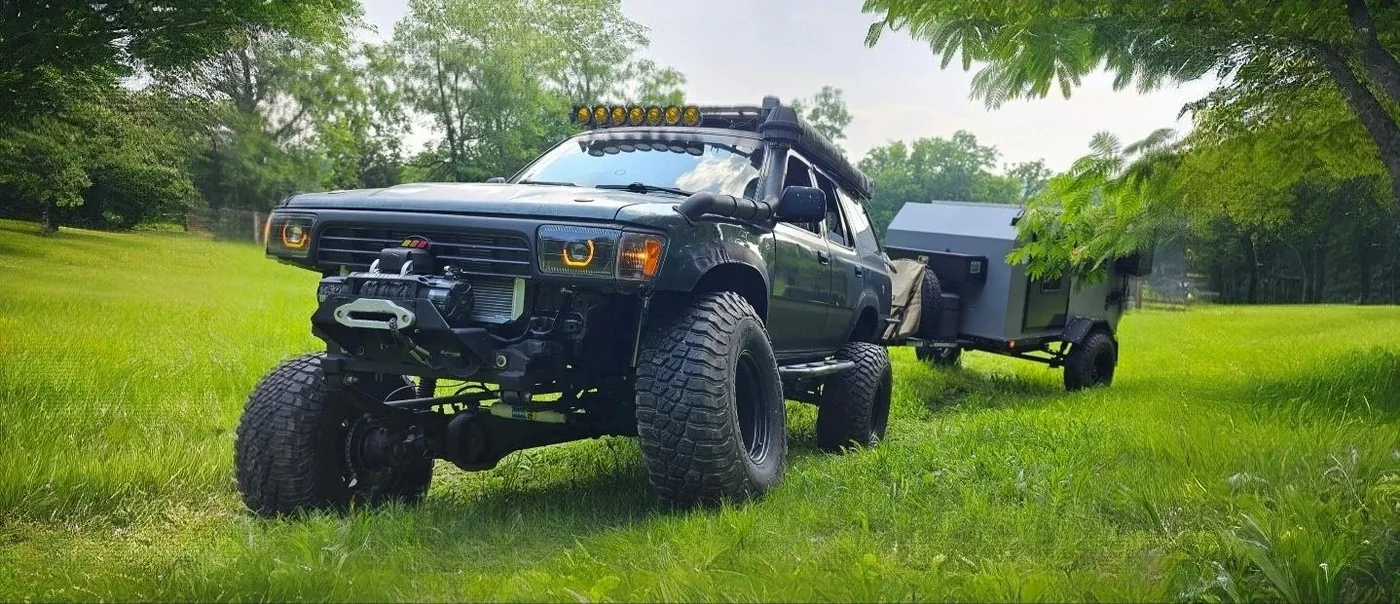
The SAO V3 Roof Rack is the only rack on the market built specifically for the 2nd gen, designed to handle rooftop tents and serious gear with thick aluminum sides and steel cross bars, while raising roof height just 2.25 inches for a low profile. Pair it with a rooftop tent, recovery boards, and storage, and you've got a genuine overlanding rig.
Step 5: Recovery Gear and the Extras
Finally, round out the build with the gear that gets you home: quality recovery equipment (straps, shackles, a way to air down and back up), and — if you wheel hard or travel solo — a winch. From there, it's all personal preference: regearing for your tire size, lockers for serious traction, interior storage, and the cosmetic touches that make the truck yours.
The Golden Rule: Build With a Plan
The single best piece of advice for any 2nd gen build is to know your end goal before you start. A mild trail-and-camp rig and a hardcore rock crawler take different paths, and buying parts in the right order — foundation first, capability second, extras last — saves you from wasting money on mods you'll outgrow or have to redo. Think about where you want the truck in one year, three years, and beyond, and build toward it deliberately.
Build Your 2nd Gen the Right Way
The 2nd gen 4Runner is one of the most rewarding platforms to build — tough, capable, and endlessly customizable. Follow the right order, start with quality parts, and you'll end up with a rig that's reliable, capable, and unmistakably yours.
At Standard American Outdoors, we're the premier one-stop shop dedicated entirely to the 2nd gen Toyota 4Runner. Every product we offer is engineered specifically for your rig and built in America — from our complete 3" lift kit and V3 roof rack to LED projector headlights and the power steering idle-up delete kit. Browse the full lineup at standardamericanoutdoors.com and sign up for the newsletter to get 10% off your first purchase.