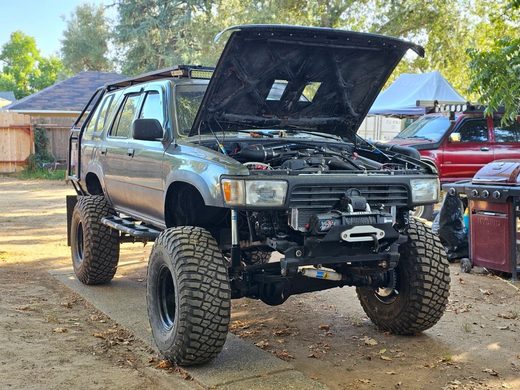
Is Your 4Runner Dangerously Slow? How to ad power to the 3.0L V6.
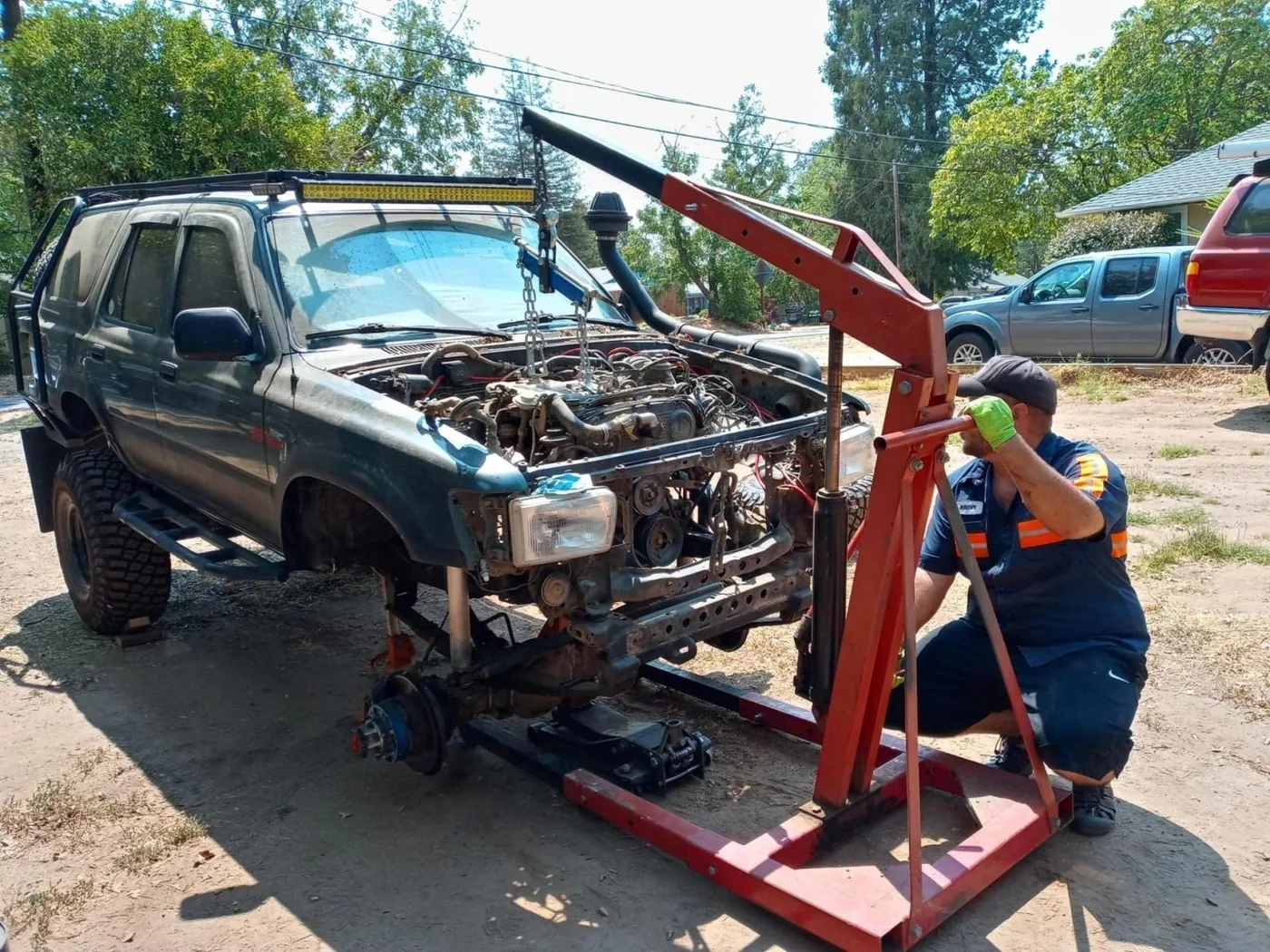
3.0L V6 power upgrades, 4Runner slow acceleration, 3VZ-E performance mods, headers for 3.0 V6, re-gearing 4Runner
You know the feeling. It's a mix of terror and frustration that every 2nd generation Toyota 4Runner owner has experienced. You're at the end of a short on-ramp, foot pressed to the floor, watching in your side mirror as a semi-truck barrels down on you at 70 mph. Your engine is screaming, but the speedometer needle is crawling, reluctantly climbing past 45 mph. You merge, forcing the trucker to hit his brakes, and you're filled with a familiar sense of resignation. This is life with the "3.slow," the notoriously underpowered 3.0L 3VZ-E V6.That lack of power isn't just an inconvenience; in modern traffic, it can feel genuinely dangerous. It dictates which lane you can use, which hills you can climb, and whether you can safely pass a slower vehicle. But what if you didn't have to live with it? What if you could wake up the sleeping giant in your engine bay? As fellow owners who have battled and beaten the 3.slow curse, we're here to tell you it's possible. This is your realistic, step-by-step guide to fixing the 3.0L V6 power problem, transforming your truck from a sluggish liability into a safe, responsive, and enjoyable vehicle to drive.
The Elephant in the Room: Why the 3.0L 3VZ-E is So Underpowered
First, let's be realistic. The 3VZ-E was designed in the late 1980s, an era with different performance expectations. It was built for reliability and smoothness, not speed. The engine's design prioritizes low-end torque for truck applications but does so with incredibly restrictive components. The intake manifolds are designed for quiet operation, not airflow. The exhaust manifolds and the infamous crossover pipe are notoriously inefficient, choking the engine's ability to exhale. The camshaft profile is mild, designed for a smooth idle rather than high-RPM breathing. When you put this 150-horsepower engine in a heavy, 4,000-pound SUV, the result is a recipe for sluggishness. Our goal isn't to turn your 4Runner into a sports car, but to perform a series of strategic upgrades that will make it a safe, confident, and pleasant daily driver.
The Foundation: Before You Chase Power, Restore It
Before you spend a dime on performance parts, you must ensure your engine is healthy. No modification will work if it's trying to compensate for a neglected engine. If your 4Runner feels exceptionally weak, you may be suffering from lost power, not just a lack of it. This is "Stage 0."
The "Stage 0" Tune-Up for Lost Power
•Full Ignition Service: Start with the basics. A full tune-up with new spark plugs (use the correct dual-electrode plugs specified for the 3VZ-E), high-quality wires, a new distributor cap, and a new rotor can make a surprising difference.•Check the Catalytic Converter: After 30 years, the internal honeycomb of your catalytic converter can become clogged or collapse, creating a massive exhaust blockage that chokes your engine. If your truck has very low power and struggles to rev, this is a prime suspect.•Verify Ignition Timing: The 3VZ-E is very sensitive to ignition timing. If it's set incorrectly (retarded), it can kill power and throttle response. A simple check with a timing light to ensure it's set to the factory specification (typically 10 degrees Before Top Dead Center with the diagnostic terminals jumped) is a crucial step.
The "Free and Cheap" Mods: Uncorking Your Engine on a Budget
Toyota's engineers left some power on the table in the name of making the 4Runner quiet and civilized. These simple modifications are about reclaiming that lost potential without spending a lot of money.
The Deckplate Mod & Intake Silencer Removal (ISR): Let Your Engine Breathe
Two of the most popular and effective beginner mods are the ISR and Deckplate mods. The Intake Silencer Removal (ISR) involves removing the bulky and restrictive factory intake plumbing and replacing it with a straight section of pipe. This smooths the airflow path into the engine. The Deckplate Mod involves cutting a hole in the front of your airbox and covering it with a screw-in marine deck plate. On the street, you can keep the plate screwed in for quiet operation. On the trail, or when you want more power, you can unscrew it to allow a massive new source of cold air into the engine. Together, these mods provide a noticeable improvement in throttle response and a very satisfying intake growl when you step on the gas.
Exhaust and Crossover Pipe: Let Your Engine Exhale
The stock exhaust is another major bottleneck. A simple and relatively inexpensive "cat-back" exhaust system (which replaces everything from the catalytic converter to the tailpipe) will provide a deeper, more aggressive tone and free up a few horsepower. More importantly, it sets the stage for the single most effective bolt-on upgrade you can make.
The "Bolt-On" Upgrades: Investing in Real Gains
If you're ready to spend some money for a tangible, seat-of-the-pants difference, these are the upgrades that deliver.
Headers: The Single Best Bolt-On for the 3VZ-E
If you make only one significant performance modification to your 3.0L, make it a set of quality headers. The factory cast-iron exhaust manifolds and the restrictive crossover pipe are the engine's biggest handicap. A set of long-tube headers (from a reputable brand like Doug Thorley) eliminates this entire mess, allowing each cylinder to breathe out through an equal-length, tuned pipe. The result is a dramatic improvement in mid-range torque—exactly where you need it for daily driving. The truck will feel less strained, pull hills more easily, and accelerate with newfound authority. This is not a placebo; it is a real, transformative upgrade.
Camshafts: Waking Up the Valvetrain
For those seeking to push the 3.0L even further, performance camshafts are the next logical step. By changing the shape of the cam lobes, you can increase the duration and lift of the valves, allowing more air and fuel to enter the engine at higher RPMs. When paired with headers and intake mods, a set of mild performance cams can wake up the top end of the powerband, making the engine feel much less asthmatic as it approaches redline. This is a more involved, engine-in-the-truck job, but it delivers real, dyno-proven gains.
The Drivetrain Multiplier: Why Re-Gearing is a Power Upgrade
Have you installed larger tires on your 4Runner? If so, you have inadvertently made your power problem significantly worse. Larger tires travel a greater distance with each rotation, effectively changing your final drive ratio and reducing the amount of torque that reaches the wheels. Your engine has to work much harder to do the same amount of work.
The Power of Mechanical Advantage: Choosing the Right Gear Ratio
Re-gearing your differentials doesn't add a single horsepower to your engine, but it can make your truck feel twice as powerful. By swapping your stock gears (likely 4.10 or 4.56) for a deeper ratio (like 4.88 or 5.29), you are restoring the mechanical advantage your engine has over the wheels. The engine can spin more easily into its powerband, and the truck will feel dramatically more responsive and eager to accelerate. For any 2nd gen with 33-inch or larger tires, a re-gear is not just a suggestion; it is essential for restoring lost performance.
The Elephant in the Room Part 2: When is a 3.4L Swap the Right Answer?
It's time for an honest assessment. If your 3.0L engine is tired, burning oil, or has low compression, sinking money into performance parts is a bad investment. The cost of headers, cams, and a re-gear can quickly add up. If you find yourself in this situation, or if you are simply seeking a level of power and reliability that the 3.0L can never realistically provide, it is time to seriously consider the 3.4L (5VZ-FE) engine swap. A 3.4L swap provides a modern, reliable, 190-horsepower engine that transforms the truck in a way that bolt-on 3.0L mods never can. It is the ultimate solution to the power problem.
Conclusion: Building a 3.0L You Can Live With
You do not have to be a victim of the 3.slow curse. You can take control and build a 2nd gen 4Runner that is safe, responsive, and has the power to confidently handle modern driving conditions. Start with a healthy, well-tuned engine. Perform the simple intake and exhaust mods to uncork the engine's hidden potential. If you're serious, invest in a set of headers for a truly transformative gain in torque. And if you're running big tires, re-gear your differentials to get your performance back. By following this strategic path, you can finally build a 2nd gen 4Runner that has the power to live up to its legendary name.
keywords:
3.0L V6 power upgrades, 4Runner slow acceleration, 3VZ-E performance mods, headers for 3.0 V6, re-gearing 4Runner