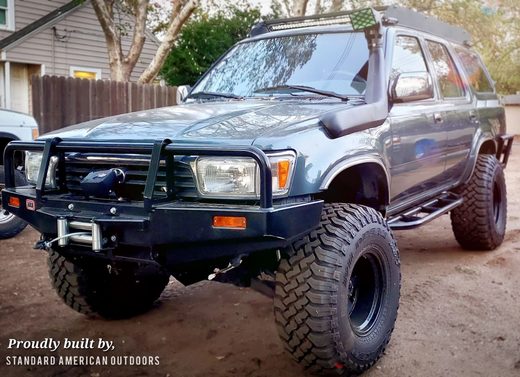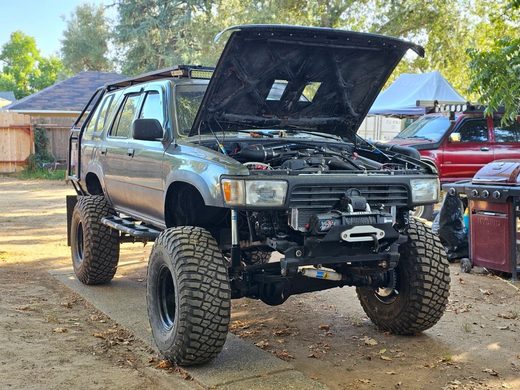
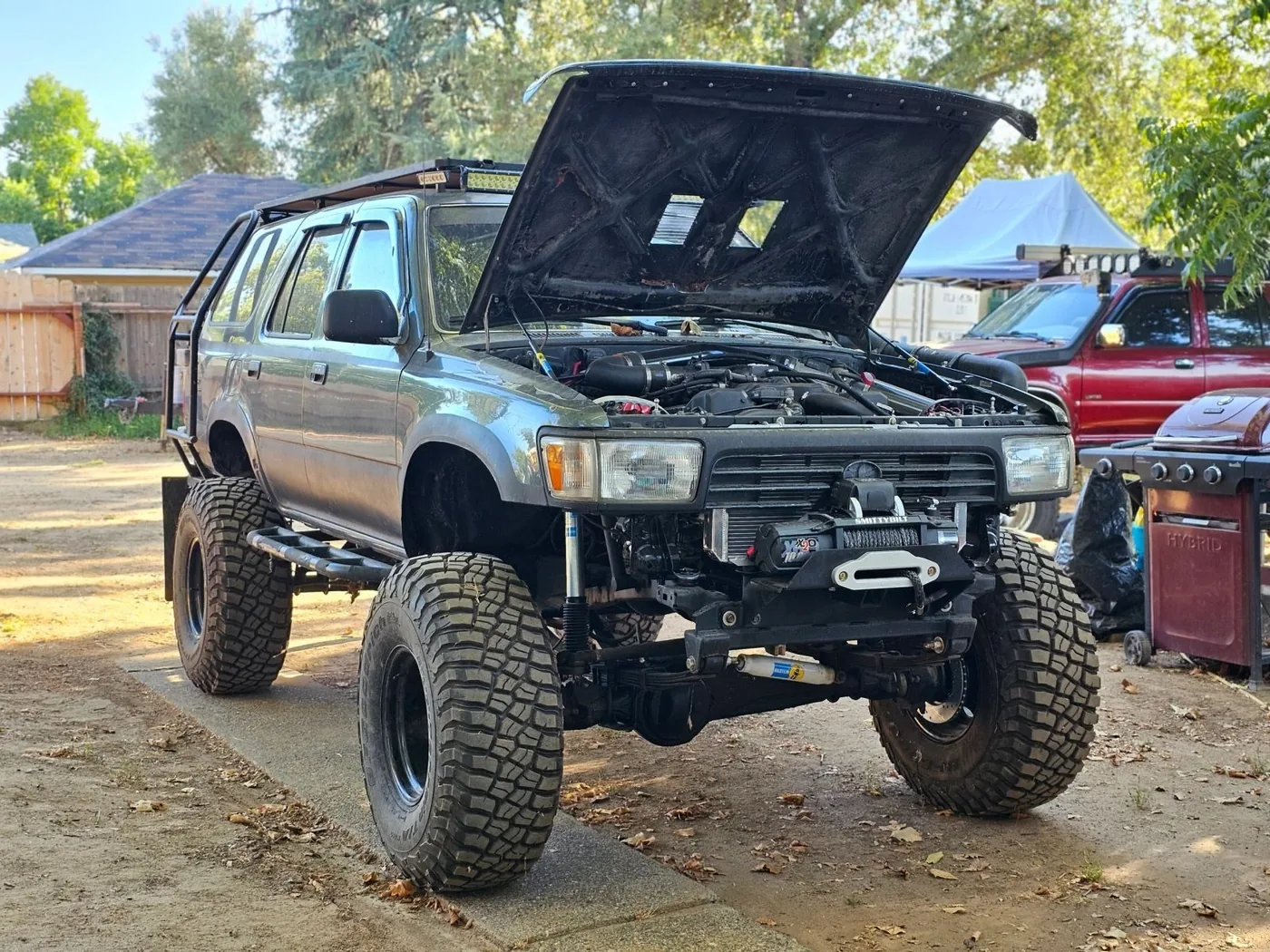
Kill the 3.Slow: Your Definitive Guide to the 3.4L 5VZ-FE Engine
3.4L engine swap, 5VZ-FE swap guide, 4Runner engine upgrade, Tacoma engine swap, wiring harness conversion
Every 2nd generation Toyota 4Runner owner has felt it. It's that sinking feeling in the pit of your stomach as you merge onto a busy highway, your foot pressed firmly to the floor, while the engine screams and the speedometer needle crawls reluctantly upward. It's the frustration of watching semi-trucks pull away from you on a steep mountain grade. It's the curse of the "3.slow," the notorious 3.0L 3VZ-E V6 that, despite its Toyota pedigree, is the one great, glaring flaw in an otherwise legendary truck. You've told yourself, "If only it had more power, this truck would be perfect."What if you could fix it? What if you could perform a heart transplant, swapping out that tired, underpowered engine for a modern, reliable, and significantly more powerful Toyota V6? That's not a pipe dream; it's the reality of the 3.4L 5VZ-FE engine swap, arguably the single greatest modification you can make to a 2nd gen 4Runner. It's the holy grail for owners who want to preserve the classic style and toughness of their truck while giving it the power and reliability it always deserved. As veterans of this exact swap, we've navigated the challenges and experienced the incredible rewards. This is your definitive guide to killing the 3.slow and resurrecting your 4Runner as the capable machine it was always meant to be.
Why the 3.4L 5VZ-FE is the Perfect Heart for Your 2nd Gen
The beauty of the 3.4L swap lies in its "OEM-plus" nature. You aren't shoehorning in a foreign V8 that requires a complete re-engineering of your truck. You are transplanting the heart of the next generation of Toyota trucks and 4Runners, and the benefits are threefold.
Power, Reliability, and an OEM Fit
Let's talk numbers. The original 3.0L 3VZ-E produced a meager 150 horsepower and 180 lb-ft of torque when it was new. The 3.4L 5VZ-FE, on the other hand, delivers a healthy 190 horsepower and 220 lb-ft of torque. While a 40hp gain might not sound massive on paper, the difference in real-world driving is staggering. It's the torque, available low in the RPM range, that transforms the vehicle. Beyond the power, you are swapping a notoriously problematic engine (the 3VZ-E is the sibling to the head-gasket-plagued 22R-E) for one of Toyota's most reliable V6 engines ever produced—the 5VZ-FE is known for easily lasting 300,000+ miles with basic maintenance.
Sourcing Your Swap: The Hunt for a Good Donor
The success of your swap hinges on the quality of the components you start with. The hunt for a good donor is the first and most critical phase of your project.
The Holy Trinity: Engine, ECU, and Wiring Harness
To save yourself from a world of electronic pain, you must acquire these three components—the engine, the engine control unit (ECU), and the complete, uncut engine wiring harness—from the same donor vehicle. Mixing and matching ECUs and harnesses from different years or models is a recipe for a truck that will never run right, if at all.
Where to Look: Donor Vehicle Guide
You can find the 5VZ-FE engine in a few common Toyota models. While they are all fundamentally the same, there are minor differences to be aware of:•1995-2004 Tacoma: The most common donor, widely available.•1996-2002 4Runner: Another excellent choice, identical in most ways to the Tacoma.•1995-1998 T100: The golden ticket. The T100's oil pan and dipstick are configured for a front-mounted steering setup, just like your 2nd gen, which eliminates one of the key mechanical challenges of the swap.
What to Pay and How to Vet a Donor Engine
Expect to pay anywhere from $1,000 to $2,500 for a complete pull-out package including the engine, ECU, and harness. When possible, vet the donor engine thoroughly. If you can hear it run, listen for any knocks or ticks. Perform a compression test to ensure the engine has healthy internals. Check the oil for any milky residue and the coolant for any oil, signs of a pre-existing head gasket issue on the donor.
The Swap Blueprint: A Step-by-Step Overview of the Mechanical Work
With your donor parts in hand, the real work begins. While complex, the mechanical side of the swap is surprisingly straightforward, revolving around three key challenges.
The Teardown: Saying Goodbye to the 3.Slow
This is the point of no return. Meticulously label every vacuum line and electrical connector as you disconnect the old 3.0L engine. Take photos. When the engine bay is empty, take the opportunity to degrease and clean everything. A clean workspace is a happy workspace.
The "Big Three" Mechanical Challenges
1.Motor Mounts: The passenger-side motor mount on the 3.4L will line up with your 2nd gen's frame perch, but the driver-side mount needs to be relocated. You can either fabricate a new mount yourself or, more easily, use a crossover-delete kit from a company like Off-Road Solutions (ORS) that includes a new weld-on perch.2.Exhaust Crossover Pipe: The 3.0L's exhaust crosses over from the driver's side to the passenger side under the transmission. The 3.4L exhaust does the opposite. This means you will need a custom crossover pipe fabricated by an exhaust shop to connect your new engine to your existing exhaust system.3.Oil Pan & Dipstick: Unless you sourced your engine from a T100, the oil pan sump on a Tacoma or 3rd gen 4Runner engine will interfere with the front differential. You will need to acquire a T100 oil pan, oil pickup, and dipstick/tube and swap them onto your donor engine.
Transmission and Drivetrain Considerations
Here's the best news: your stock 2nd gen transmission, whether it's the R150F manual or the A340H automatic, will bolt directly up to the 3.4L 5VZ-FE engine. This is a massive advantage that makes this swap so popular and feasible.
The Wiring Nightmare, Demystified: Conquering the Electrical Work
This is the part of the swap that terrifies most people, and for good reason. The goal is to merge the engine harness from the modern, computer-controlled 3.4L with the simpler body harness of your 2nd gen so that your gauges, ignition, and fuel pump all work as they should. While it is possible to do this yourself with a set of factory wiring diagrams and a lot of patience, there is a much, much better way.
The Ultimate Shortcut: Plug-and-Play Conversion Harnesses
Companies like ToyOnlySwaps and Off-Road Solutions (ORS) have perfected the art of the wiring conversion. You mail them your 3.4L engine harness and a section of your 3.0L body harness, and they mail you back a single, professionally integrated, plug-and-play harness. It is, without a doubt, the best money you will spend on this entire project. It turns the most complex, frustrating, and risky part of the swap into a simple matter of plugging in a few connectors. It is the key to a successful, stress-free swap.
Is the 3.4L Swap Worth It? An Honest Cost and Effort Breakdown
Before you dive in, it's crucial to be realistic about the investment required.
The Financial Reality: Budgeting Your Swap
•Donor Package (Engine/ECU/Harness): $1,000 - $2,500•Wiring Conversion Service: $500 - $700•Exhaust Fabrication: $300 - $600•T100 Oil Pan & Parts (if needed): $150 - $250•Miscellaneous (Fluids, Gaskets, Belts, etc.): $500•Total Estimated Cost: $2,450 - $4,550+
The Time and Skill Commitment
This is not a weekend project. For a skilled DIY mechanic with a well-equipped garage, plan for at least 40-50 hours of work. For a novice, it could take several weekends or even months. It requires a solid understanding of mechanics, some fabrication ability (or a willingness to pay for it), and a lot of patience.
The First Drive: Experiencing the Rebirth of Your 4Runner
After weeks of hard work, the moment of truth arrives. You turn the key, and instead of the familiar chug of the 3.0L, you're met with the smooth, quiet hum of the 5VZ-FE. It fires instantly, settling into a steady idle. The feeling is pure magic.The first drive is a revelation. The truck is responsive. It accelerates with an authority you've only dreamed of. You merge onto the highway and, for the first time, you're not praying for a gap in traffic; you're creating one. You point it up a steep hill, and it pulls effortlessly, the engine barely breaking a sweat. It's quieter, smoother, and infinitely more powerful. It feels like a new truck.Despite the cost and the effort, the 3.4L swap is almost universally hailed as the single best modification you can make to a 2nd gen 4Runner. You haven't just swapped an engine; you've corrected the truck's one great flaw. You've given it a new heart, a new soul, and a new lease on life, ensuring that your classic rig is ready for another 30 years of adventure.
3.4L engine swap, 5VZ-FE swap guide, 4Runner engine upgrade, Tacoma engine swap, wiring harness conversion