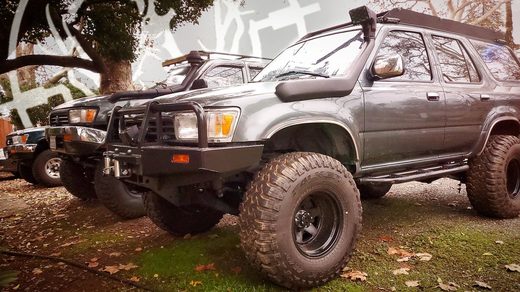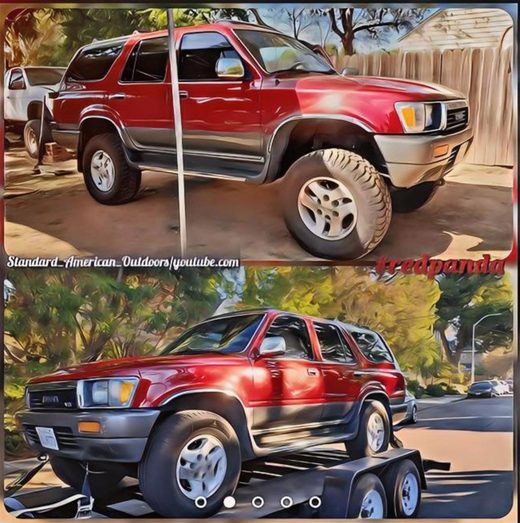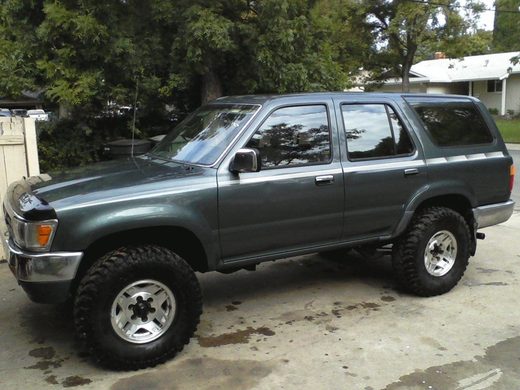
300,000k Dream: Your Guide to Making a 2nd Gen T4R Bulletproof.
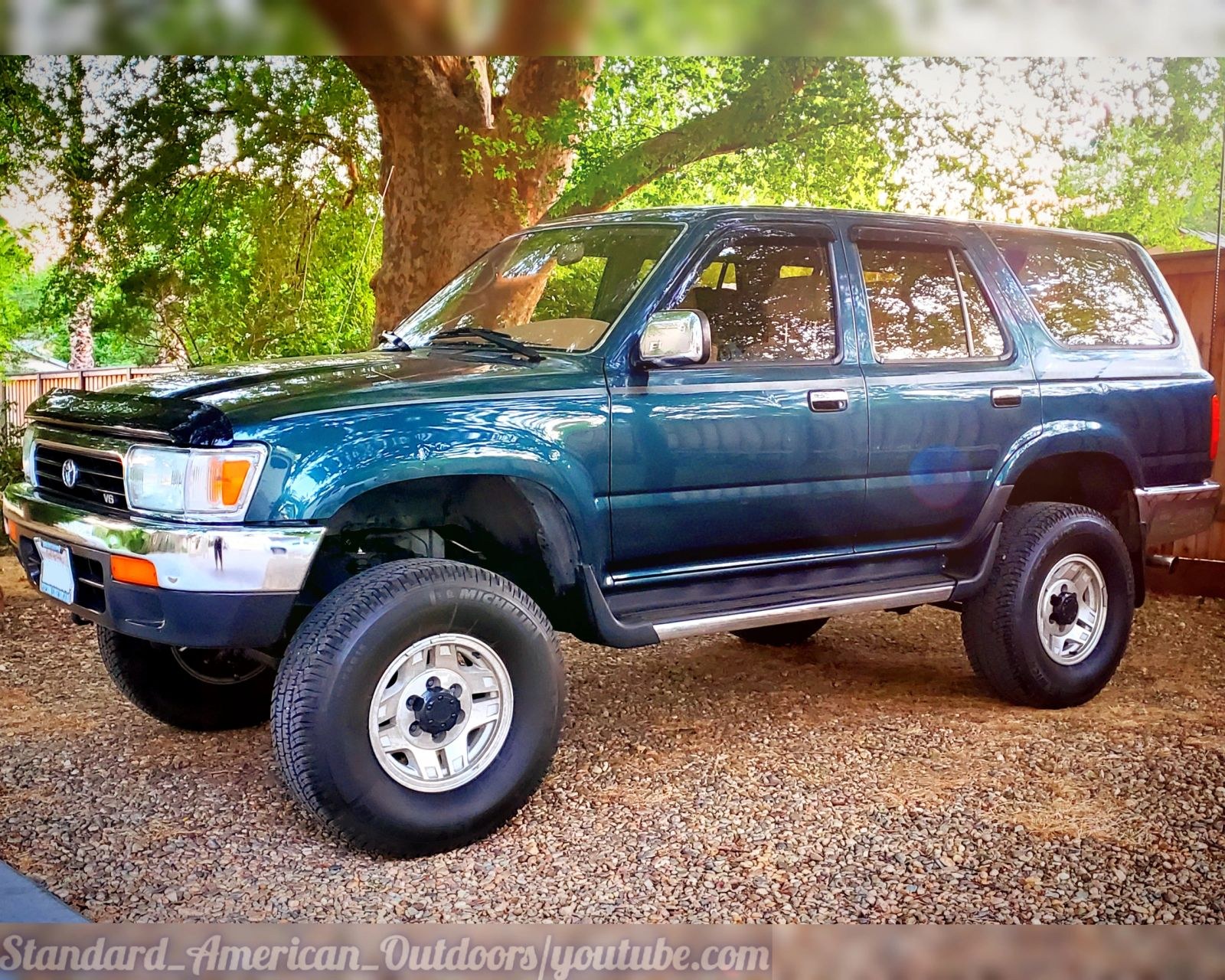
4Runner daily driver, preventative maintenance schedule, timing belt replacement, reliable Toyota, high mileage 4Runner
In a world of five-figure car payments and disposable plastic appliances, the idea of relying on a 30-year-old truck for your daily commute seems, to most people, completely insane. You've probably heard it from friends and family: "You drive that every day? Isn't it going to leave you stranded?" It's a fear rooted in modern consumer culture, but as a 2nd generation Toyota 4Runner owner, you know something they don't. You know that your truck hails from the golden era of Toyota's over-engineering, a time when vehicles were built to be repaired, not replaced. You know that with the right care, your "old truck" can be more reliable than a brand-new car off the lot.But that reliability isn't a birthright; it's earned. It's earned through diligence, preventative maintenance, and a deep understanding of the vehicle's needs. The dream of a 300,000-mile, bulletproof daily driver is not just possible; it's a reality for thousands of 2nd gen owners. As enthusiasts who have put our faith in these trucks for our own daily commutes, we've learned the secrets to their longevity. This isn't a guide to building a rock crawler or a show truck. This is the ultimate blueprint for transforming your 2nd gen 4Runner into the most dependable, cost-effective, and satisfying daily driver you'll ever own.
The Philosophy: Proactive, Not Reactive
The entire philosophy of daily-driving a classic vehicle can be summed up in one word: proactive. You cannot wait for things to break. The modern car owner is conditioned to be reactive—to wait for a check engine light or a strange noise before seeking service. To successfully daily drive a 2nd gen, you must adopt the mindset of an aircraft mechanic: you perform maintenance based on a schedule, not on a failure. You replace parts that are known to wear out before they have a chance to leave you on the side of the road. This proactive approach is the key to unlocking bulletproof reliability.
The "Baseline" Reset: Your First and Most Important Job
When you first acquire a 2nd gen 4Runner, you must assume that it has been neglected. Even with a stack of service records, you cannot be sure of the true condition of its most critical components. Your first order of business is to perform a "baseline reset." This is a comprehensive service that replaces every major wear item and fluid, giving you a known, solid starting point from which to begin your maintenance schedule. This is non-negotiable.
Your Baseline Reset Shopping List:
•Complete Timing Belt & Water Pump Kit: This is the big one. The timing belt is the lifeblood of your engine, and if it snaps, your engine is toast. The water pump is replaced at the same time because it's driven by the timing belt. Use a quality kit (like Aisin, the OEM supplier) that includes the belt, water pump, tensioner, and idler pulleys.•All Fluids: This means everything. Engine oil and filter, transmission fluid, transfer case gear oil, front and rear differential gear oil, power steering fluid, and brake fluid. Drain and fill every single one.•Complete Cooling System Overhaul: As we've detailed in other articles, this is critical. A new radiator, all new hoses, a new thermostat (OEM only!), and a new fan clutch.•Full Ignition Tune-Up: New spark plugs, spark plug wires, distributor cap, and rotor. This will ensure a strong, reliable spark.•Filters: Replace the engine air filter and the fuel filter.•Belts: Replace the accessory drive belts for the alternator and power steering.Yes, this is a significant upfront investment of time and money. But completing this baseline reset is the single most important step you can take. It single-handedly eliminates the top 90% of potential breakdown scenarios and gives you a rock-solid foundation for the next 100,000 miles.
The Daily Driver's Maintenance Bible: A Schedule for Immortality
With your baseline established, you now switch to a proactive maintenance schedule. This is the rhythm of your ownership, the simple, repeatable tasks that will keep your 4Runner running flawlessly.
Every 3,000-5,000 Miles (With Every Oil Change):
•The "Under-Hood Check": This is a 15-minute ritual. With a flashlight, inspect all fluid levels. Look for any new leaks, no matter how small. Check your battery terminals for corrosion. Squeeze your coolant hoses to check for firmness. Look for any cracked or worn belts. This simple, regular inspection is your early warning system.•Grease the Drivetrain: Your 2nd gen has grease fittings (zerks) on its driveshafts and steering components. A few pumps from a grease gun every oil change keeps these parts lubricated and happy.
Every 15,000 Miles:
•Inspect Brakes: Pull your wheels and visually inspect the thickness of your brake pads and the condition of your rotors.•Rotate Tires: This ensures even wear and extends the life of your tires.•Clean Your MAF and Throttle Body: A clean Mass Airflow Sensor and throttle body ensures your engine is getting accurate information and breathing efficiently, which is key for fuel economy and smooth operation.
Every 30,000 Miles:
•Full Fluid Service: It's time to replace the transmission fluid, transfer case oil, and differential oils again. Clean fluids are the lifeblood of your drivetrain.•Replace Fuel Filter: A clean fuel filter ensures your engine isn't being starved for fuel.•Inspect Suspension and Steering: This is a more in-depth check. Look for torn CV axle boots, leaking seals on the steering rack, and play in the ball joints and tie rod ends.
Every 60,000-80,000 Miles:
•The Big One: It's time for another complete Timing Belt and Water Pump service. This is the cycle. This is the key to longevity. Do not stretch this interval. This is the heartbeat of your reliable daily driver.
The "Quality of Life" Upgrades: Making a Classic Livable in the Modern World
Reliability is paramount, but a few strategic upgrades can make your daily commute much more pleasant.•Headlight Upgrade: The stock headlights are dangerously dim by modern standards. A simple upgrade to a quality set of LED bulbs in the stock housings, or a full projector retrofit, will transform your nighttime driving safety.•Sound System: A modern Bluetooth-capable head unit allows for hands-free calling and music streaming, making your commute safer and more enjoyable.•Sound Deadening: Applying sound-deadening material (like Dynamat or Kilmat) to the doors, floor, and firewall can dramatically reduce road and engine noise, making the cabin a much more comfortable place to be.
The Payoff: Freedom from Car Payments and the Pride of Self-Reliance
Daily driving a 2nd gen 4Runner is a statement. It's a rejection of disposable culture and a commitment to quality, longevity, and self-reliance. The initial investment and the disciplined maintenance schedule pay dividends for years to come. You are not just saving money by avoiding a car payment; you are gaining a deeper connection to your vehicle and the satisfaction of knowing that you are the reason it runs so well.That feeling of turning the key every morning, knowing your "old truck" is ready to reliably carry you through another day, is a unique and profound reward. It's the 300,000-mile dream, and by following this blueprint, you can make it your reality.<a name="post-9"></a>
Blog Post 9: The Time Machine
Goal Addressed: Restoring a 2nd gen 4Runner to factory-original conditionTarget Keywords: 4Runner restoration, factory correct restoration, NOS parts, paint and bodywork, interior restoration
The Time Machine: Your Meticulous Guide to a Factory-Correct 2nd Gen 4Runner Restoration
In an automotive landscape dominated by swooping lines, touch screens, and driver aids that insulate you from the road, the 2nd generation Toyota 4Runner stands as a monument to a different era. It's a study in honest, purposeful design. The crisp, angular lines, the upright greenhouse, the simple, tactile controls—it's a vehicle that feels like a machine, not an appliance. For a growing number of enthusiasts, the ultimate goal isn't to lift it to the sky or swap in a fire-breathing V8. The ultimate goal is to turn back the clock. It's to peel away 30 years of wear and tear and resurrect the truck, to restore it to the exact condition it was in when it first rolled off the showroom floor.This pursuit, the art of restoration, is a unique and deeply rewarding journey. It's an act of automotive archaeology, of painstakingly researching, sourcing, and refinishing components to achieve a perfect, period-correct time capsule. It's about more than just fixing an old truck; it's about preserving a piece of Toyota's golden age of engineering. As restorers who have obsessed over the correct sheen of a factory bolt and the precise texture of a dashboard, we've created this guide to help you navigate the intricate and satisfying process of bringing your 2nd gen 4Runner back to its factory glory.
The Restoration Mindset: Adopting the Three P's - Patience, Purity, and Perseverance
A successful restoration is a marathon, not a sprint. It is governed by a different set of principles than a typical build. Your guiding stars are patience, purity, and perseverance.•Patience: You will spend more time researching part numbers and hunting for rare components on eBay than you will turning wrenches. You will need to wait for the right parts to surface. Rushing the process with incorrect or subpar parts will only lead to regret.•Purity: The goal is factory-correctness. This means resisting the urge to "upgrade" with modern components where they would be visible. It means restoring, not replacing, whenever possible. The satisfaction comes from the authenticity of the final product.•Perseverance: You will hit walls. You will discover that a critical trim piece is no longer available from Toyota. You will spend weeks searching for a single, uncracked dashboard. The ability to patiently and persistently hunt for solutions is what separates a good restoration from a great one.
The Four Pillars of a Flawless Restoration
A complete, frame-off restoration can be broken down into four major pillars. While you can address them individually, a truly comprehensive project will tackle all four, as they are all interconnected.
Pillar 1: The Mechanical Soul - A Factory-Fresh Drivetrain
Before you even think about paint, you must ensure the truck is mechanically flawless. The goal here is not just to make it run, but to make it run like new. This involves a complete "baseline reset," as we've detailed in our daily driver guide, but with an even greater emphasis on using OEM (Original Equipment Manufacturer) parts wherever possible.For a true restoration, rebuilding the original 3VZ-E engine is often preferred over swapping it. This maintains the truck's numbers-matching authenticity. The rebuild should be comprehensive, involving new pistons, rings, bearings, and a full valve job. Every seal, gasket, and hose should be a new OEM Toyota part. The engine bay itself should be detailed, with components like the intake plenum and valve covers refinished in their correct factory colors and sheens.
Pillar 2: The Perfect Finish - Bodywork and Paint
This is the most visually dramatic and often the most expensive part of the restoration. The goal is a paint job that is as good as, or better than, the factory finish.•The Teardown: A proper paint job requires a complete teardown. All trim, glass, bumpers, and lights are removed. This is the only way to ensure clean paint lines and to address any hidden rust. The Rust Repair: Any and all rust must be professionally cut out and replaced with new metal, welded in seamlessly. This is not the place for body filler to hide problems; it should only be used for the thinnest skim coat to perfect the final surface. The Prep Work: This is 90% of the job. The body is stripped to bare metal, often through media blasting. It is then treated with an epoxy primer to seal the metal, followed by multiple rounds of high-build primer, block sanding, and guide coating to create a perfectly flat and wave-free surface. The Paint: The vehicle is painted in its original factory color code, which can be found on the VIN plate in the driver's door jamb. A professional painter will use a multi-stage process of base coat and clear coat to achieve a deep, lustrous shine that replicates the factory look.
Pillar 3: The Interior Time Capsule - Conquering the Cockpit
The interior is where you will spend all your time, and restoring it presents some of the biggest challenges due to the scarcity of new parts. The Dashboard: The holy grail of 2nd gen interior restoration is finding an uncracked dashboard. This often requires months of searching online marketplaces or paying a premium for a rare new-old-stock (NOS) part. Alternatively, a cracked dash can be professionally repaired and re-textured by a specialty interior shop. The Upholstery: The original seat fabric, with its distinctive 90s patterns, is impossible to find new. If your seats are torn, your best bet is to find a donor vehicle with a clean interior or to have an upholstery shop carefully remove the good sections of fabric and stitch them in to repair the damaged areas. The carpets should be replaced with a new, molded carpet kit for a perfect fit. The Details: Every switch, knob, and trim piece is removed, cleaned, and restored. Faded plastic pieces can be re-dyed using products like SEM Color Coat, which is formulated to match factory interior colors.
Pillar 4: The Final 10% - An Obsession with Details
This is what separates a good restoration from a concours-level masterpiece. It's an obsession with the small, often-overlooked details. Hardware: Every visible bolt, nut, and clamp is either cleaned and re-plated in its original finish (often zinc or cadmium) or replaced with a new OEM equivalent. This level of detail is what truly sets a restoration apart. Decals and Labels: A full set of factory-correct decals—from the "V6" emblems on the fenders to the tire pressure and emissions labels in the door jamb and engine bay—is meticulously applied in the correct locations. Wheels and Tires: The original alloy wheels are professionally refinished, and the truck is fitted with tires that are the correct factory size and a style that is period correct Undercarriage: The frame and underbody are not just undercoated; they are cleaned and painted in the correct factory semi-gloss black, with every component, from the control arms to the differential, detailed to look like new.
The Great Hunt: How to Source No-Longer-Available (NLA) Parts
Your success as a restorer will depend on your ability to be a detective. Your primary resources will be:•Toyota Dealerships & Online Parts Diagrams: Many parts are still available new from Toyota. Use online parts diagrams to find the exact part number you need, then start your search.•eBay and International Search: This will be your go-to for used and new-old-stock (NOS) parts. Set up saved searches for specific part numbers and be prepared to act quickly when a rare part appears. Don't forget to search international eBay sites, as parts may be available in other markets. Forums (Yotatech, T4R.org): The 2nd gen 4Runner community is a treasure trove of knowledge and parts. Post "want to buy" (WTB) ads and build relationships with other enthusiasts who may have a stash of parts. Junkyards/Salvage Yards: While it's getting harder to find these trucks in yards, a lucky find can yield a trove of irreplaceable interior and trim pieces for very little money.
The Ultimate Reward: Owning a Living Legend
A completed restoration is a source of immense personal pride. You have not just built a truck; you have saved one. You have become a curator of a piece of automotive history. The feeling of driving your perfectly restored 2nd gen 4Runner, of hearing the precise click of the switches and feeling the honest feedback from the road, is a unique and profound joy. It's a journey that demands dedication, but the reward is owning a vehicle that transcends transportation. It's a conversation starter, a head-turner, and a rolling testament to an era of quality and design that we may never see again. You have resurrected a legend, and the satisfaction of that achievement is immeasurable.
4Runner daily driver, preventative maintenance schedule, timing belt replacement, reliable Toyota, high mileage 4Runner