Onboard vs Portable Air Compressor: Which Should You Buy?
The real difference
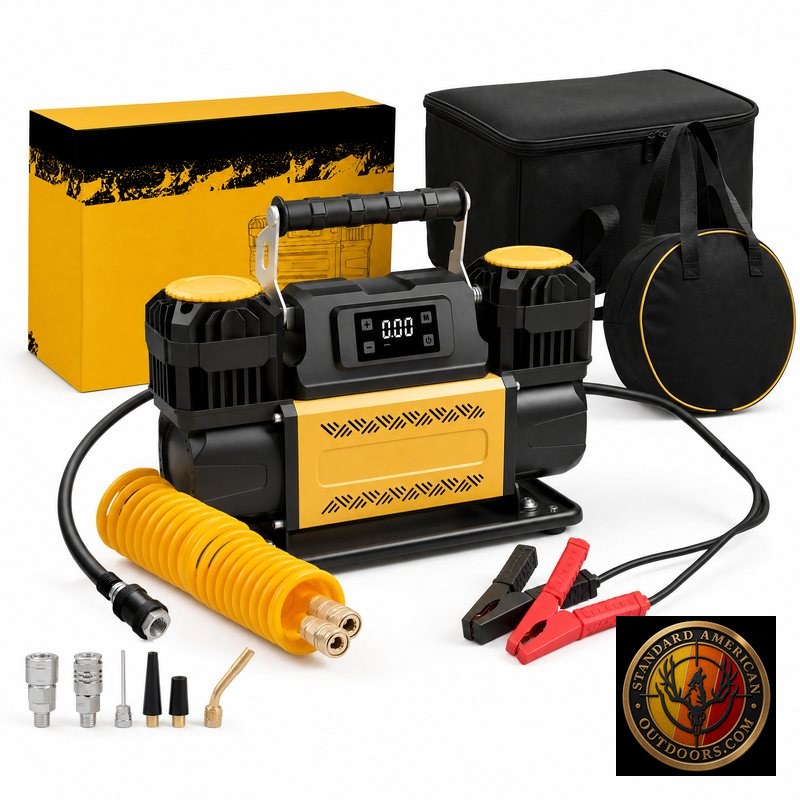
Portable units clamp to the battery, live in a hard case, and move between vehicles. They cost less, require no installation, and you can lend one to a friend. Their downside is that you have to get them out, hook them up, and put them away every single time.
Onboard compressors mount permanently and wire into the truck. Air is simply there when you want it, with no unpacking. They cost more up front and they cost you an install day.
The question that actually decides it
Do you want air for anything besides tires?
If the answer is only tires, and you wheel occasionally, buy a portable. It does the identical job and you keep the money and the drill bits.
If you run air tools, or you are seriously considering an air locker later, mounted onboard air is the better foundation — those uses want a constant pressure source, not something you rig up each time. That is a genuine functional difference rather than a preference.
Second question: are you keeping this truck? A portable follows you to the next vehicle. A mounted setup stays with the 4Runner, which is fine if the 4Runner is staying too.
How this maps to a 2nd gen
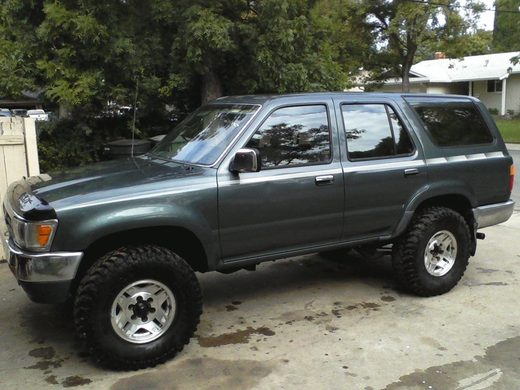
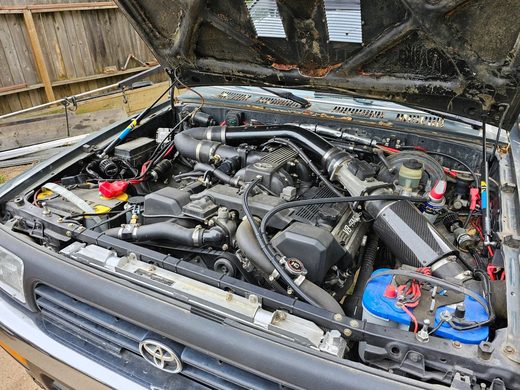
These trucks are thirty years old and engine bay space is not generous. A mounted compressor needs a spot that stays dry, does not cook, and does not interfere with anything you will need to service later — and on a 2nd gen you will be servicing things.
That reality pushes a fair number of owners toward the portable route, and there is nothing second-rate about that choice. The Bunker kit exists exactly for it: case, tank, hose, fittings, nothing drilled.
If you do want it mounted, the single with line kit or the twin with line kit ship with the plumbing so you are not ordering fittings twice.