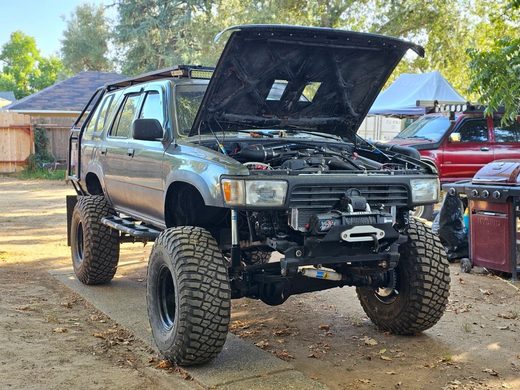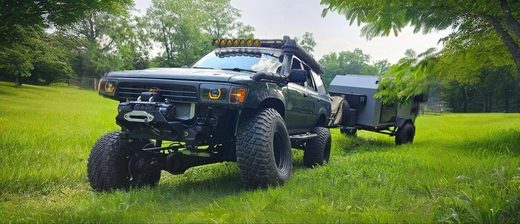
What's the Max Tire Size on a Stock 2nd Gen 4Runner?
Quick answer: On a completely stock 2nd gen 4Runner, a 30x9.5 fits with no drama and a 31x10.5 is the practical maximum — wheel backspacing decides whether you get occasional rub at full lock. Anything 33 and up needs a lift.
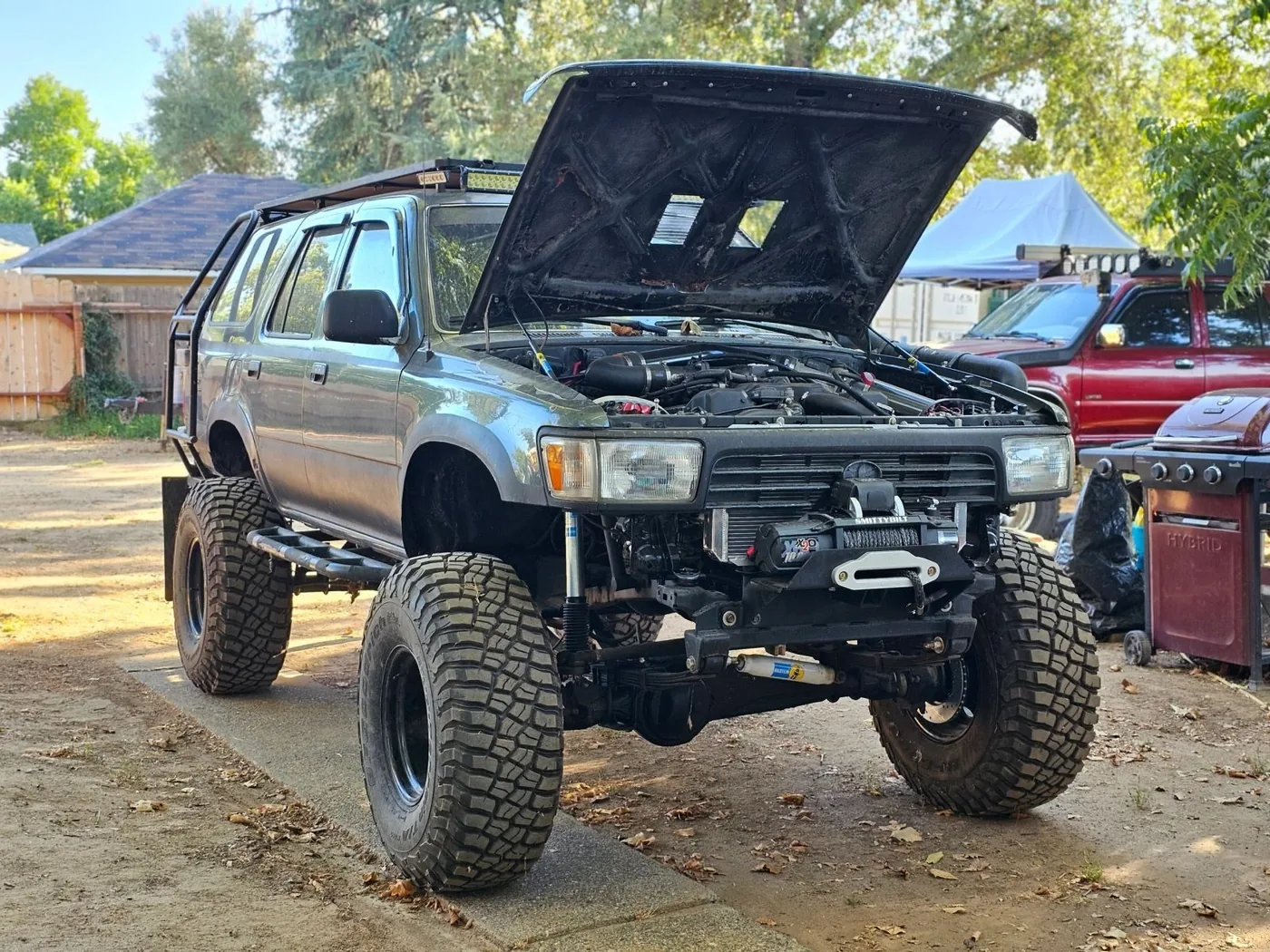
Straight answer: on a completely stock 2nd gen 4Runner (1990–1995), the practical maximum is a 31x10.50R15 — and even that may lightly rub the front mud flaps or fender liner at full steering lock. The truly zero-rub ceiling on stock suspension is a 30x9.50R15 or the metric 265/75R15. Factory size, for reference, is 225/75R15.
Why 31s Are the Stock Limit
The limiting spots are the front wheel wells: the forward fender liner and mud flap area at full lock, and the torsion bar/lower control arm zone under compression. A 31x10.50 fills the well almost completely — most trucks live happily with them after trimming the mud flaps, but a heavy wheel offset or aggressive tread can turn 'almost' into a rub. Wheel spec matters too: stock-ish backspacing on a 15x7 or 15x8 keeps a 31 out of the suspension; a wrong-offset wheel can create rubbing that the tire size alone wouldn't.
Want 33s? That's a Lift Conversation
The popular 33-inch range (33x10.50 or 285/75R16) needs roughly 3 inches of lift plus minor trimming to work properly — which is exactly what our complete 3" lift kit is built for. Our lift and tire-fitment guide covers the full size-by-size breakdown, and our no-rub tire guide lists specific tires owners run successfully at each level.
The Honest Recommendation
If you're staying stock: a quality 30x9.50 or 265/75R15 all-terrain gives you a taller, more capable tire with zero drama and no speedometer correction worth worrying about. If you want to fill the wells: 31x10.50R15, trim the flaps, and accept possible faint rub at full lock. If you're dreaming of 33s: lift it and do it right — stuffing oversized tires on stock suspension costs you turning radius, rubs through liners, and wears out your already-tired front end faster.
The Numbers, Plainly
Factory rubber on these trucks was in the 30-inch neighborhood, and the wheel wells were cut with a little grace. That grace is why the community consensus lands where it does: a 30x9.5 fits a stock 2nd gen with essentially zero drama, and a 31x10.5 is the honest maximum for most trucks — with the caveat that wheel offset and backspacing decide whether you hear an occasional kiss at full lock or nothing at all. Aftermarket wheels with less backspacing push the tire outward and change the whole rubbing conversation.
Where trucks rub at the 31 mark, it’s predictable: the front lower valance and mud flap area at full steering lock, and occasionally the rear inner arch under full compression with a loaded truck. Many owners run 31s for years and never trim a thing; some do a five-minute flap adjustment and forget about it.
Reading Your Own Truck
Thirty-year-old suspensions muddy the rules. If your rear springs have sagged, the axle sits closer to the arch than the factory intended, and a tire that clears a healthy truck will scuff yours. Check ride height honestly before blaming the tire size — a saggy 4Runner on 31s rubs where a healthy one doesn’t.
And 33s? On a stock-height truck, that’s a no. Clearing 33s properly is exactly what a complete 3" lift is for — springs, shocks, and the geometry to use the clearance you paid for. Pair the decision with our no-rubbing tire guide and the complete off-road guide and you’ll buy tires once instead of twice.
Quick Questions
Will 33s fit a stock 2nd gen 4Runner?
No — 33s on a stock-height truck rub badly. Clearing 33s properly takes a 3-inch lift with matched springs and shocks, and even then wheel offset matters.
Do 31s rub on a stock 2nd gen 4Runner?
Most trucks run 31x10.5 with little or no rub; the common contact points are the front valance and mud flaps at full steering lock. Aftermarket wheels with less backspacing increase the chance of rubbing.
What tire size came on the 2nd gen 4Runner from the factory?
Factory sizes were in the 30-inch range (like 31x10.5 on some trims and 265/75R15 equivalents), which is why 30-31 inch tires fit so naturally at stock height.