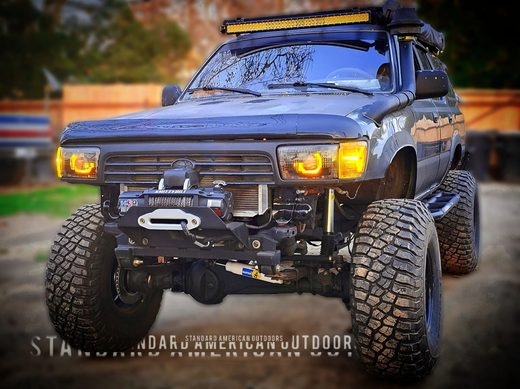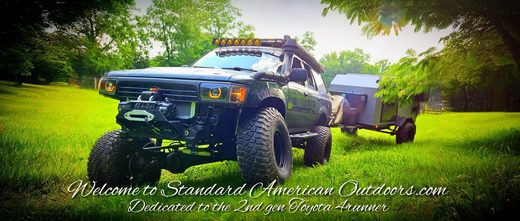
The Ultimate Guide to the 2nd Generation Toyota 4Runner (90-95)
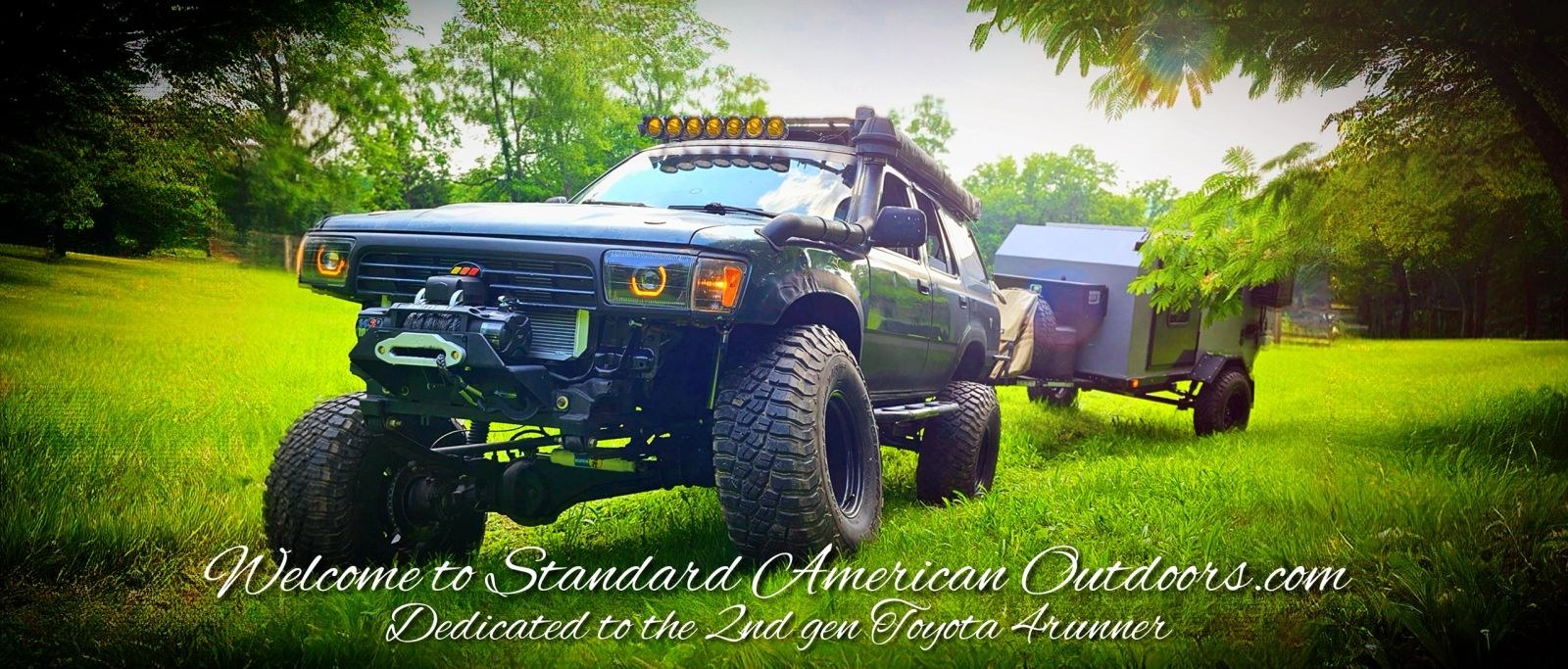
1990-1995 Toyota 4Runner. 95 4runner. 2nd gen 4Runner.
'''The Ultimate Guide to the 2nd Generation Toyota 4Runner (1990-1995): From Stock to LegendIntroduction: More Than an SUV, It's a LegacyIn the vast, sprawling universe of automotive culture, some vehicles are simply transportation. They are appliances, designed to move us from one point to another with as little drama as possible. And then, there are the legends. These are the machines that transcend their mechanical parts, weaving themselves into the fabric of our lives and adventures. They become trusted companions, keys to unlocking the wild places, and rolling testaments to a particular moment in time. The 2nd generation Toyota 4Runner is, without question, a legend.For those who know, you know. To own a 1990-1995 Toyota 4Runner is to be a custodian of a classic, a keeper of a flame from an era when "sport utility vehicle" meant exactly that. It was a time before crossovers blurred the lines, when body-on-frame construction was king, and when a vehicle's toughness was measured not by its infotainment screen size, but by its ability to get you home from the middle of nowhere. The second gen 4Runner is a masterpiece of 90s Japanese engineering—a perfect blend of rugged simplicity, surprising comfort, and timeless, boxy aesthetics.But let's be honest. Keeping a legend alive isn't always easy. These trucks are now a quarter-century old, and with age comes a unique set of challenges and opportunities. The original parts are wearing out, the paint might be fading, and the stock performance—especially from the infamous "3.slow" V6—can feel... well, slow. Yet, for every challenge, there is a vibrant, passionate, and incredibly resourceful community of owners who have found solutions. This is where the real magic of the 2nd gen 4Runner lies: in its almost limitless potential for modification, restoration, and personalization.This is not just another blog post. This is your ultimate, one-stop, comprehensive guide to everything you could ever want to know about the 2nd generation Toyota 4Runner. Whether you are a prospective buyer trying to avoid a rust bucket, a new owner wondering where to start, or a seasoned veteran planning your next major 2nd gen 4Runner modification, this guide is for you. We will cover it all:•A deep dive into the history and soul of the 2nd gen.•An exhaustive buyer's guide to help you find the perfect truck.•A complete breakdown of the infamous 3VZ-E engine and its trusty 22R-E sibling.•The ultimate guide to suspension lifts, from budget-friendly to hardcore rock crawling.•A masterclass in performance upgrades, engine swaps, and armor.•And, of course, how to solve the single biggest complaint: the criminally dim factory headlights.Here at Standard American Outdoors, we don't just sell parts. We live and breathe the 2nd gen 4Runner. This guide is our love letter to this incredible platform, a compilation of decades of collective knowledge, trail-tested wisdom, and late-night garage sessions. So grab a cold drink, settle in, and get ready to become an expert. Your journey to building the ultimate classic Toyota 4Runner starts now.Part 1: The Making of a Legend - A History of the 2nd Gen 4RunnerTo truly understand the soul of the 2nd gen 4Runner, you have to understand where it came from. It wasn't born in a focus group or designed by a committee obsessed with aerodynamics. It was forged from the DNA of one of the toughest vehicles ever made: the Toyota Hilux pickup.From Pickup Truck to Trail BlazerThe story begins in the early 1980s. Toyota, noticing that owners were putting camper shells on their small, indestructible Hilux pickups to create makeshift adventure vehicles, had a brilliant idea. They partnered with an RV company called Winnebago to create the "Trekker," which was essentially a Hilux with a custom fiberglass rear section that included seats and windows. It was a hit. This success gave Toyota the confidence to bring the concept in-house, and in 1984, the 1st generation 4Runner was born. It was, for all intents and purposes, a Hilux with a removable fiberglass top. It was raw, simple, and an absolute beast off-road.The 2nd Gen: Growing Up Without Selling OutAs the 80s gave way to the 90s, the SUV market exploded. Families wanted vehicles that could handle the daily commute in comfort but still offered the promise of weekend adventure. Toyota's answer was the 1990 Toyota 4Runner, the first model of the second generation. This was a massive leap forward. The most significant change was the move to a fully integrated, all-steel body. The removable top was gone, replaced by a solid roof and, for the first time, the option of four doors. This was the move that took the 4Runner from a niche off-road toy to a true, family-friendly SUV.However, Toyota's engineers were careful not to sacrifice the vehicle's legendary toughness. The 2nd gen 4Runner was still built on the same rugged body-on-frame chassis as the Hilux. While the front retained the independent front suspension (IFS) for better on-road manners, the rear suspension was completely redesigned. The harsh leaf springs of the 1st gen were replaced with a more sophisticated coil-spring setup. This was a game-changer, providing a much smoother and more comfortable ride on pavement without giving up the articulation and capability that enthusiasts demanded on the trail. It was the perfect compromise, and it defined the dual-purpose character of the 4Runner for decades to come.Feature1st Gen 4Runner (1984-1989)2nd Gen 4Runner (1990-1995)Body Style2-Door with Removable Fiberglass TopIntegrated Steel Body, 2-Door or 4-DoorRear SuspensionLeaf SpringsCoil SpringsEngine Options22R (Carbureted), 22R-E (EFI), 3VZ-E (V6, late models)22R-E (EFI), 3VZ-E (V6)Primary FocusUtilitarian Off-RoaderDual-Purpose (On-Road Comfort & Off-Road Capability)Why We Still Love It: The Enduring AppealDecades later, the second gen 4Runner has a cult-like following. Why? What makes these classic SUVs so special?•The Perfect Size: In a world of bloated, oversized SUVs, the 2nd gen feels refreshingly compact and nimble. It can squeeze down tight trails and navigate crowded parking lots with an ease that modern vehicles can only dream of.•Analog Soul: Driving a 2nd gen is a tactile experience. You feel the road, you hear the engine, you are connected to the machine. There are no intrusive electronics or driver aids—just you, the engine, and the trail. It's honest.•Built to Last: These trucks hail from the golden era of Toyota's "over-engineering." With basic maintenance, the chassis, drivetrain, and body can last for hundreds of thousands of miles. They are a testament to a time when things were built to be repaired, not replaced.•A Blank Canvas: The simplicity of the 2nd gen makes it an incredibly easy and rewarding platform to work on and modify. The aftermarket support is massive, and the community is always willing to share knowledge. It's the perfect project vehicle.This unique blend of history, capability, and community is what makes the 1990-1995 Toyota 4Runner a true legend. It's a platform that has earned its place in the off-road hall of fame, and it's a legacy that we at Standard American Outdoors are proud to support and continue. '''Part 2: The Hunt - Your Ultimate 2nd Gen 4Runner Buyer's GuideSo, you've been bitten by the bug. You've seen the classic boxy lines, imagined yourself on a remote trail, and decided you need a 2nd gen 4Runner in your life. Congratulations! You're about to enter one of the most rewarding and passionate communities in the automotive world. But before you drain your bank account on the first shiny rig you find on Craigslist, we need to have a serious talk. Buying a 25-year-old vehicle is a hunt, and you need to go in armed with knowledge, or you risk becoming the prey.This is not just a checklist. This is your battle plan. This is the culmination of decades of community wisdom, learned the hard way through busted knuckles, empty wallets, and heartbreaking discoveries. We'll teach you how to spot a gem, how to walk away from a disaster, and how to find the perfect platform for your future adventures. This is the ultimate 2nd gen 4Runner buyer's guide.The Golden Rule: Thou Shalt Fear The RustLet's get this out of the way first, because it is the single most important factor. I'll say it again: RUST IS THE ENEMY. A blown engine can be replaced. A bad transmission can be rebuilt. But a rotten frame is a death sentence. These trucks were built with legendary mechanicals, but their rust-proofing was, unfortunately, not as robust. A 4Runner rust issue is the #1 deal-breaker.Where to Look:•The Frame is Everything: Get under the truck with a good flashlight and a hammer or a screwdriver with a solid handle. Start at the front and work your way back. Pay special attention to the area around the rear suspension mounts, the crossmember under the transmission, and the inside of the frame rails. Tap the frame firmly. You should hear a solid, metallic ping. If you hear a dull thud, or if your tool makes a hole, walk away. I don't care if the truck is free. Walk. Away.•Beware the Fresh Undercoating: Is the underside of the truck covered in a thick, fresh layer of black undercoating? Be very suspicious. This is a classic move to hide a rusty frame. Poke and prod at it. It could be hiding a horror show of rot.•Body Rust Hotspots: Check the wheel wells, especially the rear. Pull back the carpet in the cargo area and look at the seams. Check the bottom of the doors and the tailgate. Surface rust is treatable, but large holes or bubbling paint are signs of a deeper problem.If you live in the rust belt, your hunt will be harder. It may be worth the cost of a plane ticket to buy a clean, rust-free truck from the Southwest and drive it home. It's that important.The Heart of the Beast: 22R-E vs. 3VZ-EThe 2nd gen 4Runner came with two main engine options. This is a hugely important choice that will define your ownership experience.The Indestructible Four-Cylinder: 2.4L 22R-E•The Good: The 22R-E is, without exaggeration, one of the most reliable engines ever made. It's a simple, iron-block, single-overhead-cam workhorse. With basic maintenance, it's not uncommon to see these engines go for 300,000, 400,000, or even 500,000 miles. They are non-interference engines, meaning if the timing chain breaks, the pistons won't smash into the valves, saving you from a catastrophic failure.•The Bad: It's slow. With only about 112 horsepower, a 22R-E 4Runner is not going to win any drag races. It can struggle to maintain highway speeds on steep grades, especially with larger tires. But it will always get you there.The Controversial V6: 3.0L 3VZ-E (The "3.slow")•The Good: The 3VZ-E is smoother and quieter than the 22R-E. It produces 150 horsepower, and while it's no rocket ship (earning it the affectionate nickname "3.slow"), that extra power is noticeable, especially when merging or climbing hills.•The Bad: The Head Gasket. This is the big one. The 3VZ-E has a well-documented design flaw with its exhaust crossover pipe, which runs from the driver's side exhaust manifold, over the back of the engine, to the passenger side. This design roasts the #6 cylinder, leading to premature head gasket failure. Toyota issued a recall for this, but many trucks on the road today may still have the original design. A 3VZ engine problem is a common and potentially expensive issue.How to Check for Head Gasket Issues:1.Check the Coolant: Is it milky or oily? Bad sign.2.Check the Oil: Is the oil cap milky? Bad sign.3.Look for White Smoke: Does the exhaust produce sweet-smelling white smoke, especially on startup? Very bad sign.4.Ask for Records: The best-case scenario is a seller who has receipts for a head gasket job done by a reputable shop. Even better, they may have installed headers, which eliminates the problematic crossover pipe design—a common 3VZ crossover delete modification.Verdict: If your priority is absolute, bomb-proof reliability and simplicity, find a 22R-E. If you want a bit more power and are willing to accept the risk (or find a truck where the head gasket has already been properly addressed), the 3VZ-E is a fine engine.The Drivetrain: Getting the Power Down•Transmission: Both automatic and manual transmissions were offered. The 5-speed manual is generally considered more reliable, more engaging to drive, and better for off-roading. The automatic is also a stout unit (the A340H), but it can sap some of the engine's already limited power.•4WD System: The 4WD system is legendary. It's a robust, gear-driven transfer case. During your test drive, make sure you can shift it from 2H to 4H and 4L. The light on the dash should illuminate. If it's hard to shift, it may just be that the previous owner never used it. Sometimes shifting while rolling slowly can help engage it.Suspension, Steering, and Brakes: The Ride and the Stop•Suspension: The stock suspension will likely be worn out. Expect to invest in a new set of shocks at a minimum. This is also the perfect opportunity for a 2nd gen 4Runner lift kit. Look for leaking shocks, cracked bushings, and sagging rear coil springs. A slight "saggy butt" is a common trait.•Steering: Check for excessive play in the steering wheel. The idler arm is a common wear item on the IFS steering system. Have a friend turn the wheel back and forth while you look at the steering components underneath. Any clunking or excessive movement needs to be addressed.•Brakes: Test the brakes. Do they feel spongy? Does the truck pull to one side? Brake work is relatively easy and inexpensive, but it's a good bargaining chip.The Ultimate Pre-Purchase Inspection ChecklistPrint this out. Take it with you. Be methodical. Don't let a friendly seller or a shiny paint job distract you.CategoryWhat to CheckRed FlagsFrame & BodyTap the entire frame with a hammer.Dull thuds, flaking, or holes. WALK AWAY.Inspect rear suspension mounts, inside frame rails.Any signs of patching or fresh undercoating hiding rust.Check wheel wells, door bottoms, tailgate for rust.Bubbling paint, visible holes.Engine (3VZ-E)Ask for head gasket service records.No records, seller is vague about it.Check coolant for oil, oil for coolant (milky).Milky fluids, sweet-smelling exhaust smoke.Listen for ticking or knocking sounds.Loud valve tick could mean it needs a valve adjustment.Engine (22R-E)Listen for timing chain rattle on cold start.A loud rattle that goes away after a few seconds means the chain guides are likely broken.DrivetrainTest drive both on and off-road if possible.Clunking from differentials, grinding from transmission.Engage 4H and 4L.Failure to engage, flashing 4WD light.Check for leaks from transmission, transfer case, diffs.Any significant drips are cause for concern.SuspensionPush down on each corner. Does it bounce excessively?Worn-out shocks.Look at all rubber bushings for cracks.Cracked bushings will lead to a sloppy ride and clunking.Check for "saggy butt" in the rear.Rear coil springs are likely worn out.InteriorCheck that all windows and locks work (rear window!).The rear power window is notoriously finicky.Test the A/C and heater.A/C repairs can be expensive.Look for water stains on the headliner or carpet.Sign of a leaking seal or sunroof.ElectricalTest all lights, including headlights.This is your chance to pitch a Standard American Outdoors upgrade!Check for any warning lights on the dash.ABS light is a common issue.Armed with this knowledge, you are no longer just a buyer; you are an inspector. You are ready to hunt for your legend. In the next section, we'll dive into what to do once you've brought your new prize home: the ultimate guide to 2nd gen 4Runner modifications.'''Part 3: The Transformation - Your Ultimate 2nd Gen 4Runner Modification GuideYou did it. You hunted, you inspected, and you brought home your very own piece of 90s Toyota legend. The garage smells faintly of old vinyl and adventure. The key feels right in your hand. Now, the real fun begins. The 2nd generation Toyota 4Runner is a good truck from the factory, but with the right modifications, it can be transformed into an unstoppable, trail-conquering beast that will leave modern SUVs in its dust. This is where you personalize your rig, where you build it to match your specific needs and dreams.Welcome to the ultimate 2nd gen 4Runner modification guide. We're going to cover everything from the essential first mods to the hardcore upgrades that will turn your truck into a legend. This is your roadmap to building the 4Runner of your dreams.The Holy Trinity: Lift, Tires, and ArmorThese are the foundational mods, the trifecta of off-road capability. This is where most builds start, and for good reason. They provide the most significant and immediate improvement in trail performance.1. Suspension Lifts: Reaching for the SkyA 2nd gen 4Runner lift kit is about more than just looks; it's about ground clearance and fitting larger tires. Ground clearance is what keeps the vulnerable belly of your truck from getting hung up on rocks and ruts. There are a few common ways to lift these trucks:Lift MethodFront LiftRear LiftCostProsConsBall Joint Spacers (BJS)1.5" - 2.5"Longer Coil Springs$Inexpensive, easy to install.Limited lift height, can increase wear on ball joints.Torsion Bar Crank1" - 1.5"Longer Coil Springs$Free (if done yourself), simple.Harsher ride, limited lift, wears out CV axles faster.Bracket Lift4" - 5"Taller Springs & Spacers$$$Significant lift, maintains factory ride.More complex installation, expensive, not ideal for hardcore rock crawling.Solid Axle Swap (SAS)N/A (Replaces IFS)Matching Leaf Springs$$$$The ultimate in durability and articulation.Very expensive, requires extensive fabrication, changes on-road handling.The Verdict: For most people, a combination of ball joint spacers in the front and new, longer coil springs in the rear is the sweet spot. It provides enough lift (around 2-3 inches) to fit larger tires and dramatically improve ground clearance, without breaking the bank or sacrificing too much on-road comfort. A 2nd gen 4Runner SAS is the holy grail for dedicated rock crawlers, but it's a massive undertaking.2. Tires: The Right Rubber for the Road (and Rocks)Tires are the single most important upgrade for off-road traction. Once you have a lift, you can fit bigger, more aggressive tires. The stock tires are typically around 29-30 inches tall. With a 2-3" lift, you can comfortably fit 33-inch tires, which is the sweet spot for a dual-purpose rig. This gives you a huge boost in ground clearance and traction.•All-Terrain (A/T): The best choice for a daily driver that sees weekend trail duty. They are quiet on the road but have enough void space in the tread to handle dirt, gravel, and light mud. (e.g., BFGoodrich KO2, Falken Wildpeak A/T3W).•Mud-Terrain (M/T): For the dedicated off-roader. These have massive tread blocks and are designed to churn through deep mud and grip onto rocks. They are noisy and wear faster on the pavement. (e.g., Cooper STT Pro, Nitto Trail Grappler).3. Armor: Protecting Your InvestmentOnce you're on the trail, you're going to hit things. It's inevitable. Armor is the insurance policy that lets you push your truck's limits without causing catastrophic damage.•Rock Sliders: This is the most critical piece of armor. They are heavy-duty steel rails that bolt to the frame of your truck, running underneath your doors. They protect your rocker panels—a very vulnerable and expensive part of the body to fix—from being crushed on rocks. They also serve as a handy step to get into your lifted rig.•Bumpers: A steel 2nd gen 4Runner bumper is a massive upgrade. The front bumper improves your approach angle (letting you get up and over obstacles more easily), provides a solid place to mount a winch, and offers far more protection than the flimsy stock bumper. A rear bumper can improve your departure angle and often comes with integrated features like a swing-out tire carrier (to get that heavy spare off the stock location) and recovery points.•Skid Plates: These are steel plates that protect the vital organs on the underside of your truck, like the engine's oil pan, the transmission, and the transfer case.Performance Upgrades: Waking Up the BeastLet's be real, the 2nd gen 4Runner is not a race car. But there are things you can do to improve its performance, reliability, and efficiency.Engine Mods: More Power, More Reliability•For the 3VZ-E:•Crossover Delete / Headers: This is the #1 mod for any 3VZ-E owner. Replacing the stock exhaust manifolds and the problematic crossover pipe with a set of aftermarket headers solves the head gasket issue at its source. It also allows the engine to breathe better, freeing up a few much-needed horsepower.•Intake and Exhaust: A good cat-back exhaust system and a deckplate mod on the airbox can help the engine breathe a little easier.•For the 22R-E:•Headers and Exhaust: Just like the V6, the 22R-E benefits greatly from a better-flowing exhaust.•Timing Chain: When you buy a 22R-E, plan on replacing the timing chain and, crucially, the plastic guides. Upgrading to metal-backed guides from a company like LCE Performance is a cheap and effective way to ensure long-term reliability.The Ultimate Upgrade: The Engine SwapFor those who are truly tired of the "3.slow," a 2nd gen 4Runner engine swap is the ultimate solution. This is a major undertaking, but the results can be spectacular.•The 3.4L 5VZ-FE: This is the most popular and well-documented swap. The 5VZ-FE is the engine from the 3rd generation 4Runner. It's a huge upgrade in both power (183 hp) and reliability. It's a modern, efficient engine that transforms the 2nd gen into the truck it always should have been.•Other Options: More adventurous swappers have fitted everything from small-block Chevy V8s to Toyota's own 1UZ-FE V8 from the Lexus LS400.Lighting Upgrades: Banishing the DarknessIf there is one universal complaint that unites all 2nd gen 4Runner owners, it is the abysmal quality of the factory headlights. The stock halogen bulbs in their 25-year-old housings are dangerously dim, casting a pathetic, yellowish glow that makes nighttime driving a genuinely stressful experience. In the world of essential 2nd gen 4Runner modifications, upgrading your headlights is not just a cosmetic choice; it is a fundamental safety requirement.This is where we at Standard American Outdoors come in. We were born from this exact frustration. As passionate 2nd gen owners ourselves, we got tired of the terrible options on the market—either stick with the stock candles or gamble on cheap, illegal, and blindingly dangerous aftermarket kits. We knew there had to be a better way. So we engineered it.Our Sinister, Everest, and Atom headlights are the ultimate solution. They are not just brighter bulbs; they are complete, DOT-approved, hand-built 2nd gen 4Runner projector headlight systems designed to deliver modern performance with a classic look.•The Power of the Projector: Unlike a simple reflector, a projector uses a lens and a cutoff shield to focus the light into a wide, flat, and intensely bright beam with a razor-sharp cutoff. This means you put all of the light on the road where you need it, without blinding oncoming drivers. It's the technology used in modern luxury cars, adapted for your classic 4Runner.•The Sinister: Our bestseller. A full blackout housing with a signature amber "angel eye" DRL. It's an aggressive, modern look that perfectly complements a rugged off-road build.•The Everest: For a cleaner, more refined OEM+ look. It features a Titanium or Chrome housing with a crisp white DRL. It's class and performance, combined.•The Atom: The pinnacle of power. With a staggering 92 watts of output and a distinctive twin-halo DRL, the Atom is for the owner who demands the absolute best and most powerful lighting system on the market.Investing in a set of SAO headlights is one of the most satisfying and impactful mods you will ever make. It transforms the nighttime driving experience from one of fear to one of absolute confidence. It's a safety upgrade, a cosmetic upgrade, and a value-adding upgrade, all in one.The Finishing Touches: Interior, Recovery, and More•Interior: Don't neglect the inside! A new 4Runner stereo upgrade, some comfortable seat covers, and a set of all-weather floor mats can make your daily drives much more enjoyable.•Recovery Gear: If you're going off-road, you need a recovery plan. A good winch mounted to your steel front bumper, a set of recovery straps, and some traction boards are essential pieces of kit.•Communications: A simple CB radio or a more modern GMRS radio is crucial for staying in touch with your group when you're out on the trail and cell service is a distant memory.Building a 2nd gen 4Runner is a journey, not a destination. It's a process of slowly and methodically turning a classic truck into a machine that is a true reflection of you. In the next section, we'll cover the nitty-gritty of keeping your legend alive: a complete guide to maintenance and repairs. '''Part 4: Keeping the Legend Alive - The Ultimate 2nd Gen 4Runner Maintenance and Repair GuideYour 2nd gen 4Runner is more than just a truck; it's a relationship. And like any good relationship, it requires commitment, attention, and a little bit of grease under your fingernails. These vehicles were built to be worked on, to be maintained, and to last for generations. While their mechanical soul is famously reliable, they are not magical. They are 25-year-old machines that have lived a full life, and they depend on you to keep them running strong.Forget the dealership. This is the era of the empowered owner. This section is your complete guide to 2nd gen 4Runner maintenance and repair. We'll cover the essential service intervals, how to diagnose and fix the most 2nd gen 4Runner common problems, and the tips and tricks that will keep your classic Toyota on the road and on the trail for decades to come. Roll up your sleeves, grab your toolbox, and let's get to work.The Rhythm of Reliability: Your Maintenance ScheduleRoutine maintenance is the cheapest insurance you can buy. Sticking to a schedule will prevent small issues from becoming catastrophic failures and will give you an intimate understanding of your vehicle's health. Here is a simple, effective schedule to follow.IntervalService ItemWhy It's CriticalEvery 3,000-5,000 MilesEngine Oil and Filter ChangeThis is the lifeblood of your engine. Clean oil lubricates, cools, and cleans internal components. Don't skip it.Grease Driveshafts & U-JointsThe U-joints on your front and rear driveshafts have grease fittings (zerks). A few pumps of grease keep them lubricated and prevent failure.Inspect Air FilterA clean air filter helps your engine breathe. In dusty off-road conditions, check it after every trip.Every 15,000 MilesRotate TiresEnsures even tire wear, extending the life of your expensive off-road rubber.Inspect Brake Pads/ShoesCheck for wear. Don't wait until you hear grinding.Change Front/Rear Differential FluidThe gears in your differentials work hard. Fresh gear oil is essential, especially after water crossings.Change Transfer Case FluidSame as above. The T-case is the heart of your 4WD system.Every 30,000 MilesChange Transmission FluidWhether you have an automatic or a manual, fresh fluid is key to a long transmission life.Replace Fuel FilterA clogged fuel filter can starve the engine of fuel, causing poor performance and hesitation.Replace Spark Plugs & WiresEssential for a strong spark, good fuel economy, and smooth running.Flush Cooling SystemOld coolant can become acidic and cause corrosion. A full flush and fill is cheap insurance against overheating.Every 60,000-90,000 MilesReplace Timing Belt (3VZ-E V6)CRITICAL. The 3VZ-E is an interference engine. If the timing belt breaks, the pistons will destroy the valves, resulting in catastrophic engine failure. This is a non-negotiable, preventative repair.Replace Timing Chain (22R-E 4-Cyl)The 22R-E has a chain, not a belt. While it doesn't have a set interval, listen for a rattle on cold starts. This indicates the plastic guides have broken, and it's time for a new chain and metal-backed guides.Diagnosing the Gremlins: Solving Common 2nd Gen ProblemsEvery classic vehicle has its quirks. Knowing what to look for can turn a potential disaster into a manageable weekend project.The 3VZ-E Head Gasket SagaWe covered this in the buyer's guide, but it's worth repeating. If you own a 3.0L V6, you must be vigilant. The root cause is the exhaust crossover pipe cooking the #6 cylinder.•The Symptoms: Unexplained coolant loss, white and sweet-smelling exhaust smoke, milky oil, or overheating.•The Permanent Fix: Don't just replace the gasket. You must address the cause. Install a set of aftermarket headers to eliminate the crossover pipe. This is the only way to ensure the problem never comes back. While you're in there, use high-quality head gaskets and new head bolts. It's a big job, but it will make your 3VZ-E vastly more reliable.The Infamous Rear Power WindowAh, the 2nd gen 4Runner rear window. A brilliant feature when it works, and a source of endless frustration when it doesn't.•The Problem: The window goes up or down slowly, gets stuck, or doesn't work at all. The culprit is often a worn-out motor, bad wiring in the tailgate, or a faulty switch.•The Fix:1.Check the Simple Stuff First: The window has a safety feature that prevents it from rolling up if the rear wiper isn't fully parked. Make sure the wiper is in its proper place. Also, check the window lock switch on the driver's door.2.The Key Switch: Try the key switch on the tailgate itself. If that works but the console switch doesn't, you have a switch or wiring issue.3.Motor and Regulator: If it's slow or makes grinding noises, the motor is likely dying. You'll need to open up the tailgate panel to access and replace the motor and regulator assembly. It's a bit tedious, but very doable.Saggy Butt Syndrome (SBS)Over time, the rear coil springs get tired and begin to sag. This is especially true if the vehicle was used for towing or carrying heavy loads.•The Problem: The rear of the truck sits noticeably lower than the front.•The Fix: New rear coil springs. This is a relatively easy DIY job. You can replace them with stock-height springs or use this as the perfect excuse to install a lift kit with longer, stronger coils.The Lazy Idler ArmThe IFS steering on these trucks has a pivot point called an idler arm, which is a known weak link and wear item.•The Problem: Vague, sloppy steering. A feeling of•The Problem: Vague, sloppy steering. A feeling of wandering on the highway. You may also hear a clunk when turning.•The Fix: Replace the idler arm. While you can replace it with another stock unit, the best solution is to upgrade to a heavy-duty aftermarket idler arm that includes a bronze bushing. This is a much more durable design that will last far longer and provide a more solid steering feel. Companies like Total Chaos or Blazeland offer excellent options.The Stubborn ABS LightThe early ABS systems on these trucks were not the most reliable. It is very common to see the ABS warning light illuminated on the dash.•The Problem: The ABS light is on, indicating the anti-lock braking system is disabled. (Your normal brakes will still work).•The Fix: Diagnosing the exact cause can be tricky. It often involves checking wheel speed sensors for damage or contamination. Honestly, many owners simply learn to live with it or pull the ABS fuse to turn the light off. Unless you are committed to a full factory restoration, this is often considered a low-priority issue.The DIY Spirit: Tools and ResourcesWorking on your 2nd gen 4Runner is incredibly rewarding. Here’s what you need to get started:•A Good Metric Tool Set: You can do 90% of the work on these trucks with a basic set of metric sockets, wrenches, and screwdrivers.•The Factory Service Manual (FSM): This is your bible. The FSM provides detailed, step-by-step instructions for virtually every repair imaginable. You can find digital copies online through forums and community resources. A 2nd gen 4Runner service manual is the single best tool you can own.•The Community: You are not alone. Websites like T4R.org, YotaTech, and various Facebook groups are invaluable resources. If you have a problem, chances are someone else has already solved it and written a detailed guide. Don’t be afraid to ask questions.Taking ownership of your vehicle's maintenance is the final step in becoming a true enthusiast. It builds confidence, saves you an immense amount of money, and forges a bond between you and your machine that you can't get any other way. Your classic Toyota 4Runner will thank you for it with years of unwavering reliability.Conclusion: Your Legend AwaitsWe've been on quite a journey. We've traveled back in time to the birth of a legend, hunted for the perfect specimen, explored a universe of modifications, and gotten our hands dirty with maintenance and repairs. You are now armed with the knowledge to not just own a 2nd generation Toyota 4Runner, but to become a true master of the platform.This vehicle is more than just a classic SUV. It's a key. It's a key that unlocks remote campsites, breathtaking vistas, and challenging trails. It's a key that unlocks a vibrant and welcoming community of fellow adventurers. It's a key that unlocks a deeper, more tangible relationship with the machine that carries you on your journeys.Whether your dream is to build a hardcore rock crawler, a self-sufficient overlanding rig, or simply a beautifully restored classic that turns heads at the local coffee shop, the 1990-1995 Toyota 4Runner is the perfect canvas. It's a platform that rewards hard work, creativity, and a spirit of adventure.Here at Standard American Outdoors, our passion for these incredible trucks is at the core of everything we do. Our industry-leading Sinister, Everest, and Atom projector headlights were born from our own desire to make our 2nd gens safer, more capable, and more beautiful. We are not just a company; we are part of the community. We are proud to be a part of your journey, and we are committed to providing you with the highest quality, trail-tested parts to help you build the 4Runner of your dreams.Your legend awaits. It's waiting in your garage, covered in a fine layer of dust and possibility. It's waiting for the next turn of the wrench, the next trail to be conquered, the next sunset to be chased. Go build it. Go drive it. Go live it.