The Ultimate Guide to 2nd Generation Toyota 4Runner LED Headlight
Restoring Sight to a Legend
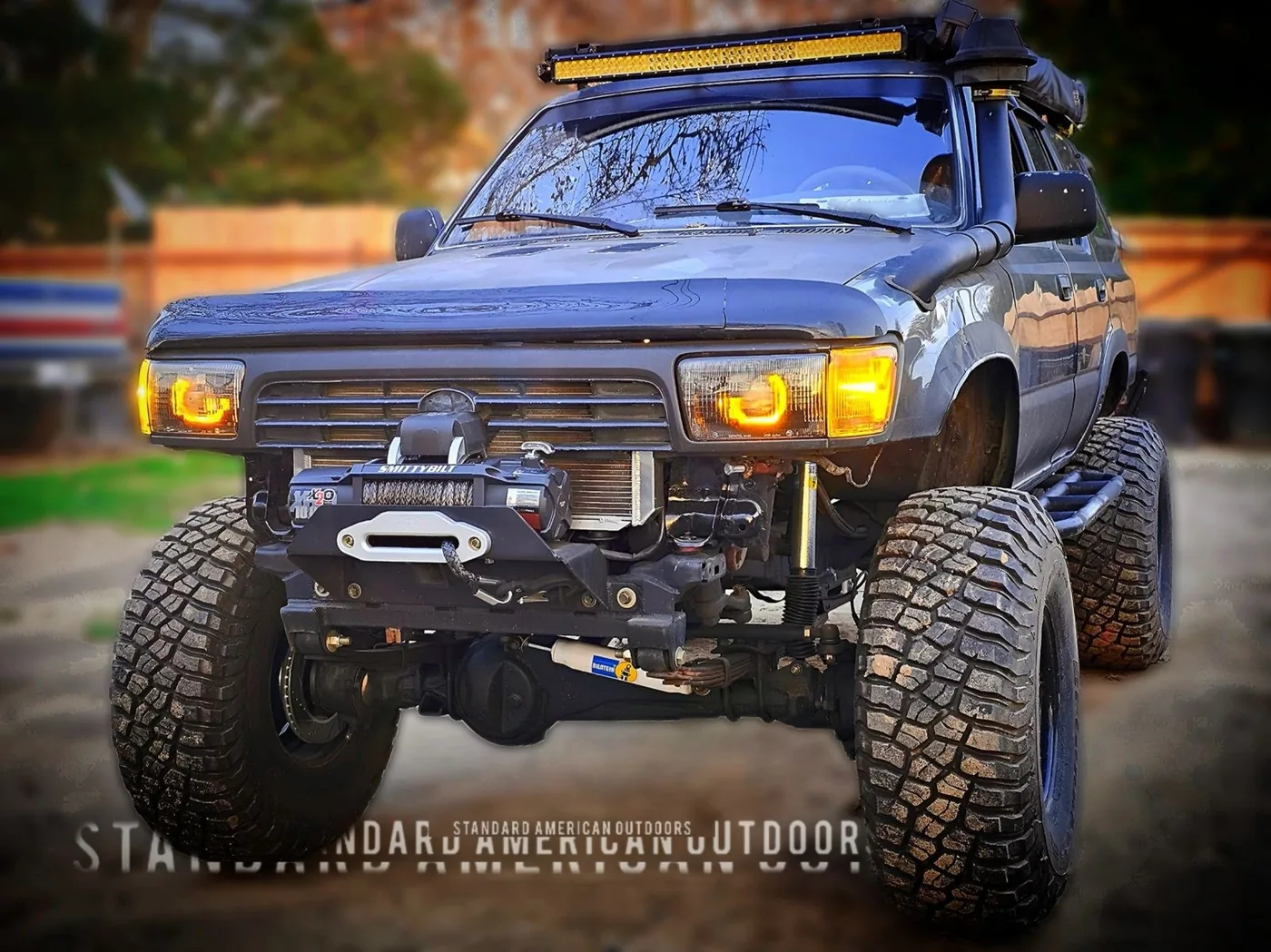
The 2nd generation Toyota 4Runner is more than just an SUV; it is a rolling testament to the golden age of Japanese automotive engineering. Forged from the same DNA as the indestructible Hilux pickup, the 1990-1995 4Runner represents a perfect blend of rugged simplicity, surprising comfort, and timeless, boxy aesthetics. It is a vehicle that has earned a cult-like following for its unwavering reliability and its ability to conquer both the urban jungle and the most remote trails with equal aplomb. For many, it is the definitive 4x4, a trusted companion that has woven itself into the fabric of countless adventures. But even legends have their weaknesses, and for the 2nd gen 4Runner, its Achilles' heel has always been its criminally dim factory headlights. If you are a proud owner of one of these iconic vehicles, you know the struggle all too well. The stock headlights, whether the early sealed beams or the later halogen composites, cast a feeble, yellowish glow that does little to inspire confidence on a dark, winding road. This single flaw not only detracts from the driving experience but also poses a significant safety risk, turning nighttime excursions into a nerve-wracking ordeal. For too long, the dedicated community of 2nd gen 4Runner enthusiasts has been left in the dark, with no high-quality, plug-and-play lighting solutions to match the vehicle's legendary status. That is, until now. At Standard American Outdoors, we are not just another retailer of Toyota 4Runner parts. We are passionate owners and enthusiasts, and we have made it our mission to solve the most significant problems facing the 2nd gen 4Runner community. We are proud to introduce the definitive solution to the platform's lighting woes: the Sinister, Everest, and Atom LED headlights. This is not just another incremental upgrade; it is a revolution in visibility, safety, and style, designed exclusively for the 1990-1995 Toyota 4Runner.
This comprehensive guide will serve as your ultimate resource for transforming your 4Runner's lighting performance. We will delve into the history of the stock headlight systems, explore the cutting-edge technology behind modern LED lighting, and provide an in-depth look at our three distinct headlight models. Whether you are a new owner wondering where to start or a seasoned veteran planning your next major modification, this guide will provide you with all the information you need to make an informed decision and finally give your legendary 4Runner the vision it was always meant to have. It is time to step out of the darkness and into the light. It is time for a 4Runner LED headlight revolution.
The Achilles' Heel of a Legend: A Deep Dive into the Failures of Stock 2nd Gen 4Runner Headlights
To truly appreciate the revolutionary leap in performance that modern LED headlights offer, it is essential to first understand the severe limitations of the factory-installed lighting on the 2nd generation Toyota 4Runner. Toyota, for all its engineering prowess in creating a nearly indestructible vehicle, equipped these trucks with headlight technology that was already becoming obsolete by the 1990s. This has left a legacy of poor visibility and significant safety concerns for owners. The lighting issues are not just a matter of preference; they are a fundamental flaw that compromises the vehicle's usability in low-light conditions. The problem is so pervasive that it has become a universal pain point within the enthusiast community, with countless forum threads and social media posts dedicated to finding a solution for the dim 4runner headlights. The Tale of Two Systems: Sealed Beams and Composite HalogensThe 2nd generation 4Runner's production run from 1990 to 1995 spanned a transitional period in automotive lighting technology. As a result, there are two distinct factory headlight systems that owners will encounter, each with its own set of significant drawbacks. The 1990-1991 Models: Trapped in the Past with Sealed Beam HeadlightsFor the initial two years of its production, the 2nd gen 4Runner was fitted with 7x6 inch rectangular sealed beam headlights. This technology, which dates back to the 1940s, is a relic of a bygone era. A sealed beam unit is exactly what its name implies: the filament, reflector, and lens are all integrated into a single, non-serviceable glass housing. When the filament burns out, the entire headlight unit must be replaced. This design presents a multitude of problems for the modern driver.
Sealed Beam Technology Explained: In a sealed beam headlight, the internal filament heats up and glows, and the light it produces is bounced off a fixed, parabolic reflector and out through the glass lens. The entire unit is hermetically sealed to prevent moisture and dust from entering, which was an advantage in its time. However, this design offers no opportunity for upgrade or repair, locking the vehicle into an outdated and underperforming lighting system. The inherent flaws of sealed beam headlights include:•Pathetic Light Output: By today's standards, the light output from a stock sealed beam is alarmingly low. They produce a dim, yellowish light that struggles to illuminate the road ahead, making it difficult to spot hazards, read signs, or navigate unlit roads with any degree of confidence. This is the root cause of the widespread 4runner poor visibility at night.•No Upgrade Path: The sealed design means you cannot simply swap out the bulb for a brighter, more modern alternative. Your only option is to replace the entire unit with another sealed beam of the same outdated technology, perpetuating the cycle of poor performance.•Poor Beam Control: The simple reflector design does a poor job of controlling the light beam. This results in a significant amount of glare for oncoming drivers and a scattered, unfocused light pattern that fails to concentrate illumination where it is needed most: on the road ahead.•Increased Cost Over Time: While a single sealed beam unit might seem inexpensive, the need to replace the entire unit every time a filament burns out can lead to higher long-term costs compared to modern systems with replaceable bulbs. For owners of 1990-1991 models, the only way to truly escape these limitations is through a complete toyota 4runner sealed beam conversion, a process that involves replacing the entire headlight assembly with a modern housing that can accept a separate, high-performance bulb. This is one of the most common and necessary 2nd gen 4runner mods for early models.
The 1992-1995 Models: A Step Forward, But Still in the Dark with Composite HalogensRecognizing the limitations of sealed beam technology, Toyota updated the 4Runner's front end for the 1992 model year, introducing a more modern composite headlight assembly with a replaceable halogen bulb. These housings, which are specific to the Toyota 4Runner 1992-1995 headlights, were a welcome improvement, but they are still woefully inadequate by modern safety and performance standards. The shortcomings of the 92-95 composite halogen headlights include:•Insufficient Brightness: While brighter than their sealed beam predecessors, the stock halogen bulbs (typically 9004-type) still produce a relatively low lumen output. The light is often described as a dull, warm yellow that lacks the intensity and clarity of modern LED or even HID systems.•Inefficient Reflector Design: The factory reflector housings were designed specifically for the light-emitting characteristics of a halogen filament. When owners attempt to install aftermarket LED or HID bulbs in these housings—a practice known as "plug-and-play" retrofitting—the results are often disastrous. The reflector cannot properly control the light from these different sources, leading to a scattered, uncontrolled beam pattern that creates dangerous levels of glare for other drivers and fails to improve down-road visibility.•Lens Degradation: The plastic composite lenses on these factory headlights are highly susceptible to oxidation and UV damage over time. This results in a hazy, yellowed, or foggy appearance that significantly reduces light output and further degrades the already poor beam pattern. This is a primary cause of 4runner headlight condensation and fogging issues.•Short Bulb Lifespan: Halogen bulbs have a relatively short operational lifespan, typically ranging from 500 to 1,000 hours. This means that owners of daily-driven 4Runners will find themselves replacing headlight bulbs on a regular basis, adding to the vehicle's running costs. These persistent 2nd gen 4runner headlight problems have created a strong demand for a true, engineered solution. Simply replacing the bulb is not enough. A complete 4runner headlight replacement with a modern projector-based system is the only way to truly overcome the inherent design flaws of the factory composite housings.
In the next chapter, we will explore the technology that makes such a dramatic transformation possible. We will leave the dim past behind and step into the brilliant world of modern LED headlight technology, explaining the science behind the superior performance, safety, and style that our headlights bring to the legendary 2nd generation Toyota 4Runner.
The Dawn of a New Era: A Deep Dive into Modern LED Headlight Technology
Leaving the dim, yellow glow of outdated halogen and sealed beam headlights in the past is one of the most impactful upgrades any 2nd generation 4Runner owner can make. To understand why the Sinister, Everest, and Atom headlights represent such a monumental leap forward, it is crucial to grasp the fundamentals of modern LED headlight technology. This is not just about swapping a bulb; it is about adopting a completely new system of illumination that is superior in every measurable way. From brightness and efficiency to durability and safety, LEDs have redefined what is possible for automotive lighting. The Core of the Revolution: What is an LED? At its heart, an LED, or Light-Emitting Diode, is a semiconductor device that emits light when an electric current passes through it. Unlike a traditional halogen bulb, which generates light by heating a fragile tungsten filament until it glows (a process known as incandescence), an LED generates light through a process called electroluminescence. This fundamental difference is the source of all of the LED's advantages.•Efficiency: Incandescent bulbs are incredibly inefficient, wasting up to 90% of their energy as heat. LEDs, on the other hand, convert a much higher percentage of their energy directly into light, making them vastly more efficient.•Durability: The filament in a halogen bulb is extremely fragile and susceptible to damage from vibration and shock—a major concern for a vehicle designed for off-road use like the 4Runner. LEDs are solid-state devices with no fragile filaments to break, making them exceptionally durable and perfectly suited for the rigors of the trail.•Longevity: The heat and filament degradation that limit a halogen bulb's life are non-issues for LEDs. A well-engineered LED headlight can last for 30,000 to 50,000 hours, a lifespan that can potentially outlast the vehicle itself.
The Three-Way Battle: LED vs. Halogen vs. HIDFor decades, drivers had two primary choices for headlights: halogen or High-Intensity Discharge (HID), also known as Xenon. With the maturation of LED technology, the landscape has changed dramatically. Let's break down how these three technologies stack up against each other. FeatureHalogenHID (Xenon)LED (Light-Emitting Diode)Brightness (Lumens)Low (approx. 700-1,200 per bulb)High (approx. 3,000 per bulb)Very High (3,000-10,000+ per system)Lifespan (Hours)Short (500 - 1,000 hours)Moderate (2,000 - 3,000 hours)Extremely Long (30,000 - 50,000+ hours)Energy EfficiencyVery Low (wastes most energy as heat)ModerateVery High (up to 80% more efficient)Color TemperatureWarm Yellow (approx. 3200K)Cool White/Blue (4300K - 6000K)Cool, Natural White (5000K - 6500K)Start-Up TimeInstantSlow (requires several seconds to warm up)InstantDurabilityPoor (fragile filament)Moderate (glass bulb, but no filament)Excellent (solid-state, shock-resistant)CostVery LowModerateHigh (but offset by longevity)Glare PotentialLow (in factory housing)Very High (if improperly retrofitted)Very High (if improperly retrofitted)As the table clearly shows, LED technology is the undisputed champion in nearly every category. It combines the brightness of HID with instant-on performance and adds unparalleled durability and lifespan, making it the ideal choice for a 4Runner headlight upgrade. The Secret to Control: Projector vs. Reflector OpticsPerhaps the most critical concept to understand in modern lighting is the difference between projector and reflector optics. This is the single biggest factor that separates a safe, effective headlight from a dangerous "glare cannon." The factory 1992-1995 4Runner uses a reflector housing, which is simply not designed to handle the light from an LED source.
Reflector Housings: A traditional reflector headlight consists of a bulb placed in front of a large, chrome-plated bowl. The bowl is shaped to collect the light from the bulb and "reflect" it forward. This system is cheap to manufacture but offers very little control over the beam pattern. When a powerful LED bulb is placed in a housing designed for a halogen filament, the light scatters uncontrollably, creating massive glare for oncoming drivers while failing to put the light on the road where it is needed. Projector Housings: A projector headlight is a far more sophisticated optical system. It works like the lens in a slide projector.1. Light Source: An LED chip emits light backwards into a specially shaped elliptical reflector.2.
Reflector: This reflector focuses all of the light to a single, intense focal point.3. Cutoff Shield: At this focal point, a small metal shield physically blocks the upper portion of the light. This is what creates the signature, razor-sharp cutoff line of a projector beam. It is this shield that prevents light from shining into the eyes of oncoming drivers.4. Lens: The light then passes through a convex lens at the front of the housing, which magnifies and projects the controlled beam of light onto the road in a wide, even pattern.
This system provides a level of precision and control that is simply impossible to achieve with a reflector. It is the reason why all Standard American Outdoors headlights are built using high-quality projector optics. We do not sell bulbs; we sell complete, engineered headlight systems that are designed to work together for optimal performance and safety. The Mark of Quality: Why DOT Compliance MattersIn the world of aftermarket lighting, you will often see parts advertised as "for off-road use only." This is frequently a code for "this product is not legal or safe for public roads." The Department of Transportation (DOT) sets strict standards (FMVSS 108) for headlight performance, including brightness, beam pattern, and cutoff, to ensure that they illuminate the road effectively without blinding other drivers. Our commitment to providing DOT approved headlights is a cornerstone of our design philosophy. It is a guarantee that our products have been tested and verified to meet these critical safety standards. Choosing a non-compliant headlight not only puts you at risk of a traffic ticket but also endangers everyone else on the road. By combining the power and efficiency of modern LED chips with the precision of projector optics and the assurance of DOT compliance, we have created a headlight system that finally brings the 2nd generation 4Runner into the 21st century. In the following chapters, we will explore how we have packaged this cutting-edge technology into three distinct models—the Sinister, Everest, and Atom—each offering a unique blend of style and performance to suit the individual needs of every 4Runner owner.
The Standard American Outdoors Solution: Forging a New Vision
In the vast and often impersonal world of aftermarket automotive parts, it is rare to find a company that is truly dedicated to a single, often overlooked, vehicle platform. While larger companies chase the latest models and the biggest markets, the passionate owners of classic vehicles like the 2nd generation Toyota 4Runner are frequently left behind. This is the void that Standard American Outdoors was created to fill. We are not a massive, faceless corporation; we are a company founded by and for die-hard 2nd gen 4Runner enthusiasts. We have spent countless hours on the trail, busted our knuckles in the garage, and experienced firsthand the unique joys and frustrations that come with owning these legendary trucks. A Solution Born from Passion and NecessityFor years, we watched as the owners of newer 4Runners were presented with a dazzling array of high-quality lighting options from premium brands like Morimoto and AlphaRex. Meanwhile, the 2nd gen community was left with a frustratingly limited set of choices: stick with dangerously dim factory lights, gamble on cheap, illegal, and ineffective "plug-and-play" LED bulbs, or attempt a complex and expensive custom retrofit. We saw a clear and pressing need for a better way. The owners of these classic trucks deserved a solution that was modern, safe, effective, and designed specifically for their vehicle. This realization was the genesis of our headlight development program. We identified a critical market gap: a complete lack of high-quality, bolt-in, DOT-compliant projector headlights for the 1990-1995 Toyota 4Runner. We made it our mission to fill that gap, not by reselling generic parts, but by engineering a true, platform-specific solution from the ground up.
Our Core Principles: Quality, Safety, and ValueIn developing the Sinister, Everest, and Atom headlight lines, we were guided by a set of unwavering core principles that define every product we create:•Engineered for the 2nd Gen: Our headlights are not universal parts forced to fit. They are designed and built exclusively for the 1990-1995 4Runner, ensuring perfect fitment, seamless integration, and uncompromising performance.•True Plug-and-Play Installation: We believe that a major upgrade should not require a major headache. Our headlights are designed for a simple, straightforward installation process that can be completed by the average home mechanic with basic hand tools. No complex wiring, no cutting, no permanent modifications.•Unyielding Commitment to Safety: We refuse to compromise on safety. Our use of projector optics and our strict adherence to DOT compliance ensures that our headlights provide a massive improvement in visibility for the driver without creating dangerous glare for oncoming traffic. We build lights that are safe for everyone on the road.•Direct-to-Consumer Value: By designing, manufacturing, and selling our products directly to you, the enthusiast, we cut out the multiple layers of distributors and retailers that inflate the prices of other brands. This allows us to offer a premium, feature-packed product at a price that is accessible to the real-world enthusiast. Standard American Outdoors is more than just a parts company; we are an active and dedicated member of the 2nd gen 4Runner community. We are building the products that we have always wanted for our own trucks, and we are proud to share them with fellow owners who share our passion for keeping these legends alive and thriving. The Sinister, Everest, and Atom are the embodiment of that passion—a new vision, forged in the darkness, to finally allow the 2nd generation 4Runner to conquer the night.
The Sinister: Embrace the Darkness
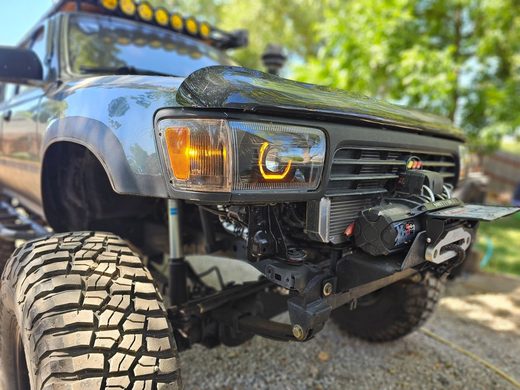
For the 2nd generation 4Runner owner looking to make a bold, aggressive statement, there is no other choice. The Sinister LED headlights are the embodiment of modern, blacked-out style, designed to completely transform the front end of your truck. These headlights are for the enthusiast who wants to banish every last trace of chrome and create a look that is as menacing as it is effective. The Sinister model pairs the cutting-edge performance of our projector LED system with an aesthetic that is pure, unapologetic aggression. A New Identity: The Sinister AestheticThe defining feature of the Sinister headlights is their stunning, high-gloss, high-temperature black housing. We have meticulously blacked out the entire interior of the headlight, from the main reflector bowl to the projector shroud, creating a deep, dark appearance that makes the projector lens appear to float in a void. This is not a simple coat of spray paint; it is a professional, durable finish designed to withstand the intense heat generated by the LED system and the rigors of daily driving and off-road abuse. The aggressive look is completed by the signature amber "demon eye" Daytime Running Light (DRL). This powerful amber LED ring surrounds the projector lens, providing a sharp, distinctive glow that is visible day or night. It gives the 4Runner a modern, custom look that sets it apart from everything else on the road. When wired into the corner lights or a separate switch, the amber DRLs provide an intimidating presence and a significant boost in visibility to other drivers, enhancing the vehicle's safety profile.
Technical Breakdown: Performance Meets StyleBeneath the aggressive styling lies the same core of high-performance technology that powers all of our headlight models. The Sinister is not just about looks; it is about providing a massive, tangible upgrade in nighttime visibility.•High-Performance Projector Optics: At the heart of the Sinister is a bi-LED projector unit. This single projector is responsible for producing both the low beam and the high beam, ensuring a perfectly aligned and consistent beam pattern. The low beam features a razor-sharp, DOT-compliant cutoff that puts a wide, bright carpet of light on the road without blinding oncoming traffic. When you activate the high beam, a solenoid physically drops the cutoff shield out of the light path, unleashing the projector's full power for incredible long-distance illumination.•30,000-Hour LED Lifespan: The integrated LED light source is rated for an incredible 30,000 hours of operation. For the average driver, this translates to decades of use without ever having to worry about changing a bulb. It is a true "fit and forget" solution.•Simple Plug-and-Play Design: We engineered the Sinister for a hassle-free installation. The main headlight plug connects directly to your 4Runner's factory harness, just like a stock headlight. The only additional wiring required is for the amber DRL, which involves connecting a single power wire to your desired trigger (such as the corner light) and a ground wire to the chassis. No complex harnesses, no relays, no cutting of factory wires. Step-by-Step Installation Guide: Bringing the Sinister to LifeInstalling your new Sinister headlights is a straightforward process that can be completed in your driveway with basic hand tools. Here is a general guide to the process:1. Preparation: Park your 4Runner on a level surface and disconnect the negative terminal on your battery for safety.2.
Grille Removal: The first step is to remove the front grille. This is typically held in place by a series of clips and screws along the top and bottom edges. Carefully release these and set the grille aside.3. Headlight Trim Removal: With the grille out of the way, you can now access the trim pieces that surround the headlights. These are also held in place by clips and screws. Remove them to expose the headlight mounting bolts.4. Unbolt the Factory Headlights: Each factory headlight is held in by four bolts (typically 10mm). Remove these four bolts, and the headlight assembly will be free.5.
Disconnect the Wiring: Carefully pull the headlight assembly forward and disconnect the main electrical connector from the back of the stock bulb or sealed beam unit.6. Install the Sinister Headlight: Position your new Sinister headlight in place. Connect the main headlight plug to the factory harness. You will notice it plugs in just like the original bulb.7. Wire the DRL: Now, you will wire the amber DRL. The kit includes a power wire and a ground wire. Use a T-tap or other suitable connector to tap the power wire into the positive wire of your corner marker light. This will make the amber DRL turn on whenever your parking lights or headlights are on. Secure the ground wire to a clean, unpainted metal point on the chassis.8.
Bolt in the New Headlight: Secure the Sinister headlight using the four factory bolts you removed earlier.9. Test Everything: Reconnect your battery. Turn on your parking lights to test the amber DRL. Then, turn on your headlights and test both the low beam and high beam functions.10. Reassembly: Once you have confirmed that everything is working correctly, reinstall the headlight trim and the front grille.11.
Aim Your Headlights: This is a critical final step. Refer to Chapter 8 of this guide for detailed instructions on how to properly aim your new projector headlights to ensure maximum performance and safety. The Sinister in the Wild: Customer ShowcaseThe true test of any product is how it performs in the real world. The Sinister headlights have become a favorite among 2nd gen 4Runner owners who want to combine top-tier performance with a modern, aggressive look. Here is what some of our customers have to say:"The Sinister headlights completely changed the look of my '94. The blacked-out housing is exactly what I was looking for, and the amber DRLs are just mean. The light output is night and day compared to stock. Best mod I've done, hands down." - Brice, Verified Buyer"I was tired of the chrome on my SR5. The Sinister headlights were the perfect solution. The installation was easy, and the beam pattern is incredible. The cutoff is so sharp, and I'm not blinding people anymore, even though the lights are way brighter." - Andrew, Verified Buyer[Insert a gallery of high-quality customer photos showing the Sinister headlights installed on various 2nd gen 4Runners, showcasing different angles, DRLs on, and low beams on at night.]The Sinister is more than just a headlight; it is a statement. It declares that your classic 4Runner is not a relic of the past but a modern-day predator, ready to embrace the darkness and conquer the night. For those who dare to go bold, the Sinister is the ultimate fusion of aggressive style and brilliant illumination performance for your black housing headlights 4runner.
The Everest: Conquer the Night with Classic Style
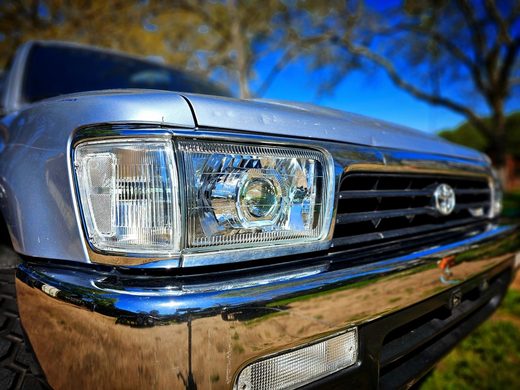
While some owners crave the aggressive, blacked-out aesthetic of the Sinister, others seek a more refined and classic look for their 2nd generation 4Runner. For the enthusiast who appreciates a clean, premium, OEM+ (Original Equipment Manufacturer plus) appearance, we created the Everest LED headlights. The Everest model is the epitome of understated performance, designed to seamlessly integrate with the 4Runner's original styling while providing a monumental upgrade in lighting technology. It is the perfect choice for the owner who wants to modernize their truck's performance without sacrificing its timeless character. A Vision of Classic Elegance: The Everest AestheticThe Everest headlight is defined by its bright, clean, and classic appearance. Instead of the blacked-out housings of the Sinister, the Everest offers two distinct, premium finishes:•High-Gloss Titanium: This sophisticated finish offers a modern, metallic look that is a step above the standard chrome. It provides a subtle, custom touch that complements a wide range of vehicle colors, particularly darker shades like black, gray, and blue.•Brilliant Chrome: For the purist who loves the classic look, our brilliant chrome housing offers a mirror-like finish that mimics the appearance of high-end OEM headlights. This is the ideal choice for owners who want to maintain a factory-fresh look while benefiting from modern LED performance. Complementing the bright housings is the elegant white/light blue "angel eye" Daytime Running Light (DRL). This full-circle halo provides a sharp, modern, and luxurious accent, reminiscent of the lighting found on high-end European vehicles. The crisp white light of the angel eye DRL not only enhances the vehicle's aesthetic but also significantly improves its daytime visibility to other drivers, adding a crucial layer of safety.
The Everest X2: The Pinnacle of IntegrationFor the owner seeking the ultimate in clean, integrated design, we offer the Everest X2 model. This premium option takes the classic Everest design and incorporates a high-intensity LED turn signal directly into the headlight housing. This feature provides several key benefits:•Enhanced Safety: The high-mounted, bright LED turn signal is far more visible to other drivers than the stock incandescent bulb located in the bumper valance, significantly reducing the risk of accidents during lane changes or turns.•Clean, Custom Look: By integrating the turn signal, the Everest X2 allows for the removal of the factory corner lights, creating a smoother, cleaner, and more modern front-end appearance. This is a popular modification for enthusiasts looking to create a truly unique and streamlined look.•Plug-and-Play Simplicity: Despite its advanced functionality, the Everest X2 remains a plug-and-play solution, with a simple wiring adapter that connects directly to your factory turn signal harness. Technical Excellence as StandardLike all of our headlight models, the Everest is built on a foundation of uncompromising performance and quality. It shares the same core technology as the Sinister, ensuring that its beautiful aesthetics are backed by brilliant illumination.•Bi-LED Projector Power: The Everest utilizes the same high-performance bi-LED projector, providing a powerful low beam with a sharp, DOT-compliant cutoff and a brilliant, far-reaching high beam.•30,000-Hour Lifespan: The robust, solid-state LED light source is engineered for a 30,000-hour operational life, ensuring years of maintenance-free performance.•Effortless Installation: The Everest is a direct bolt-in replacement for the factory headlights and features a plug-and-play main connector. The angel eye DRL requires a simple two-wire connection (power and ground), and the Everest X2 model includes an easy-to-use adapter for its integrated turn signal. Installation and Showcase: The View from the SummitThe installation process for the Everest is nearly identical to that of the Sinister, with the only difference being the color of the DRL wire. The white/light blue angel eye is wired in the same simple manner, by tapping into a power source like the corner lights and securing the ground wire. For the Everest X2, an additional plug-in adapter connects to the turn signal harness.
Customer feedback for the Everest has been overwhelmingly positive, particularly from owners who want a significant performance upgrade without straying too far from the 4Runner's classic design language."I wanted brighter lights but didn't want the blacked-out look for my SR5. The chrome Everest headlights are perfect. They look like they could have come from the factory, but the light output is just incredible. The angel eyes are a really classy touch." - Jose G., Verified Buyer"I opted for the Everest X2 in the Titanium finish and couldn't be happier. The integrated turn signals really clean up the front of the truck. The quality is top-notch, and the light output on dark country roads is a game-changer. It feels like driving a new truck." - Jaasai G., Verified Buyer[Insert a gallery of high-quality customer photos showing the Everest headlights in both Chrome and Titanium finishes. Include shots of the angel eye DRLs during the day and the powerful beam pattern at night. Showcase at least one vehicle with the Everest X2 model to highlight the integrated turn signal.]The Everest is the perfect fusion of classic style and modern technology. It is a tribute to the 2nd generation 4Runner's timeless design, enhancing its appearance with a touch of elegance while completely revolutionizing its nighttime performance. For the owner who wants to conquer the night with class and sophistication, the Everest represents the peak of OEM+ lighting for your chrome housing headlights 4runner and angel eye headlights 4runner.
The Atom: Unleash the Power of the Sun
For the 2nd generation 4Runner owner who accepts no compromises and demands the absolute pinnacle of lighting performance, there is only one name: the Atom LED headlights. The Atom is not just an upgrade; it is a statement of overwhelming superiority. It was conceived and engineered for a single purpose: to produce the most powerful, intense, and controlled beam of light possible from a headlight designed for the 1990-1995 4Runner. This is the top-tier, flagship model in the Standard American Outdoors lineup, representing the culmination of our research and development in lighting technology. The Brightest Star in the Constellation: The Atom's Unmatched PowerThe Atom stands in a class of its own, primarily due to its staggering light output. While the Sinister and Everest models offer a revolutionary improvement over stock, the Atom takes it to an entirely different dimension.•Massive 92-Watt Combined Output: The Atom boasts a combined power rating of 92 watts, making it one of the most powerful headlight systems available for any classic vehicle, let alone the 2nd gen 4Runner. This immense power translates directly into an "insane" level of brightness, producing a torrent of clear, white light that effectively turns night into day.•The Twin-Halo Design: The visual signature of the Atom is its unique and captivating twin-halo design. This intricate setup provides a multi-dimensional, high-tech look that is unlike anything else on the market. The dual halos create a mesmerizing depth and complexity within the housing, signaling that this is a headlight of extraordinary capability.•Razor-Sharp, Controlled Beam: Power is nothing without control. The Atom's advanced projector optics are engineered to harness its immense power and sculpt it into a wide, evenly distributed beam pattern with a razor-sharp cutoff. This ensures that the massive amount of light is directed precisely where you need it—down the road and onto the trail—without creating glare for other drivers. It is the ultimate combination of raw power and surgical precision. The Science of Sustainable Power: Engineering the AtomGenerating the kind of light output that the Atom produces creates a significant engineering challenge: heat. Excessive heat is the enemy of any LED, as it can degrade performance and drastically shorten its lifespan. This is why the Atom is built with a suite of premium features designed to manage heat and sustain its incredible performance over the long term.•Integrated Smart Heat Management: The Atom is equipped with an intelligent thermal management system. This system constantly monitors the temperature of the LED chips and, if necessary, makes micro-adjustments to the power output to ensure the system is always operating within its optimal temperature range. This 4runner smart heat management system is crucial for protecting the internal components and guaranteeing a long, reliable service life, even under the most demanding conditions.•Premium Aluminum Housings: Unlike lesser headlights that use plastic housings, the Atom is constructed with robust, all-aluminum housings. Aluminum is an excellent thermal conductor, and the housings are designed with integrated heat sink fins to effectively draw heat away from the LED chips and dissipate it into the airflow.•High-Clarity Glass Lenses: To ensure maximum light transmission and long-term durability, the Atom features real glass projector lenses. Unlike plastic lenses that can yellow and haze over time, glass provides superior optical clarity and is far more resistant to scratching and pitting from road debris.
Installation and Showcase: Wielding the Power of the AtomDespite its advanced technology, the Atom is designed for the same straightforward, plug-and-play installation as our other models. The main headlight connector plugs directly into the factory harness, and the twin-halo DRLs are wired with a simple power and ground connection. The robust construction is immediately apparent the moment you handle the units, assuring you of their premium quality. For the 4Runner owner who is building an ultimate-performance machine—whether for high-speed desert running, technical rock crawling, or simply owning the darkest backroads—the Atom is the only choice. It is a testament to what is possible when you push the boundaries of technology and refuse to compromise."There are bright headlights, and then there's the Atom. The output is genuinely shocking. I can see details on the trail a quarter-mile away. The twin-halo look is super unique and gets comments everywhere I go. If you want the absolute best, this is it. Period." - Customer Review[Insert a gallery of customer photos that attempt to capture the extreme brightness of the Atom headlights. Include shots showing the twin-halo DRLs and, most importantly, nighttime beam pattern shots that illustrate the width, reach, and intensity of the light output.]The Atom is the definitive statement in 2nd generation 4Runner lighting. It is a declaration of power, a marvel of engineering, and the ultimate tool for any owner who believes that when it comes to visibility, there is no such thing as "too much." When you want the brightest 4runner headlights with a unique twin halo design, you are ready to unleash the power of the Atom.
Head-to-Head: Choosing Your Perfect 2nd Gen Headlight
With three distinct, high-performance options available, choosing the right headlight for your 2nd generation 4Runner can seem like a daunting task. However, the Sinister, Everest, and Atom were each designed with a specific type of owner in mind. This chapter will break down the key differences between the models in a detailed head-to-head comparison, helping you to identify the perfect headlight to match your personal style, performance needs, and budget. This is your decision-making guide to navigating the Standard American Outdoors lighting ecosystem. The Ultimate Comparison: Sinister vs. Everest vs. AtomTo provide the clearest possible overview, we have created a comprehensive table that directly compares our three flagship models across the most important categories. Use this table to quickly assess which headlight aligns best with your goals for your 4Runner. FeatureThe SinisterThe EverestThe AtomPrimary AestheticAggressive, Blacked-Out, ModernClassic, Premium, OEM+Ultimate Performance, High-TechHousing FinishHigh-Gloss BlackHigh-Gloss Titanium or Brilliant ChromePremium Aluminum with Heat SinksDRL SignatureSingle Amber "Demon Eye" HaloSingle White/Light Blue "Angel Eye" HaloUnique Twin-Halo DesignBrightnessHigh (Revolutionary over stock)High (Same core performance as Sinister)Extreme (92W - Highest Output Available)Special FeaturesEverest X2 Model: Integrated LED Turn SignalSmart Heat Management, Glass LensIdeal For...
Owners seeking a modern, aggressive look. Owners who prefer a clean, classic, or OEM+ look. Owners who demand the absolute maximum light output.
Price$$$$$$The Decision Funnel: How to Choose Your Perfect HeadlightStill undecided? Let's walk through a simple decision-making process to help you find the perfect match. Step 1: Define Your Aesthetic GoalFirst and foremost, how do you want your truck to look? This is the easiest way to narrow down your options.•Do you want a dark, aggressive, "murdered-out" appearance? If you are planning to black out your grille, bumpers, and trim, your choice is clear: The Sinister. Its black housing and amber DRL are designed specifically for this aesthetic.•Do you prefer a clean, classic, or premium look that respects the 4Runner's original design? If you appreciate the look of chrome or a subtle metallic finish, your choice is The Everest. Its bright housings and white angel eye DRL provide a sophisticated, modern look without being overly aggressive.•Is your primary goal a high-tech, performance-oriented look that signals ultimate capability? If you want a unique design that stands out and screams "high-performance," then The Atom and its captivating twin-halo design is the headlight for you. Step 2: Assess Your Performance NeedsAll three models offer a massive performance upgrade over the stock headlights. However, there are still levels to the performance.•Do you need a revolutionary improvement in daily driving and occasional trail use? Both The Sinister and The Everest offer identical, exceptional light output that will transform your nighttime driving experience. They provide a wide, bright beam that is more than sufficient for the vast majority of drivers.•Do you demand the absolute, unequivocal best-in-class light output? If you frequently drive in extremely dark, rural areas, engage in high-speed off-roading, or simply believe that there is no such thing as too much light, then The Atom is your only option. Its 92-watt output is in a league of its own.
Step 3: Consider Special FeaturesFinally, are there any special features that are particularly important to you?•Do you want to clean up your front end by eliminating the factory corner lights? If so, the Everest X2 with its integrated LED turn signal is the perfect solution, offering a unique combination of safety and streamlined style.•Are you a "tech and specs" person who appreciates the finest engineering and materials? If features like a smart heat management system, aluminum housings, and glass lenses are important to you, then The Atom will satisfy your desire for the best-engineered product. By following this simple funnel, you can confidently select the headlight that is not just a part, but a perfect extension of your vision for your 2nd generation Toyota 4Runner. Whether you choose the aggressive style of the Sinister, the classic elegance of the Everest, or the overwhelming power of the Atom, you are guaranteed a revolutionary upgrade that will redefine your relationship with your legendary truck.
The Perfect Install: Aiming and Adjustment
Congratulations! You have successfully installed your new Sinister, Everest, or Atom projector headlights, and the transformation in your 2nd generation 4Runner’s appearance is stunning. However, the installation process is not quite complete. There is one final, crucial step that many people overlook: properly aiming your new headlights. This step is not just a recommendation; it is absolutely essential for both safety and performance. Proper 4runner headlight adjustment ensures that the powerful beam from your new projectors is focused on the road where it belongs, giving you maximum visibility without blinding oncoming drivers. Why Aiming is Non-NegotiableProjector headlights are precision optical instruments. They create a very wide, flat beam with a sharp horizontal cutoff. If this beam is aimed too high, the cutoff will be above the eye level of other drivers, causing dangerous glare and potentially leading to an accident. If it is aimed too low, you will severely limit your down-road visibility, defeating the purpose of the upgrade. Factors like your vehicle’s suspension lift, tire size, and even the weight you typically carry can all affect the correct headlight aim. Therefore, it is critical to perform this adjustment after installing your new headlights to tailor them perfectly to your specific truck. The DIY Guide to Perfect Headlight AimingYou do not need a special shop or expensive equipment to properly aim your headlights. This simple, effective method can be done in your driveway with just a tape measure, some painter's tape, and a screwdriver.1.
Find a Level Surface: Park your 4Runner on a perfectly level surface facing a flat, vertical wall or garage door. Pull the truck up as close to the wall as possible.2. Mark the Headlight Centerlines: Use your tape measure to measure the distance from the ground to the exact center of each of your new projector headlights. Place a small, horizontal piece of painter's tape on the wall to mark the height for each headlight. Then, use a vertical piece of tape to mark the center of each headlight, creating two small crosses on the wall that correspond to the exact position of your projectors.3. Back Up 25 Feet: Carefully back your 4Runner straight up so that the front of your headlights are exactly 25 feet away from the wall. It is important to be precise with this measurement.4.
Create the Target Line: Now, you will create the target for your cutoff line. For every vehicle, the headlight beam should have a slight downward angle. For an SUV like the 4Runner, a drop of 2-3 inches at 25 feet is a good starting point. Measure 2.5 inches down from the horizontal tape marks you made in step 2 and create a single, long horizontal line of tape across the wall at this new, lower height. This is your target cutoff line.5. Adjust the Driver's Side Headlight: Turn on your headlights. Cover the passenger side headlight with a thick towel or jacket to block its light. You will now see the beam pattern of your driver's side headlight on the wall. You should see a distinct horizontal cutoff line, which may have a slight "step up" on the right side. Your goal is to adjust the headlight so that the flat, horizontal part of the cutoff line is perfectly aligned with the target tape line you created in step 4.6. Locate the Adjuster Screws: On the back of your headlight housing, you will find the adjustment screws. There is typically one for vertical adjustment (up/down) and one for horizontal adjustment (left/right). For this process, you will primarily be using the vertical adjuster.7.
Make the Adjustments: Using a screwdriver, slowly turn the vertical adjustment screw. You will see the beam pattern move up or down on the wall. Continue adjusting until the cutoff line aligns perfectly with your target tape line. The "step up" portion of the beam should be to the right of your vertical centerline mark for the driver's side headlight.8. Adjust the Passenger's Side Headlight: Now, cover the driver's side headlight and repeat the process for the passenger side. Adjust it until its horizontal cutoff also aligns with the target tape line.9. Verify the Alignment: Uncover both headlights and look at the combined beam pattern. You should see a single, wide, continuous cutoff line across the wall at your target height, with two distinct "steps" of light rising to the right. This pattern illuminates the road intensely while keeping the light out of the eyes of oncoming drivers in the opposite lane.
By taking the extra 15-20 minutes to complete this crucial step, you ensure that you are getting the absolute maximum performance from your new headlights in the safest possible way. You have not just installed a new part; you have installed a complete, professionally-tuned lighting system for your projector headlights.
Completing the Build: Other Essential 2nd Gen 4Runner Parts
Transforming your 2nd generation 4Runner’s lighting with a set of Sinister, Everest, or Atom headlights is a game-changing modification. However, for the true enthusiast, it is often just one part of a larger journey. A well-built vehicle is a balanced system, where each upgrade complements the others to create a cohesive and capable machine. Now that you have conquered the darkness, it is time to consider other essential 2nd gen 4Runner mods that will elevate your truck's performance, capability, and style to match its newfound visual prowess. At Standard American Outdoors, our expertise extends beyond just lighting. We live and breathe this platform, and we understand the ecosystem of parts required to build a truly exceptional 1990-1995 Toyota 4Runner. This chapter will briefly touch on some of the most popular and synergistic upgrades that will help you complete your ultimate build. Suspension Lifts: The Foundation of CapabilityAn aggressive set of headlights and a capable suspension go hand-in-hand. A quality suspension lift is arguably the most important modification for any 4Runner intended for off-road use or for those who simply want to run larger, more aggressive tires. A lift kit not only provides the clearance needed for bigger tires but also improves suspension travel, articulation, and overall off-road performance.•Why it Complements Your Headlights: A lift will change your truck's stance and ride height, which is another reason why the headlight aiming process in Chapter 8 is so critical. Furthermore, the aggressive look afforded by a suspension lift and larger tires is the perfect complement to the modern styling of our projector headlights, creating a fully realized, purposeful aesthetic.•Popular Options: Lift kits for the 2nd gen 4Runner range from simple budget-friendly spacer lifts to comprehensive kits that include new upper control arms, differential drops, and high-performance shocks.
Off-Road Armor: Protection for the TrailIf you plan to use your 4Runner's legendary 4WD system to its full potential, a set of robust armor is not a luxury; it is a necessity. The factory components are not designed to withstand the impacts of rocks, stumps, and other trail obstacles.•Rock Sliders: These are one of the most critical pieces of armor, protecting the vulnerable rocker panels (the area below your doors) from being crushed on obstacles. They also provide a convenient step for accessing the roof.•Skid Plates: A full set of skid plates will protect your engine oil pan, front differential, transmission, and transfer case from catastrophic damage.•Bumpers: Upgrading to steel plate bumpers not only provides superior protection but also improves approach and departure angles and provides a solid mounting point for a winch—an essential recovery tool for any serious off-roader. Performance Modifications: Waking Up the BeastWhile the 22R-E and 3VZ-E engines are known for their reliability, they are not known for their power. Aftermarket support for these engines is extensive, with a variety of modifications available to improve performance.•For the 3VZ-E "3.slow": The single most important modification is to address the restrictive factory exhaust crossover. Installing a set of aftermarket headers (a 3VZ crossover delete) not only resolves the head gasket issue but also frees up a significant amount of horsepower and torque.•For the 22R-E: Upgrades for the trusty four-cylinder often include a performance header, a larger-diameter exhaust system, and an upgraded camshaft to improve breathing and overall power output.•Engine Swaps: For those seeking a major power increase, engine swaps are a popular, albeit more involved, option. The most common swap is the 3.4L 5VZ-FE V6 from the 3rd generation 4Runner, which offers a significant boost in both power and reliability over the 3VZ-E. By viewing your 2nd generation 4Runner as a complete system, you can create a build that is not only visually stunning with its new headlights but also immensely capable and personalized to your specific needs. These upgrades, combined with your revolutionary new lighting system, will ensure that your legendary Toyota 4Runner is ready to conquer any road or trail, day or night. Explore the full range of Toyota 4Runner parts at Standard American Outdoors to continue your build journey.
Conclusion: Your Legend, Reimagined
The 2nd generation Toyota 4Runner has rightfully earned its place in the pantheon of legendary 4x4s. It is a vehicle that embodies the spirit of adventure, a trusted companion that has carried a generation of enthusiasts to the ends of the earth and back. Yet, for all its strengths, its journey has always been hampered by a single, glaring weakness: a lighting system that belongs to a bygone era. The dim, yellow glow of the factory headlights has been a constant source of frustration and a significant safety compromise, leaving owners to navigate the darkness with a sense of uncertainty. This guide has illuminated the path forward. We have journeyed from the outdated technology of sealed beams and composite halogens to the cutting-edge world of modern LED lighting. We have dissected the science of projector optics and underscored the critical importance of DOT-compliant design. Most importantly, we have unveiled the definitive solution, engineered exclusively for your 1990-1995 4Runner: the Sinister, Everest, and Atom headlight systems from Standard American Outdoors. This is more than just an upgrade; it is a complete transformation. It is the power to turn night into day, to see every obstacle on the trail and every hazard on the road with absolute clarity. It is the confidence to know that your vehicle is safer, more capable, and more stylish than ever before. It is the satisfaction of installing a high-quality, plug-and-play solution that was designed with a passion and precision that matches your own love for this iconic vehicle.
We have shown you the path to an aggressive, blacked-out aesthetic with The Sinister. We have revealed the clean, classic, OEM+ elegance of The Everest. And we have unleashed the overwhelming, uncompromising power of The Atom. The choice is now yours. Your legendary 2nd gen 4Runner deserves to be seen. It deserves to have its vision restored, to be equipped with a lighting system that is worthy of its go-anywhere, do-anything spirit. Stop compromising. Stop squinting into the darkness. It is time to conquer the night. Explore the Sinister, Everest, and Atom collections today and give your truck the revolutionary vision it was always meant to have. Your journey out of the darkness starts now. Click here to explore the full collection:•Shop The Sinister LED Headlights•Shop The Everest LED Headlights•Shop The Atom LED HeadlightsLet's paint a more vivid picture of what this means for the driver. It means white-knuckle driving on any road that isn't bathed in the glow of city streetlights. It means the constant, nagging fear of overdriving your headlights—traveling at a speed where you cannot possibly stop in the distance you can see ahead. On a dark, rainy night, the stock headlights struggle to cut through the precipitation, creating a wall of glare that reflects back at the driver, further reducing visibility. When a deer or other animal darts out from the side of the road, the precious seconds needed to react are lost because the animal was simply invisible in the dim periphery of the headlight beam. This is not just an inconvenience; it is a constant, low-level state of danger that 2nd gen 4Runner owners have been forced to accept as normal.
The psychological toll is also significant. The constant eye strain from trying to pierce the darkness leads to fatigue on long drives. The joy of a spontaneous nighttime adventure is replaced by a calculated risk assessment. Do I really want to take the 4Runner, or should I take a different vehicle with better lights? This is a question that no owner of such a capable and legendary vehicle should ever have to ask. The failure of the stock lighting system fundamentally undermines the very spirit of the 4Runner—the spirit of freedom, adventure, and go-anywhere capability. Furthermore, the aging electrical systems of these 25-plus-year-old vehicles exacerbate the problem. Over time, electrical connections can corrode, and wires can degrade, leading to increased resistance in the headlight circuit. This resistance causes a voltage drop, meaning that the headlights receive less power from the alternator and battery than they were designed to. Even a small voltage drop of 10% can result in a 30% or greater reduction in light output from a halogen bulb. This is why, for many owners, their headlights seem to have gotten dimmer over the years—they have. The combination of outdated technology and an aging electrical infrastructure creates a perfect storm of poor performance. When we talk about the failure of the stock 2nd gen 4Runner headlights, we are not just talking about a dim bulb. We are talking about a systemic failure that impacts the safety, usability, and enjoyment of the vehicle. It is a failure that has been crying out for a modern, comprehensive solution. It is a failure that we at Standard American Outdoors have made it our mission to solve, not with a simple bulb, but with a complete, engineered lighting system that finally allows this legendary vehicle to realize its full, 24-hour potential.
Deeper into the Diode: Understanding LED Chip TechnologyNot all LEDs are created equal. The heart of any LED headlight is the chip itself, and the type and quality of these chips play a massive role in the performance, reliability, and beam quality of the final product. The most common types of LED chips used in automotive applications are:•CSP (Chip Scale Package): These are some of the most advanced and desirable chips for automotive use. A CSP chip is very close in size to the actual LED die itself, meaning it has no bulky packaging. This compact size is a huge advantage because it allows engineers to create a light source that very closely mimics the size and position of a traditional halogen filament. This is critical for creating a clean, controlled beam pattern, especially in projector applications. The small size allows for precise focal point alignment within the projector's optics.•COB (Chip on Board): A COB LED consists of multiple individual LED dies mounted directly onto a single substrate or circuit board. This creates a single, large, and very bright light source. While COB technology is excellent for producing a high volume of light (lumens), its large surface area makes it very difficult to control in a headlight. It's almost impossible to focus a large COB chip into a sharp, DOT-compliant beam pattern, which is why they are often found in cheap, low-quality "plug-and-play" bulbs that produce immense glare.•SMD (Surface Mount Device): SMD chips are individual LEDs that are soldered onto a circuit board. You will often see them used for accent lighting, daytime running lights, and turn signals. While they are reliable and efficient, they are generally not powerful enough on their own to serve as the primary light source for a headlight low or high beam. However, they are perfect for creating the intricate designs of our "angel eye" and "demon eye" DRLs. Standard American Outdoors exclusively uses high-quality, automotive-grade CSP chips in our projector systems. This commitment to superior chip technology is a key reason why we can achieve a powerful beam that is also precisely controlled and compliant with safety standards. The Unsung Hero: The Science of Heat ManagementWe mentioned that LEDs are far more efficient than halogens, but they still produce heat. This heat is generated at the back of the LED chip, and if it is not effectively removed, it will cause the chip's performance to degrade rapidly. This is the single biggest factor that separates a high-quality, long-lasting LED headlight from a cheap one that fails in a matter of months. A robust heat management system, also known as a heat sink, is non-negotiable.
There are two primary types of heat sinks:•Passive Cooling: This is the most reliable method. It relies on a large piece of metal, typically aluminum, with many fins to increase its surface area. Heat from the LED chip is conducted into the aluminum heat sink, and the fins allow that heat to dissipate into the surrounding air. This is a completely solid-state solution with no moving parts, making it incredibly durable and perfect for the high-vibration environment of a 4Runner.•Active Cooling: This method incorporates a small mechanical fan to actively blow air across the heat sink, dramatically increasing the rate of heat dissipation. While this can allow for a smaller heat sink or higher power levels, it introduces a potential point of failure—the fan itself. In a dusty, wet, and muddy off-road environment, a small fan is susceptible to failure. Our Sinister and Everest models utilize a robust, oversized passive cooling system integrated directly into the headlight housing, ensuring silent, reliable, and long-lasting performance. The ultra-powerful Atom model features a hybrid system, with a massive passive heat sink and an intelligent, thermally controlled fan that only activates when necessary, providing the ultimate in cooling performance without sacrificing reliability. More Than a Sticker: The Rigors of DOT FMVSS 108 ComplianceAchieving DOT compliance is not a simple matter of filling out a form. It involves a rigorous and scientific testing process to ensure a headlight is safe for public roads. The standard, known as FMVSS 108, specifies a complex series of photometric test points. During testing, the headlight is mounted in a special fixture called a goniometer, which can measure the precise intensity of light (measured in candela) at dozens of specific points in the beam pattern.
These test points are designed to measure two things simultaneously:1. Illumination: Are you putting enough light on the road and on important areas like road signs above and to the right?2. Glare Prevention: Are you limiting the amount of light directed into the eyes of oncoming drivers and drivers ahead of you (as seen in their rearview mirror)?
The test ensures that there is a sharp, clean cutoff and that the beam is properly shaped. This is why simply being "bright" is not enough. A headlight must be bright in the right places and dim in the right places. Our commitment to engineering our projector optics to meet these stringent requirements is a fundamental part of our design philosophy and a key differentiator that separates our products from the countless unsafe and illegal options on the market. Standard american outdoors - Toyota 4runner, Offroad, Lifestyle Blog