What CFM Do You Actually Need? Off-Road Compressor Numbers
Ignore PSI. Look at CFM.
Nearly every off-road compressor on the market reaches around 150 psi, so max pressure tells you almost nothing when comparing models. It is a spec that looks meaningful and is not.
CFM — cubic feet per minute — is the number that decides how long you stand there. It measures air volume delivered, and it maps directly to fill time.
Here is the catch nobody prints on the box: CFM is almost always quoted at zero psi, and it drops as tire pressure climbs. A compressor advertised at 6 CFM is delivering considerably less by the time your tire is at 30 psi. Compare honestly and assume the real-world figure is lower than the headline.
Rough numbers by tire size
Guidance from people who test compressors for a living lands roughly here: stock-size tires on a midsize SUV are served fine by something in the 2 CFM range. Lifted rigs on 35s want 2.5 CFM or more. Past 37 inches you need a twin-motor unit or a mounted onboard system, because a smaller compressor will hit its duty-cycle limit before all four tires are up.
Below about 1.5 CFM, expect over five minutes per tire on a large 4x4. That is twenty-plus minutes of standing around.
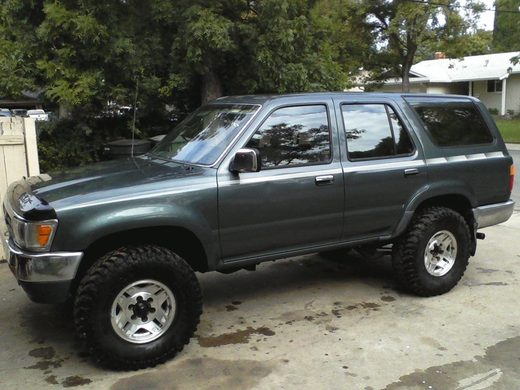
For a 2nd gen 4Runner on 31s or 33s, you are in comfortable territory for most decent compressors — but the difference between a slow one and a fast one is still the difference between a five-minute job and a twenty-minute one.
What the difference looks like in practice
A published head-to-head makes it concrete. On a 38-inch tire, airing from 12 psi to 31 psi, a 1.66 CFM compressor averaged 4 minutes 18 seconds per tire. A 6.16 CFM twin did the same job in 2 minutes 13 seconds.
Across four tires that is roughly seventeen minutes versus nine. On a cold evening with the light going, that gap is the entire argument for buying the bigger unit.
If you want to air all four at once with a hose kit, the benchmark rises again — testers suggest a minimum of 3 CFM and preferably 4 or more. Our quad hose kit guide covers that pairing.
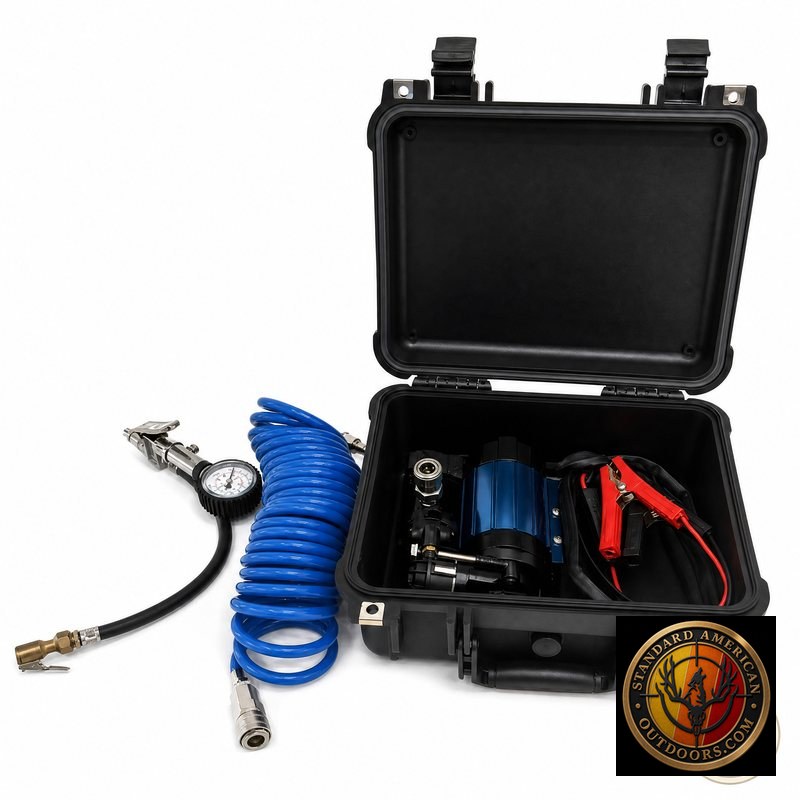
One honest note: we have not published CFM figures for our own units in this article because we would rather you read them off the product listing than take a blog post's word for it. Check the twin and single listings for current specs.