22RE Coolant Pipes: The Hidden Steel That Decides Your Engine’s Fate
Somewhere on your 22RE, right now, a steel pipe you've never seen is rusting from the inside. The 22RE routes coolant through metal pipes and heater lines tucked against the block and under the intake, sealed with o-rings that went hard during a previous presidency. When one lets go it doesn't seep politely — it dumps, usually far from home.
Where they hide
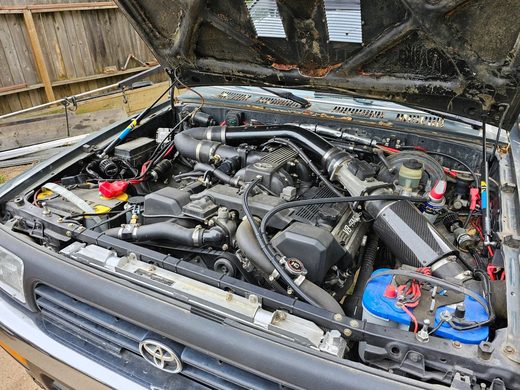
The main players: the pipe running along the block feeding the heater circuit, the shorter connectors joining hoses behind the engine, and the o-ring-sealed joints where pipe meets housing. They're invisible in a driveway glance, which is exactly why a truck with a "mystery coolant loss" so often traces back here after the radiator and hoses get replaced on spec.
How they announce themselves
Three ways: a coolant smell with no visible puddle (a weep hitting hot metal and steaming off), slow unexplained loss with a clean radiator and dry hoses, or the dramatic version — a rusted-through pipe letting go all at once, usually when the system is hot and pressurized. Rusty crust or a white-green bloom at a pipe joint is the pre-failure signature; find it with a flashlight before it finds you.
The o-ring trick
Half the leaks at these pipes are the o-rings, not the steel — and here's the catch that wastes weekends: a new o-ring on a corroded, pitted sealing surface will leak again. When a joint is apart, judge the pipe's sealing land honestly. Smooth steel + fresh o-ring = fixed. Pitted steel = the pipe is done, and the o-ring was never the real problem.
Replace like you mean it
These pipes are cheap relative to everything they can ruin. The doctrine: when one goes, do the set — same age, same coolant, same fate — with new o-rings at every joint, and burp the system properly afterward (air pockets from this job cause fake overheating that sends people down the wrong path — the overheating diagnosis chain logic applies to both engines). Fresh coolant while it's drained is free money; the coolant guide covers what to run.
Frequently asked questions
Why is my 22RE losing coolant with no visible leak?
Check the steel coolant and heater pipes against the block — small weeps steam off hot metal and never puddle. A pressure test with a flashlight on every pipe joint finds what a driveway glance can't.
Can I just replace the o-rings?
Only if the pipe's sealing surface is still smooth. A new o-ring on pitted steel leaks again — corroded pipes get replaced, not resealed.
Should I replace all the coolant pipes at once?
Yes — they share age, coolant, and corrosion. One failing is the set's announcement.
Why does my truck overheat right after coolant pipe work?
Almost always trapped air. Burp the system thoroughly with the heater on full before chasing any other cause.