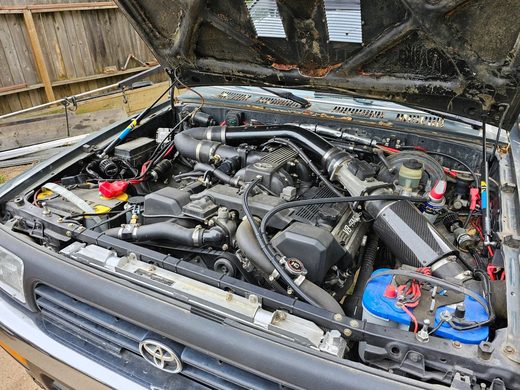
22RE EGR Cooler Cleaning: The Carbon-Choked Part Nobody Looks At
Somewhere between your 22RE's exhaust manifold and intake sits a part most owners have never touched: the EGR cooler, a small heat exchanger that tempers exhaust gas before recirculating it. After three decades it's less a cooler than a carbon fossil — and a choked EGR path shows up as symptoms people chase everywhere else first.
What it does and why it clogs
EGR routes a little exhaust back into the intake to cool combustion and tame NOx; the cooler knocks the gas temperature down first, using engine coolant. Exhaust carries soot, soot loves cool surfaces, and thirty years of deposits narrow the cooler and passages until flow chokes — or the valve gets propped by grit and leaks when it should be closed.
The symptoms it fakes
Two opposite failure directions, two symptom sets. Choked/no flow: pinging and pre-ignition under load (the cooling effect is gone — and chasing "why does my 22RE ping on hills" often ends here), plus emissions-test grief and EGR-related codes on trucks with the monitoring to notice. Stuck open/leaking: a vacuum-leak-like rough idle and stumble, because exhaust is diluting the idle mixture — a cousin of the impostors in the idle guide. Same little system, opposite miseries.
The cleaning, honestly
The parts come off — valve, cooler, the pipe work — and the carbon comes out the slow way: soaking in a serious carb/decarbon cleaner, scraping what tools can reach, repeat until passages daylight. The cooler is the stubborn one; heavy deposits laugh at a quick spray, so this is a soak-overnight project, not a lunch job. While it's apart, check the valve seats and moves freely, and use fresh gaskets on reassembly — an exhaust leak at an EGR joint ticks like a cracked manifold and starts a whole new wrong diagnosis. Verify the related vacuum lines while you're there; they crumble like everything else's rubber.
Clean vs delete — the straight answer
The forums will offer you the delete. The straight version: EGR on these trucks is emissions equipment, removing it has legal and inspection consequences that vary by state, and a cleaned, working system genuinely does its job — cooler combustion is also kinder to a 30-year-old engine's appetite for pinging. Cleaning restores stock function without opening any of those cans. This guide's position is simple: make stock work first.
Frequently asked questions
What are the signs of a clogged EGR cooler on a 22RE?
Pinging under load is the classic — the charge-cooling effect is gone. Add emissions-test failures and EGR codes where monitoring exists.
Why does my idle stumble like a vacuum leak after EGR work?
A valve stuck partially open or a leaking gasket dilutes the idle mixture with exhaust — it presents exactly like a vacuum leak. Recheck the valve seat and gaskets.
Can I really clean a 22RE EGR cooler at home?
Yes — it's removal, soaking, scraping, and patience. Overnight soaks beat quick sprays; heavy carbon takes rounds.
Should I just delete the EGR?
A cleaned system does its job and keeps you legal — deletes carry state-dependent legal and inspection consequences. Restore stock first.