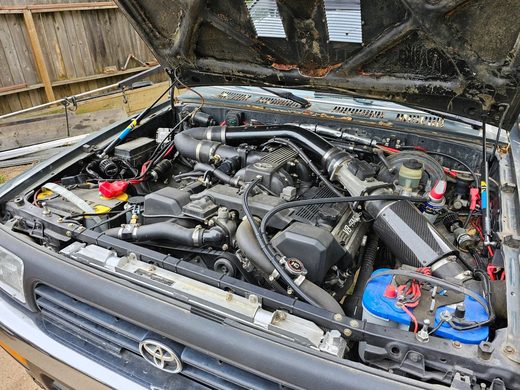
22RE Idle Speed: How to Adjust It — and When the Screw Isn’t the Problem
"How to change idle speed on a 22RE" is a five-thousand-a-month search with a trap inside it: on a fuel-injected 22RE, the idle screw is the last adjustment, not the first fix. Most bad idles aren't set wrong — they're compensating for something, and turning the screw just teaches the engine to idle wrong politely.
Rule out the liars first
The pre-adjustment checklist that solves most "idle problems": vacuum leaks (a quarter-century of rubber means cracked lines everywhere; the unlit-propane or careful-carb-cleaner sweep around the intake finds hissing suspects), the throttle body and its bypass passages gummed with decades of film (a proper cleaning resurrects more idles than any adjustment), a sticking or unplugged idle-up system, and basic tune health — plugs, wires, timing where it belongs. An engine that surges, hunts, or races isn't asking for the screw; it's reporting a leak or a sensor.
Setting it right, in order
When the engine is actually healthy: warm it fully, confirm base ignition timing first (idle and timing interact — set timing per the underhood procedure before touching idle), then set idle speed to the factory figure on the emissions label with accessories off. The number on your truck's label is the spec; year and market variations make internet numbers a guess. Set warm, verify it returns to the same idle after a rev, and confirm the cold-start fast idle still behaves.
The surge that isn't the screw
An idle that oscillates rhythmically — up-down-up-down — is the classic vacuum leak or throttle-body-film signature. An idle that drops when the wheel turns or the AC kicks on points at the idle-up circuits doing their job badly. And a truck that idles high forever after cold start is a cold-air/fast-idle mechanism sticking, not a screw setting. The screw fixes exactly one thing: a healthy engine idling at the wrong number.
While you're under the hood
Replace the crumbling vacuum lines wholesale — it's the cheapest refresh in the engine bay and the single most common 22RE idle cure. This is core 300k playbook material, and if the deeper tune rabbit hole calls, the engine comparison covers what each of these motors wants to run happy.
Frequently asked questions
Why does my 22RE idle surge up and down?
Rhythmic surging is the vacuum-leak and dirty-throttle-body signature. Sweep for leaks and clean the throttle body and bypass passages before any adjustment.
What should 22RE idle speed be?
The figure on your truck's underhood emissions label — it's year- and market-specific, and it's the number the factory certified. Set it warm, accessories off, timing verified first.
Why is my idle high only when cold?
That's the fast-idle mechanism doing its job — high cold idle that settles warm is designed behavior. High-forever is that mechanism sticking, not a screw problem.
Does timing affect idle speed?
Directly — they interact. Base timing gets set per the factory procedure first; only then does an idle adjustment mean anything.