22RE Oil Pump: Reading the Pressure Gauge and Replacing the Pump Right
Oil pressure anxiety is a rite of passage on a 30-year-old engine, and the 22RE hands it out generously: a gauge that reads lower every year, a flicker at hot idle, and a search history full of "22RE oil pump replacement." Before pump surgery, know what the gauge is actually saying — and if the pump really is due, know why it's never a solo job on this engine.
Reading the gauge honestly
The pattern that matters is trend and behavior, not one scary number. Healthy-old looks like: decent pressure cold, lower-but-steady warm, rising with RPM. The worrying signatures: pressure that doesn't climb with RPM, or warm-idle readings flirting with nothing accompanied by valvetrain clatter. And the first suspect is the cheapest one — the sender and its wiring lie constantly at this age. Verify with a mechanical gauge before believing anything expensive; five minutes with real numbers beats every forum guess.
What low pressure usually means
Real, verified low pressure on a 22RE ranks its causes: worn bearings opening clearances (pressure the pump makes leaks away internally — this is the high-mileage default), a tired relief valve or pump, or sludge starving the pickup. That ranking matters because a new pump can't fix bearing clearance — which is why "I replaced the pump and pressure barely changed" is a common forum heartbreak. Compression-test-level honesty applies here: diagnose which story you're in first (the rebuild decision guide is the companion read).
Why the pump job is really a timing-cover job
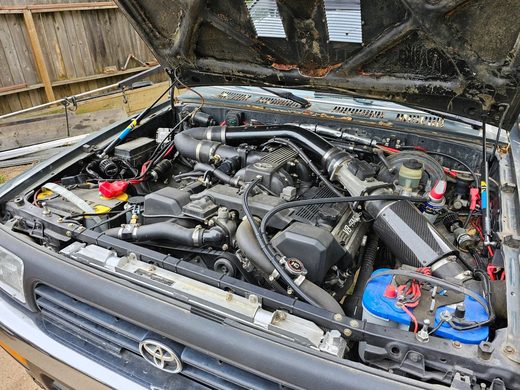
Here's the 22RE-specific part: the oil pump lives at the front of the engine behind the timing cover territory, driven off the crank. Getting there honestly means the same neighborhood teardown as the timing chain job — which is exactly why the community doctrine is do them together. A pump replaced without addressing a rattling chain and brittle guides an inch away is labor thrown away; the timing chain guide covers that half. One teardown, both famous jobs, done for a decade.
The cheap insurance around it
New pickup tube o-ring and a clean pickup screen while you're in there, a quality filter always, and honest oil-change rhythm forever after — sludge is the pump's real enemy. Front crank seal goes in new on reassembly as a rule. All of it is 300k playbook doctrine: the cheapest time to replace anything is while it's already staring at you.
Frequently asked questions
My 22RE oil pressure is low at hot idle — is that the pump?
First verify with a mechanical gauge — senders lie. Real low pressure at high mileage is more often bearing clearance than the pump itself, which is why diagnosis precedes parts.
Can I replace the 22RE oil pump without the timing chain?
You can, but you shouldn't — they share the same front-of-engine teardown, and reassembling around a worn chain and brittle guides wastes the labor you just paid.
Will a new pump fix pressure lost to worn bearings?
No — bearing clearance leaks pressure away internally no matter how strong the pump. That's the rebuild conversation, not the pump conversation.
What protects an oil pump long-term?
Clean oil on schedule, a quality filter, and a clean pickup screen. Sludge starvation kills more pumps than wear does.