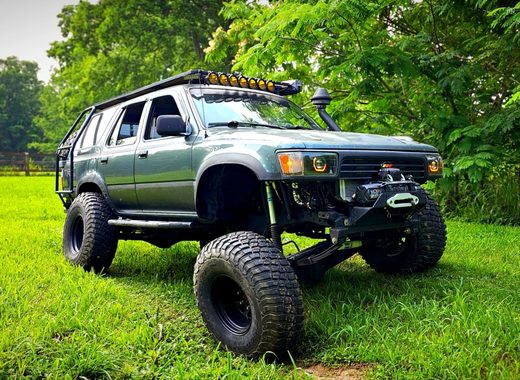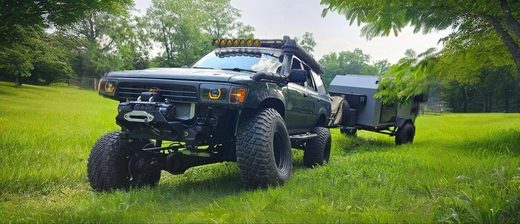
2nd Gen 4Runner Off-Road: The Complete Guide (1990–1995)
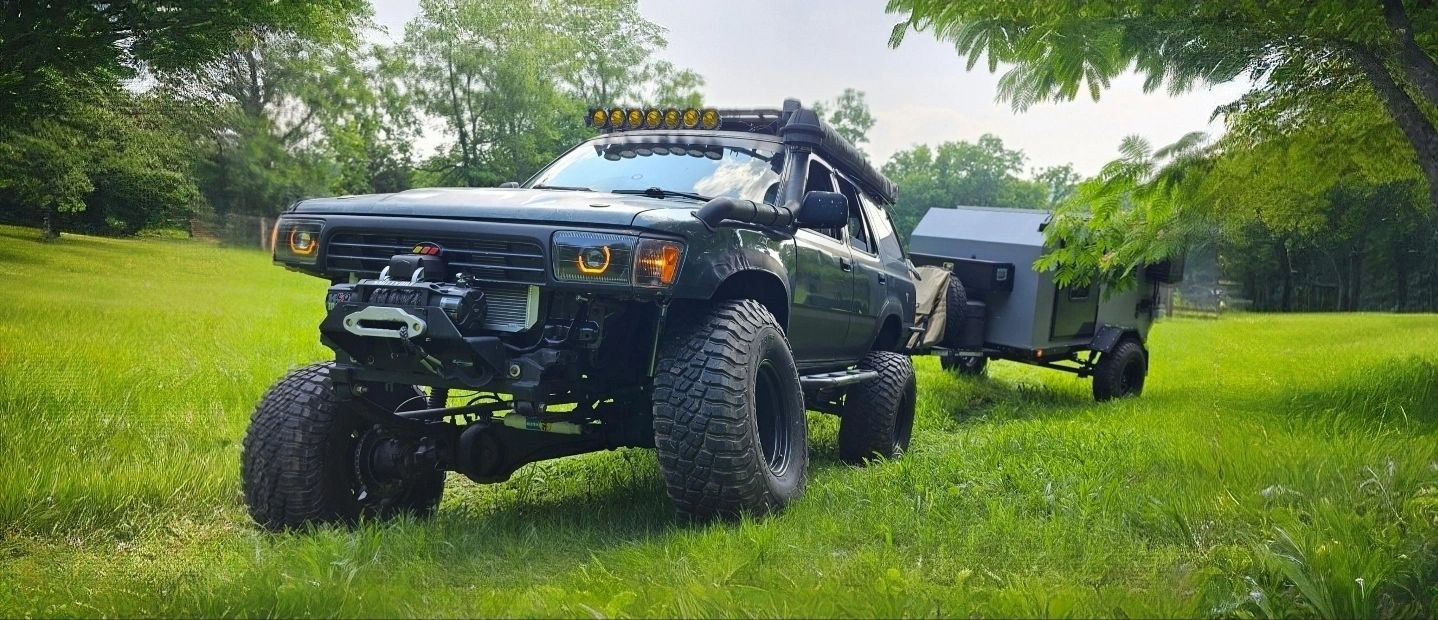
The 2nd gen 4Runner (1990–1995) is one of the most capable off-road platforms Toyota ever built, and this is the complete guide to wheeling one: what it does well from the factory, where it struggles, the upgrade order that actually works, and the techniques that keep a 30-year-old truck alive on the trail. Consider this the hub — we link out to our deep-dive guides on each topic throughout.
What the Stock Truck Can Actually Do
A healthy, bone-stock 2nd gen is more capable than most people expect. You get a solid rear axle, low-range transfer case, decent approach and departure angles for its era, and Toyota's famously stout Hilux-derived running gear. Forest roads, moderate rock, mud, sand, and snow are all on the menu with nothing but good tires. The factory limitations are ground clearance, the open differentials, and street-biased rubber — which conveniently maps to the exact upgrade order below.
The Upgrade Order That Works
First: tires. Nothing transforms off-road ability like a quality all-terrain or mud-terrain, and it is the best money you will spend. Second: suspension. A complete 3-inch lift opens up the 33-inch tire range, restores the sagging 30-year-old stance, and adds real clearance under the diffs and rockers — our complete 3" lift kit covers the whole suspension in one box. Third: protection — rock sliders before body armor, skids before bumpers. Fourth: lighting, because trail days end in the dark — modern LED projector headlights are a night-and-day safety upgrade over foggy 1990s halogens. Traction aids (lockers) and a winch come after all of that, once you know how and where you actually wheel.
Techniques That Save 30-Year-Old Trucks
Air down — dropping to the mid-teens PSI adds traction and saves your suspension and spine. Pick lines for clearance, not speed; momentum is for sand and mud, finesse is for rocks. Use low range early instead of slipping the clutch or lugging the engine. Watch the temperature gauge like a hawk, especially on the 3.0L V6 — heat is the number one killer of these engines, and slow technical wheeling on a hot day is exactly when it creeps. And never wheel alone without recovery gear and a way to air back up.
Know Your Weak Points Before the Trail Does
Every 2nd gen has the same short list: the factory idler arm and ball joints wear out and make steering vague right when you need precision; the cooling system needs to be fresh, not just functional; and the power steering idle-up valve is a known leaker that our delete kit removes for good. Sort these before your first hard trail day — a capable truck that breaks is just an anchor with a roof rack.
Where to Go From Here
Dig deeper with our guides on the best off-road tires with no rubbing, the priority-order mod guide, the complete lift and tire-fitment breakdown, and building a 2nd gen for overlanding. The 2nd gen rewards patient, well-ordered building more than almost any platform — do it right and it will take you places new trucks fear to scratch their paint.