2nd Gen 4Runner Gear Ratios: Finding Yours and Choosing Bigger Tires
Which gears did you get
Second gen 4Runners most commonly came with 4.10 gears, but 4.56 and 4.88 ratios also went out from the factory depending on configuration. If you are buying a used third member or planning a regear, guessing is how you end up with mismatched front and rear ratios — which is a genuinely expensive mistake.
The reliable way to find out: check the tag or stamping on the differential housing, or count it manually. Mark the driveshaft and a rear tire, raise both rear wheels, then rotate the driveshaft and count how many turns it takes to rotate the wheels once. Roughly four turns means 4.10; closer to four and a half means 4.56.
Whatever you find, front and rear must match. A 4Runner with mismatched ratios binds the drivetrain in four-wheel drive and destroys parts.
What bigger tires actually do
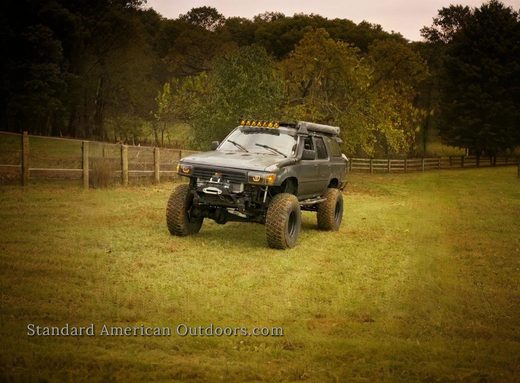
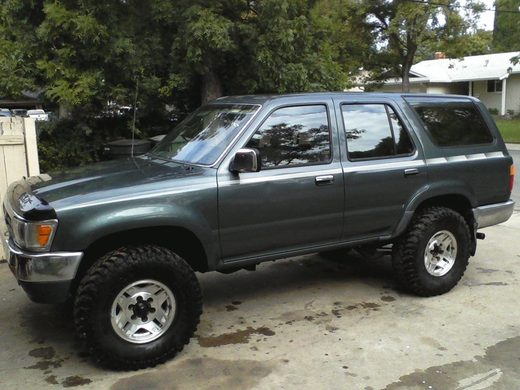
Larger tires effectively raise your gearing. Going from a 30-inch tire to a 33 makes the truck behave as though you swapped to numerically lower gears — slower off the line, more hunting between gears on grades, and a transmission that works harder.
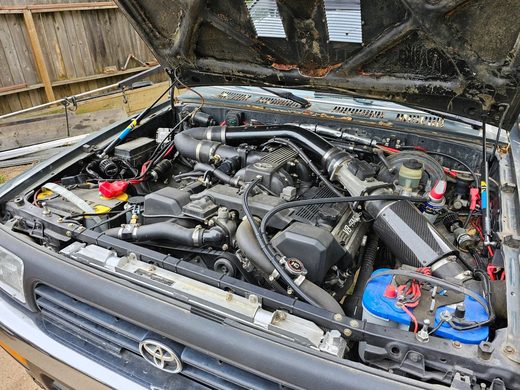
On a 3.0L 3VZE, which was never generously powered to begin with, this is noticeable. The engine has to spin further into its range to do the same work, and the automatic will downshift more.
It also throws your speedometer off. Bigger tires cover more ground per revolution, so an indicated 60 is actually faster than 60. Worth knowing before you argue with a state trooper.
Our guide to stock max tire size covers what fits before you get into regearing territory at all.
When regearing is worth it
If you have gone to 33s and kept the factory 4.10s, you will feel it every day. Regearing to 4.88s restores the effective ratio and brings back the drivability you gave up. That is the classic pairing.
Regearing is not a driveway job for most people — setting pinion depth and backlash correctly requires specific tools and experience, and a poorly set-up ring and pinion will howl and eventually fail. Budget for a shop that does this regularly.
The honest counterpoint: if you are running 31s, the factory 4.10s are fine and your money is better spent elsewhere. Regearing solves a problem you may not actually have. See the off-road build guide for where it sits in the priority order.
And whatever tire size you land on, get the suspension sorted first — sagging rear springs change ride height, clearance, and how everything else behaves. Our rear spring guide covers it.