Boosting a 22RE: Turbo vs Supercharger, From Someone Who Runs One
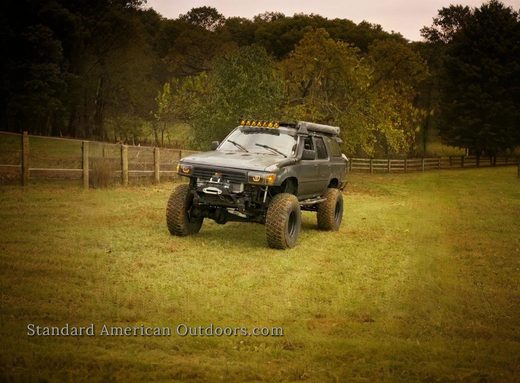
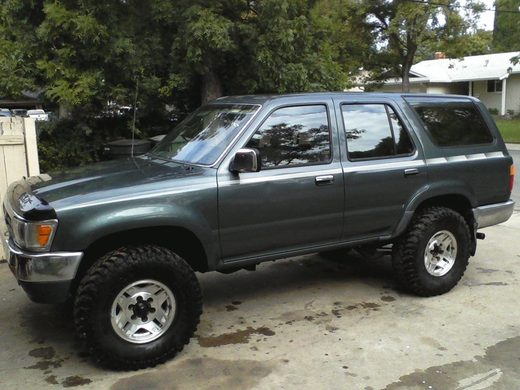
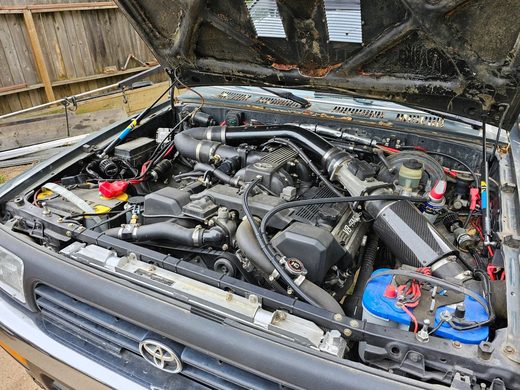
The 22RE makes its power the way a hand tool does — slowly, forever, and without complaint. That's the whole appeal, and it's also why the same question comes up every time someone climbs a grade fully loaded: can you boost it? Yes. We run a turbocharged 22RE in the shop, and this is what that actually teaches you.
Why the 22RE takes boost at all
The 2.4 was built understressed: an iron block, modest compression, and a bottom end engineered for abuse rather than output. That conservatism is exactly the margin forced induction needs. It's the same logic as boosting the 3VZE — the traits that make these engines slow stock are the traits that let them survive a few extra pounds of air.
Turbo vs supercharger, honestly
Supercharger: instant response, linear delivery, and on this platform the historically "known" path — the LCE-style kits are what people search for by name. Simpler to live with, harder to find used, and the boost curve is fixed by pulley.
Turbo: more headroom, more efficient at making real power, and far more flexible in how much boost you run. The costs are packaging (exhaust routing on a truck this tight is genuinely the hard part), heat management, and a longer list of decisions. It's the enthusiast path, and it's what we run.
The honest comparison: a supercharger makes the truck feel quicker everywhere; a turbo makes it genuinely fast in the places that matter, with more work to get there.
Fuel is the whole project
This is the lesson worth more than any hardware opinion. Pressure is not volume. A regulator can show a perfectly healthy number on the gauge while the pump behind it runs out of actual flow under load — and the symptom is a truck that pulls hard and then flattens at the top of the rev range. That reads like timing, or turbo sizing, or a boost leak, and people chase it for months. It's the pump. Supporting fuel goes in before boost goes up, every time, and wideband monitoring is the only way you'll know you're right. The fuel pump and filter job is the starting point on any of these trucks.
Low boost is the religion
Everything good about a boosted 22RE lives at modest pressure with a conservative tune. Detonation is the only real enemy on an iron-block engine with age on it — quality fuel, timing respected, and a knock ear (or better, a gauge) always on. Chasing big numbers on a 30-year-old 2.4 is how the swap crowd earns the right to say told-you-so. And before any of it: the engine needs to be healthy first. Compression consistent (the rebuild decision guide), timing chain sorted, cooling system honest. Boost finds every weakness you were ignoring.
Boost or swap?
A swap buys more power for more project — the 5VZ path and the 1UZ dream both do it. Boosting keeps the engine you already know, registered and sorted, and changes its personality instead of replacing it. Fewer parts, more discipline. Some of us just like making the little four-cylinder everyone underestimates get up and move.
Frequently asked questions
Can a stock 22RE handle boost?
At low boost with a conservative tune and adequate fuel, its understressed iron-block design gives real margin. Health first though — boost exposes a worn timing chain or tired cooling system immediately.
Turbo or supercharger for a 22RE?
Supercharger for instant, linear response and simpler living; turbo for more headroom and real power, at the cost of packaging and heat management. Both work; the turbo demands more tuning discipline.
What kills boosted 22RE builds?
Lean fueling, almost always. An undersized pump that can't match the new airflow is the classic project killer — and it disguises itself as a tuning problem for months.
How much boost is safe?
Think conservative psi with wideband monitoring rather than a number from a forum. Fuel quality, timing, and engine condition define safe on an engine this old — not a universal figure.