Compressor Duty Cycle Explained (And Why It Matters More Than You Think)
What the percentage means
Duty cycle is the share of a cycle — usually ten minutes — that a compressor can run continuously before it needs to stop and cool.
A 50% duty cycle means roughly five minutes of running followed by five minutes of rest. A 100% duty cycle means it can keep going.
This sounds academic until you do the arithmetic on a real air-up.
Why it bites on four tires
Refilling 35-inch tires from trail pressure to highway pressure can take three to five minutes per tire. Four tires is twelve to twenty minutes of runtime.
Hand that job to a 50% duty cycle compressor and it will shut down partway through the second tire and make you wait. Then again. What should be a fifteen-minute job becomes half an hour of stop-start.
This is why testers recommend at least a 75% duty cycle for larger tires, and why 100% units are what people reach for on group runs where several vehicles need airing up after a sand recovery. In that situation a compressor that needs to rest is not an inconvenience — it is the thing holding up five trucks.
Reading it honestly
Duty cycle is usually quoted at a specific pressure, often 100 psi, and it gets worse as pressure and ambient temperature rise. A rating earned in a lab in mild conditions is optimistic on a hot day in the desert.
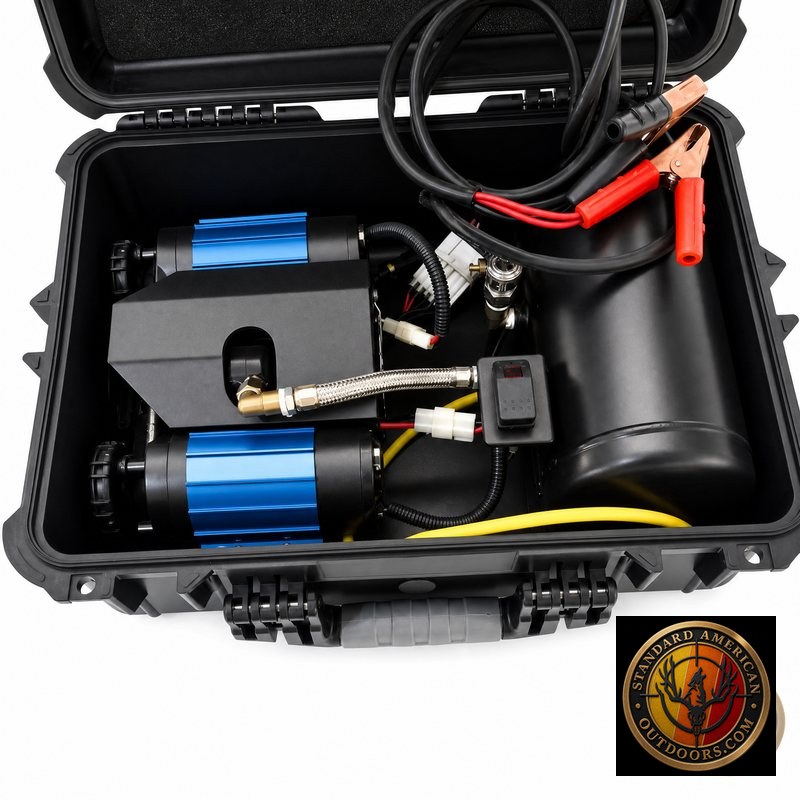
Twin-motor compressors generally handle sustained work better simply because each motor is doing less of it. That is a real part of the case for the twin beyond raw speed.
Pair duty cycle with CFM when you compare units — one tells you how fast, the other tells you how long. Our CFM guide covers the other half.
Air & Recovery parts for the 2nd gen
Built for the 1990–1995 4Runner. See all air & recovery parts and guides →
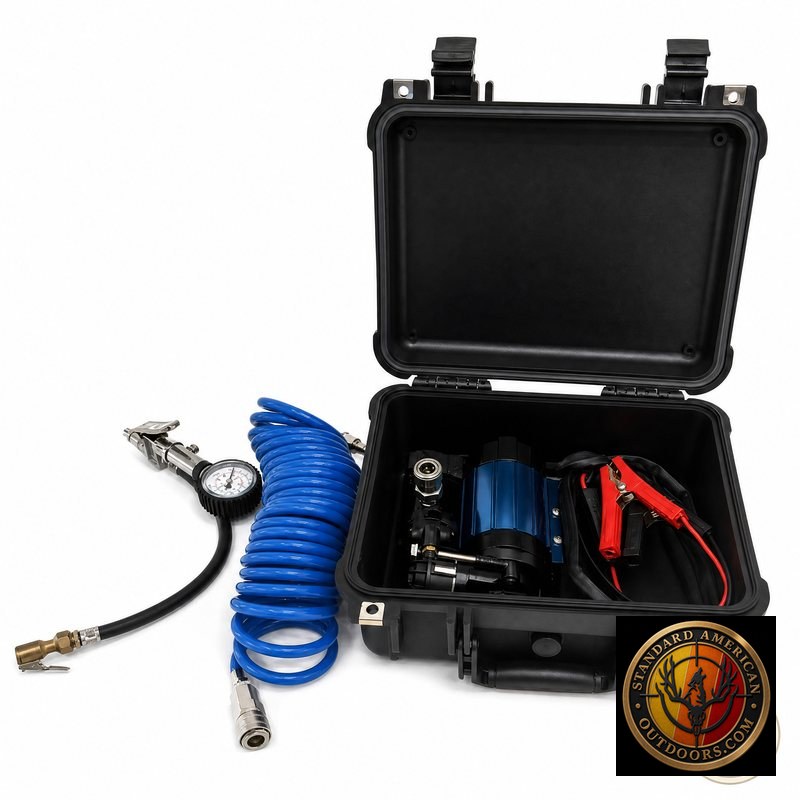 Single Air Compressor with Line Kit
New guides, first look at new parts
We publish a guide most weeks and build parts for one truck. If you own a 2nd gen, put your email in and you’ll get both. No filler.
One email at a time, unsubscribe in a click.