Where Does the Spare Go After a Lift or Bigger Tires?
By Jay — 2nd gen 4Runner owner & builder, Standard American Outdoors
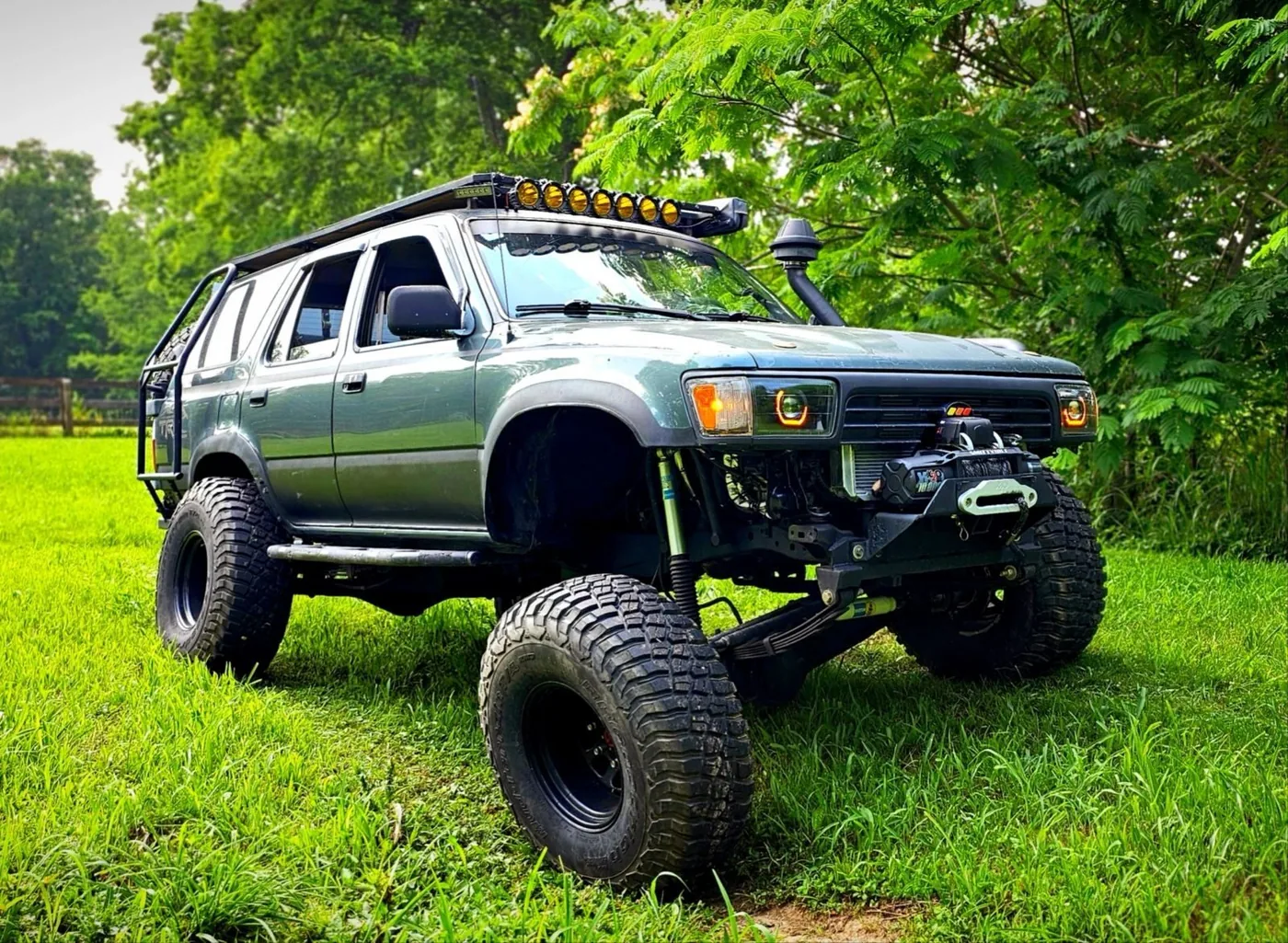
Every 2nd gen 4Runner owner who lifts the truck and steps up in tire size eventually hits the same wall: the stock spare doesn't fit under the truck anymore. It's not a defect — it's just clearance math, and it catches almost everyone eventually.
Why the stock mount stops working
The factory spare hangs underneath the rear of the frame, lowered through a trap door on a winch-style cable. That whole system — the body opening, the clearance under the frame, the winch mechanism — is sized around the factory spare's diameter and width.
Go up in tire size, whether from a lift or just wider and taller rubber on its own, and that stock footprint runs out of room. The new tire either won't pass through the factory opening, won't clear on the way down, or fouls the frame, exhaust, or sway bar. At that point, running your actual road tire size as an under-body spare stops being an option.
Realistic options 2nd gen owners actually use
Roof-mounted spare
A 4Runner has no bed, so unlike a pickup, the roof is the realistic place to carry a full-size spare once it's off the frame. Mounted right, it keeps the weight off the tailgate and out of the departure-angle conversation entirely.
The tradeoff is real: weight on the roof raises the center of gravity, and a mounted tire and wheel isn't light — that affects handling and rollover margin more than most people expect. It also makes loading and unloading a solo, heavy-tire job.
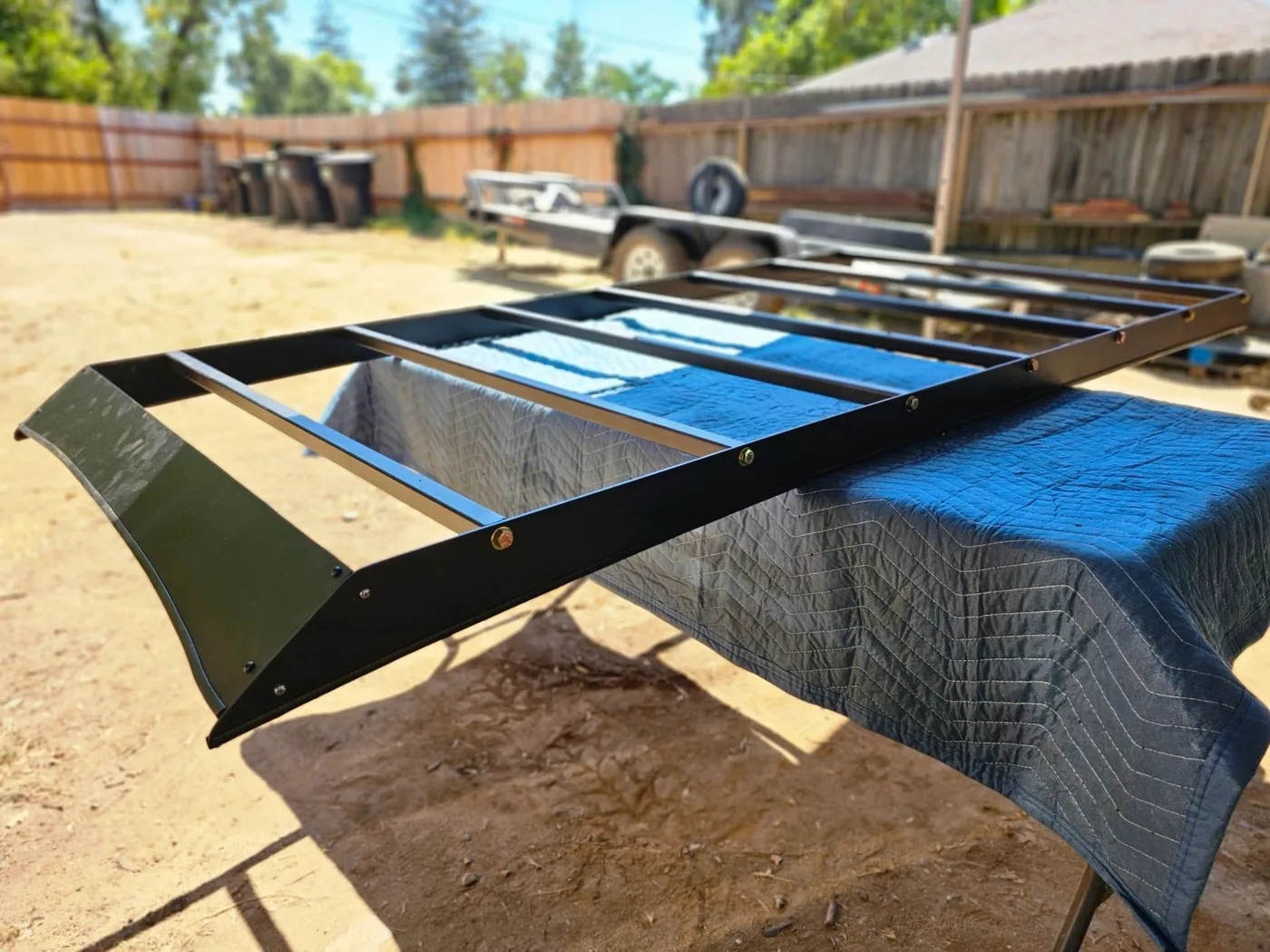
If you go this route, the rack matters. A full-length rack like SAO's V3 HD — built by hand in our shop from American steel and aluminum, RTT-rated, with 14 mounting points — is a legitimate place to put a spare, since it's already built to carry real static load. Worth saying honestly: that's not a reason to buy one just for this, but a rack that isn't rated for real weight is a bad thing to discover at speed.
Swing-out rear carrier
This is what most built rigs end up running: a carrier mounted to an aftermarket rear bumper or hitch, swinging out to the side instead of dropping down underneath. It keeps the spare low, which most people find easier to handle than a roof mount.
The cost is rear overhang and departure angle — a swing-out carrier adds length behind the truck, exactly where it matters most departing a steep obstacle. It also usually means committing to an aftermarket rear bumper, a bigger project than just relocating a tire.
Tailgate-mounted carrier
Some owners mount a carrier straight to the tailgate, the way plenty of older SUVs handle it. It's a real option, but the factory tailgate, hinges, and latch were never engineered to carry a mounted tire and wheel — doing it right means reinforcing the structure, not just bolting a bracket to sheet metal, and it can interfere with the rear glass depending on mounting.
A smaller "space-saver" spare
The lowest-effort option: keep a reduced-size spare in the stock location, sized to still clear with your bigger tires in place. It works, with one catch — it's a get-you-to-a-shop tire, not a matched trail spare. Don't run it far, fast, or off-road.
Picking the right option
If you want a true full-size spare and don't want to touch your bumper or tailgate, roof mounting is the practical answer on a vehicle with no bed to fall back on. If low center of gravity and easy loading matter more than rear overhang, a swing-out carrier is the better tradeoff. If you rarely leave pavement, a space-saver solves it with the least work. There's no universal right answer here — it depends on how you actually use the truck.
Common Questions About Spare Tire Mounts
Will any lift height cause spare clearance problems?
It's less about lift height and more about the tire size that lift lets you run. Small increases sometimes still clear stock; bigger jumps in diameter or width are what usually force the issue.
Is a roof-mounted spare safe for regular highway driving?
It's done all the time, but understand the tradeoff — weight up high changes handling and raises rollover risk versus the same weight mounted low. Make sure it's secured to a rack actually rated for that load.
Can I just run a smaller tire as a permanent fifth tire instead of a true spare?
You can, but it defeats matching your spare to your real tire size for a true trail-ready setup. It's a reasonable compromise for pavement-only use, not for anyone running remote trails regularly.
Do swing-out carriers require welding?
Most bolt to an aftermarket bumper or hitch receiver rather than requiring welding themselves, though the bumper they mount to is often its own bolt-on or weld-in project.
What's the simplest option if I just want it solved?
A properly sized space-saver spare in the stock location is the least work, cost, and modification — if you're fine with its limitations.
New guides, first look at new parts
We publish a guide most weeks and build parts for one truck. If you own a 2nd gen, put your email in and you’ll get both. No filler.
One email at a time, unsubscribe in a click.