What Tire Pressure Should You Run Off-Road?
The short answer
For general trail use on a 2nd gen 4Runner without beadlock wheels, somewhere in the 15 to 20 psi range is where most people end up. The broadly accepted safe working window is roughly 12 to 25 psi.
Soft sand is the exception. Flotation matters more than anything else there, and pressures in the 8 to 12 psi range are common — with the understanding that you are closer to the limit of what the bead will hold.
There is no single correct number, which is why anyone who gives you one without asking about your truck, your tires, and your terrain is guessing.
Why start high and work down
The reliable method is to air down conservatively, drive the section, and take more out if you want more compliance. Going straight to the lowest number you have heard about is how people unseat beads.
Watch how the truck behaves. When the tire starts conforming to obstacles rather than bouncing off them, you are in the right zone. When the sidewall starts visibly bulging and the steering goes vague, you have gone far enough.
Weight matters too. A loaded truck with a roof rack, gear, and passengers wants slightly more pressure than the same truck empty.
The limit, and the trip home
Without beadlocks, the bead is held on the rim by air pressure. Take enough out and a hard side load — a rock, a rut, an aggressive turn — can break it. That is the real constraint, not tire damage.
And the pressure you run on the trail is not the pressure you drive home on. Low-pressure highway driving builds heat, ruins fuel economy, wears the shoulders, and in the worst case destroys the tire.
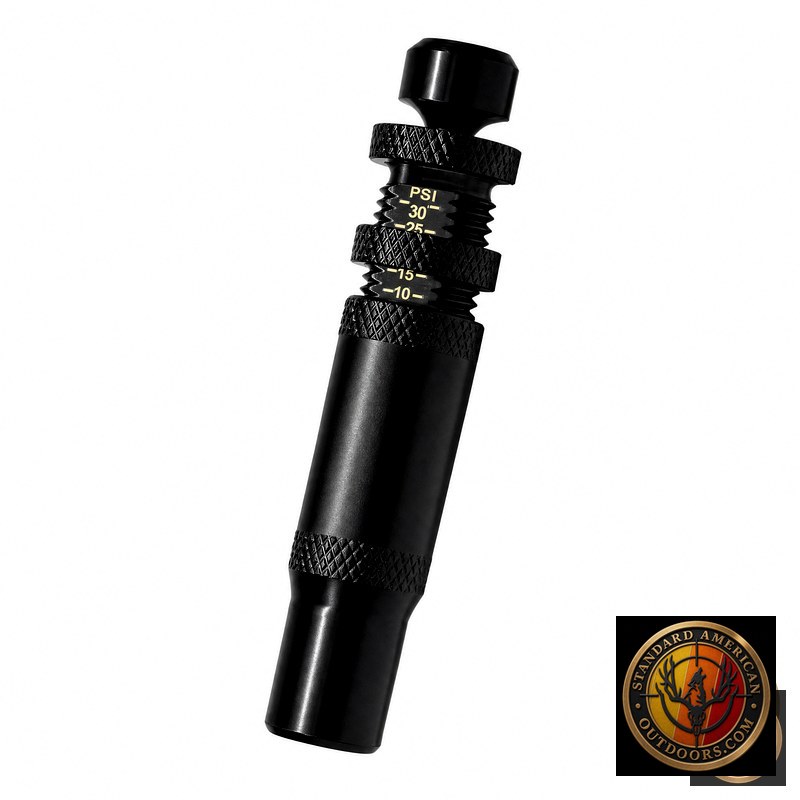
Which is the whole reason to carry air. Our onboard air guide covers mounted versus portable, and a deflator with a gauge makes hitting your number a two-minute job rather than guesswork.
Why airing down works at all
Lowering pressure lengthens the tire's contact patch. A longer footprint spreads the truck's weight over more ground, which means less pressure per square inch, which means the tire floats over soft surfaces instead of digging in and conforms around rocks instead of skating off them.
It also makes the ride dramatically better, because the tire absorbs impacts the suspension would otherwise pass into the cab. On a washboard road this is the single biggest comfort improvement available to you, and it's free.
Start conservative and adjust
There's no single correct number, because it depends on your tire, your wheel, your load, and the terrain. What's reliable is the method: drop in stages and watch what the truck does.
Take a modest amount out first, drive a bit, and see whether traction and ride improved enough. Go further only if you need it. It's easy to let more air out and slow to put it back in without a compressor.
Heavier trucks — a rooftop tent, a full load of gear, a bumper and winch — can generally run a bit lower than an empty one and still keep the tire seated, because the extra weight is what's flattening the tire in the first place.
The limits worth respecting
Bead seating. Go too low and the tire can unseat from the wheel, especially in a hard turn or against a rock ledge. Without beadlocks, that's the real floor on how far you can go.
Sidewall exposure. A softer tire bulges more, putting more sidewall where sharp rock can find it.
Steering feel. The truck will feel vague and slow to respond. That's expected at low speed and dangerous at high speed.
Speed. This is the one people ignore. An aired-down tire builds heat fast. Keep speeds low, and air back up before you get anywhere near a highway.
Airing back up is the other half
Airing down without a plan to air up is how a good day ends badly. Carry a compressor, know roughly how long four tires take on your setup, and do it at the trailhead rather than promising yourself you'll find a gas station.
Frequently asked questions
Do I need deflators, or can I just use a valve tool?
A valve core tool works and costs almost nothing. Deflators are about doing four tires quickly and landing on a consistent pressure without babysitting a gauge — a convenience, not a requirement.
Will airing down hurt my tires?
Not at trail speeds within sensible limits. The damage comes from running low pressure at road speed, which builds heat and destroys the sidewall.
What about airing down in sand versus rocks?
Sand rewards flotation, rocks reward conformability, and both want less air than pavement. Sand generally tolerates going lower; rocks put more of your sidewall at risk.
New guides, first look at new parts
We publish a guide most weeks and build parts for one truck. If you own a 2nd gen, put your email in and you’ll get both. No filler.
One email at a time, unsubscribe in a click.