2nd Gen 4Runner Towing Capacity: Real Numbers and Real Limits
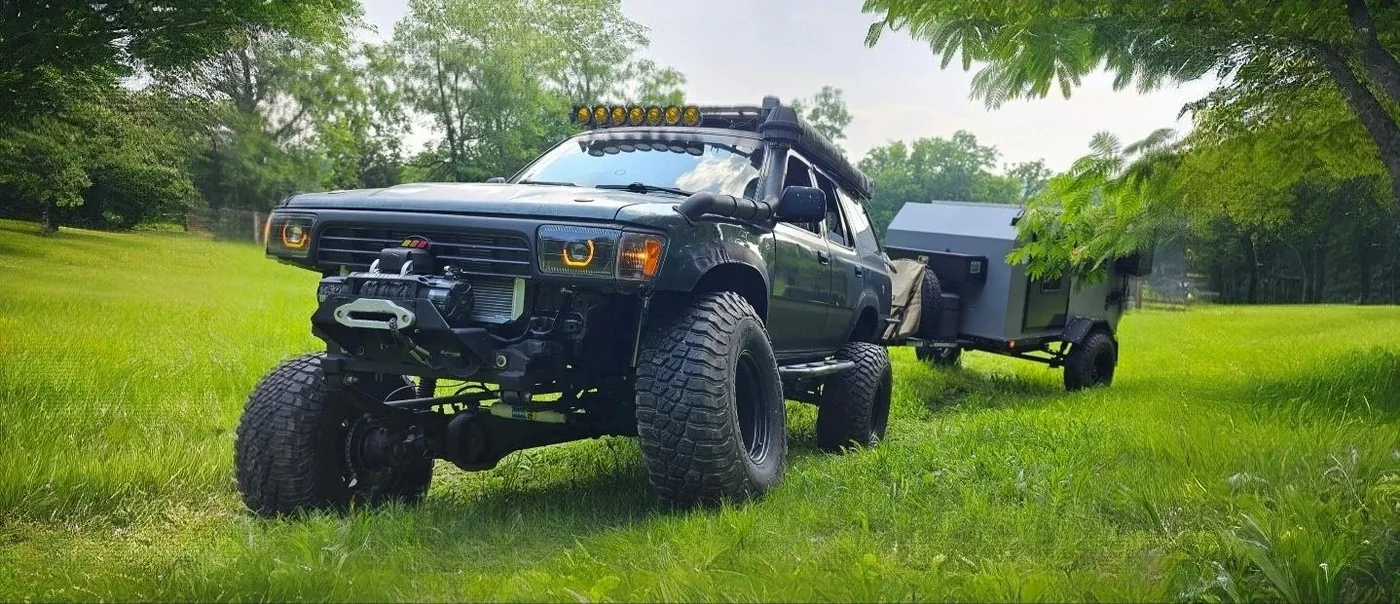
Straight answer: a V6 2nd gen 4Runner (1990–1995) is rated to tow about 3,500 pounds, and a 22RE four-cylinder truck is realistically a 2,000–2,500-pound tow vehicle at most. Those are the numbers — but on a 30-year-old truck, the rating is only half the story.
What Each Engine Can Honestly Handle
The 3.0L V6's 150 hp and 180 lb-ft will move 3,500 pounds, but it will work for it — expect downshifts on grades and patient merging. A small boat, a pair of ATVs, a utility trailer with a project engine: comfortable. A loaded tandem-axle car hauler: that's the ceiling, and it will feel like it. The 22RE is a wonderful engine that simply doesn't have the torque for serious towing; keep it to light utility trailers and it will thank you. On either engine, a 5-speed manual gives you more control on grades than the 4-speed automatic.
The Age Tax: What Matters More Than the Rating
A rating written in 1992 assumed a healthy 1992 truck. Before towing anything meaningful today, three systems need to be genuinely fresh, not just functional. Cooling: towing is sustained load, sustained load is heat, and heat is what kills the 3.0L — a marginal radiator that survives commuting will not survive a July grade with a trailer. Transmission: if it's the automatic, fresh fluid is mandatory and a supplemental cooler is the single best towing upgrade you can make. Brakes: your truck's brakes are stopping the trailer too; anything over about 1,500 pounds should have its own trailer brakes.
Towing Setup Checklist
Use a Class II/III hitch properly bolted to the frame, keep tongue weight around 10–15% of trailer weight, air the rear tires toward max sidewall pressure, and watch the temp gauge like it owes you money. If you tow regularly, the complete 3" lift kit's refreshed rear suspension also cures the saggy-tail squat that 30-year-old factory springs give you with a loaded hitch.
Bottom Line
Respect the 3,500-pound V6 rating, halve your expectations with the 22RE, and spend your money on cooling, transmission service, and brakes before you spend it on the trailer. A sorted 2nd gen tows its rating for decades; a neglected one grenades a head gasket on the first mountain pass.
The number is not the limit that matters
Every truck has a tow rating, and most owners discover the hard way that it's the least useful number in the conversation. What actually limits a 2nd gen is the combination of stopping distance, tongue weight on a thirty-year-old rear suspension, and driveline temperature on a long grade.
For your truck's actual figures, use the door jamb sticker and the owner's manual rather than anything you read online, including here. Ratings vary by engine, transmission, axle ratio, and cab configuration, and a wrong number is worse than no number.
What to check before you hitch anything
Rear ride height. A truck that already sags empty has nothing left to give when you add tongue weight. Sort the springs first — this is the single most common thing owners skip.
Brakes. These trucks stopped adequately in 1993 with nothing behind them. Anything you tow needs its own brakes past a modest weight.
Cooling. Towing is a heat problem before it's a power problem, and on a 3VZ-E heat is exactly what you don't want. Everything in the cooling system should be known-good before you load a trailer.
Transmission temperature. Long grades and an automatic are the classic way to cook fluid.
Tires and gearing. Tall tires on stock gears make an already-underpowered combination worse, and put the engine in the wrong place in its range.
Being honest about it
These are capable trucks that are also small, old, and modestly powered by modern standards. They'll pull a small utility trailer, a dirt bike, a pair of quads, or a modest boat happily. They are not a modern half-ton, and asking them to be one is where people get in trouble.
Age matters here in a way ratings don't capture: a rating assumed new brakes, new suspension, and a healthy cooling system. If yours has thirty-year-old everything, the honest working limit is lower than the sticker.
Frequently asked questions
Does a lift affect towing?
It raises the hitch, which changes trailer angle and can worsen sway. It also changes geometry generally. Not a dealbreaker, but plan for a drop hitch to get the trailer level.
Four-cylinder or V6 for towing?
The V6 has the easier time. The four-cylinder will do light work but will be working hard doing it, and working hard is what generates the heat you're trying to avoid.
Do I need a transmission cooler?
If you tow regularly with an automatic, it's cheap insurance against the failure mode that actually kills these transmissions.
What if I'm already seeing transmission warning signs?
Towing accelerates exactly the wear this platform is known for. See our automatic transmission guide for what to check before you hook up a trailer again.
New guides, first look at new parts
We publish a guide most weeks and build parts for one truck. If you own a 2nd gen, put your email in and you’ll get both. No filler.
One email at a time, unsubscribe in a click.